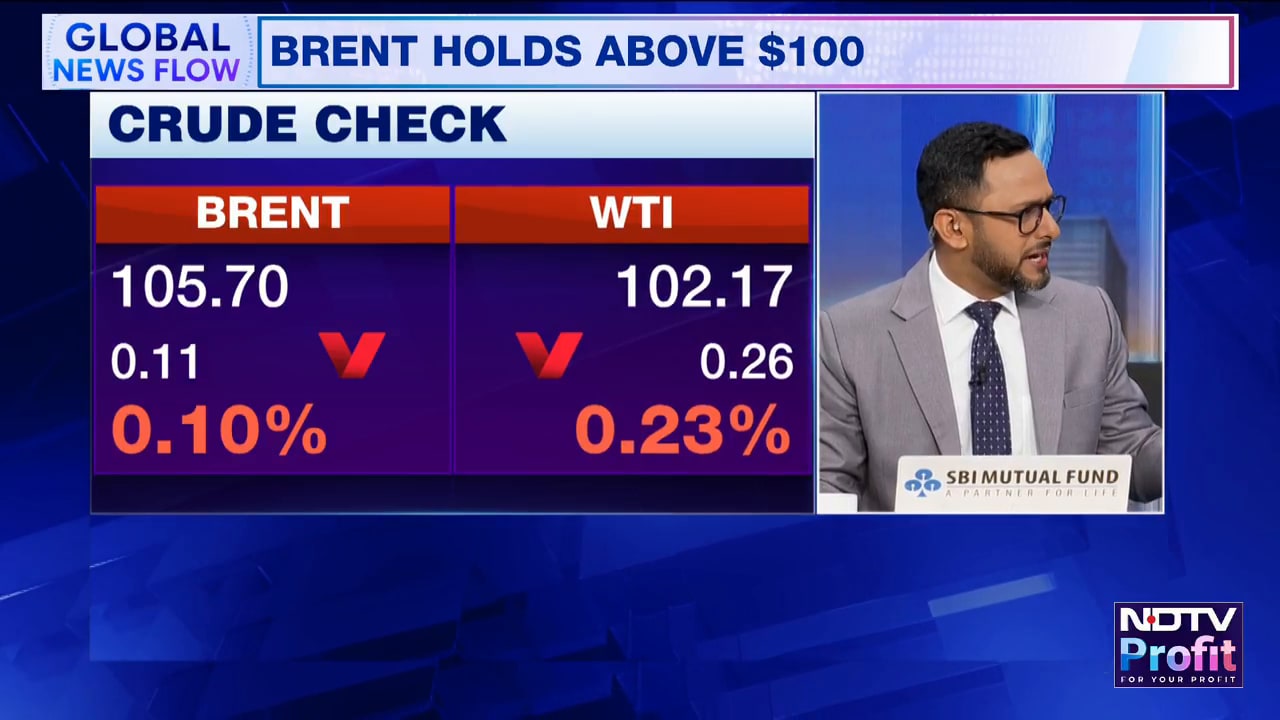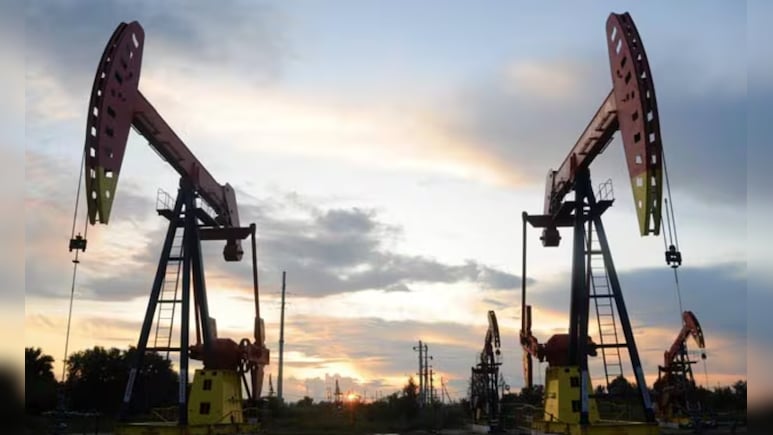
Oil prices held firm on Wednesday after a sharp surge in the previous session, as escalating geopolitical tensions in the Middle East kept markets on edge. Brent crude traded above $103 per barrel, while US benchmark West Texas Intermediate hovered near $96.
The latest escalation follows Iran's confirmation that Ali Larijani, a senior security official and secretary of the Supreme National Security Council, has been killed. His death marks a significant blow to Iran's wartime leadership and signals a further deterioration in the regional conflict. Markets have responded by pricing in a higher geopolitical risk premium.
At the centre of market concerns is the Strait of Hormuz, a crucial chokepoint that typically carries nearly a fifth of global oil shipments. Traffic through the passage remains severely restricted, with vessel movement increasingly dictated by geopolitical considerations rather than normal trade flows.
Also Read | Layoffs Are Rising In Tech, But These Skills Are Helping People Unlock Better Pay
Attempts by US President Donald Trump to mobilise allied support to secure the route appear to have stalled, adding to uncertainty over how quickly supply chains can normalise. Meanwhile, military activity in the region has intensified, with Iran stepping up attacks and the US targeting missile sites near the strait.
Get all the latest updates on the US, Israel-Iran war here.
Inflation Concerns Resurface
Oil has rallied sharply this year, with prices up nearly 70%, largely driven by the escalation involving Iran, the US and Israel. The surge is beginning to filter through to consumers, with US diesel prices crossing $5 per gallon.
The spike in energy costs is now firmly on the radar of central banks. Policymakers, including the US Federal Reserve, are closely monitoring the situation as higher fuel prices could complicate efforts to manage inflation without slowing economic growth.
On the supply side, Iraq has reached an agreement with Kurdistan to resume pipeline exports, offering some relief to global markets following recent disruptions.
At the same time, longer-term demand trends are evolving. The increasing adoption of electric vehicles helped reduce global oil consumption by an estimated 2.3 million barrels per day last year. That figure is expected to rise steadily through the decade, highlighting a gradual shift in energy demand even as short-term geopolitical risks continue to dominate price movements.
ALSO READ: Strait Of Hormuz Blockade: 3 Lakh Metric Tonnes LPG Stranded, Says Government
Essential Business Intelligence, Sharp Market Insights, Practical Personal Finance Advice, Daily Fuel, Gold and Silver Prices and Latest Stories — On NDTV Profit.