The Indian stock market has been continuously responding to bad news and hopes emanating from a potential deal on the Middle East conflict. According to market analysts, a mid to long-term market direction will emerge only from clarity on the conflict resolution, particularly on the opening of the Strait of Hormuz. Till then, global crude oil prices will continue to fluctuate impacting the sentiment on D-Street, while foreign investors maintain pessimism over the Indian equity market.
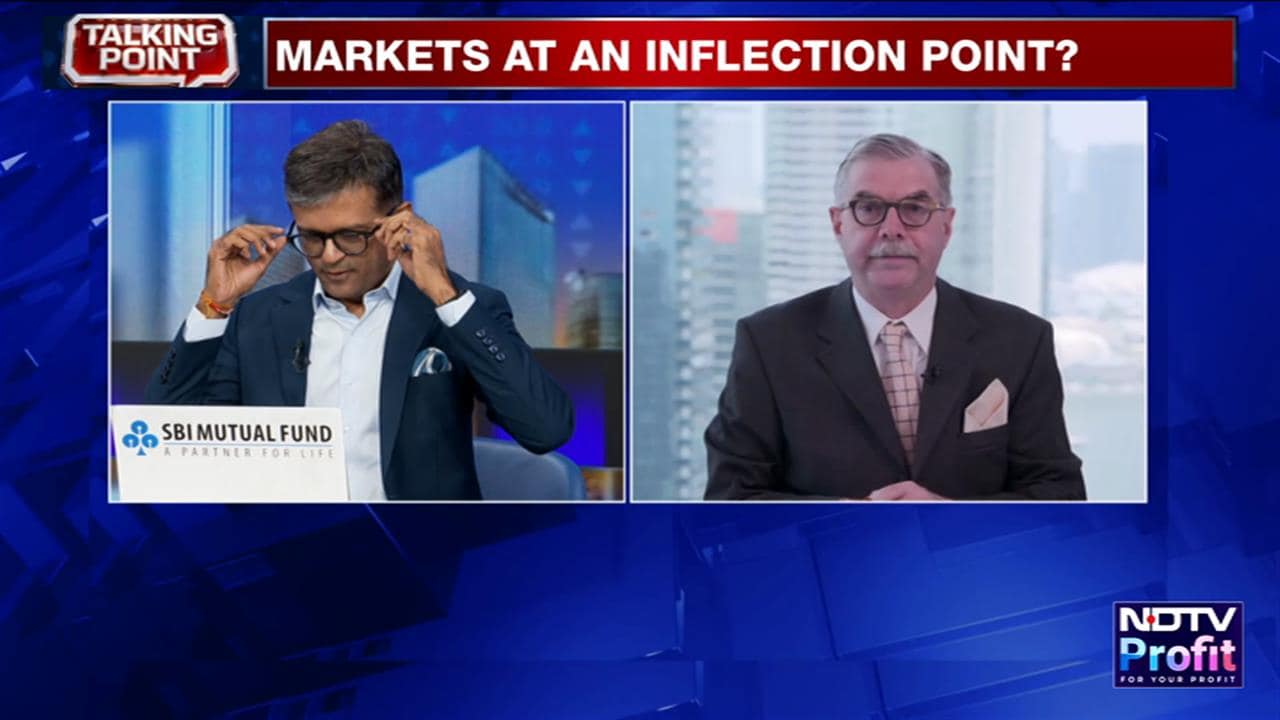
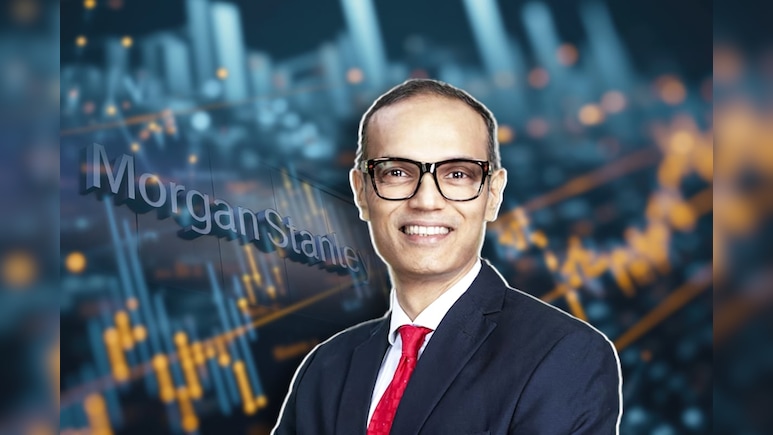
In the current market scenario, Ridham Desai, Managing Director and Chief Equity Strategist India, Morgan Stanley maintains an optimistic view despite the ongoing uncertainty due to the US-Iran war. Popularly known as the 'perma bull' of the Indian market due to his bullish view in the long-term, Desai revealed his investing mantra in an exclusive interview with NDTV Profit Townhall on April 24. The market expert suggests that despite everything, 'now is the time to buy' in Indian markets.

-
 India's Market Leaders To Decode The New Samvat At NDTV Profit Ignite In Mumbai On Oct 28
 -
 NDTV Profit IGNITE Diwali 2026: Top Market Veterans Decode Wealth Creation
 -
 The Week Ahead: Earnings Season, Fed Policy Verdict And Crude Oil In Focus
 -
 Silver Is Now Down From Rs 4.2 Lakh To Rs 1.9 Lakh: Where It Goes From Here
 -
 NDTV Ignite, The Trillion-Dollar Trajectory: India's Road to 2030
ALSO READ: Nifty May Sink To 20,500 If Iran War, Weak Monsoon Trigger Bear Attack, JPMorgan Warns
Also Read | Layoffs Are Rising In Tech, But These Skills Are Helping People Unlock Better Pay
Ridham Desai's Investing Mantra
According to the Morgan Stanley expert, currently it is a time of great uncertainty, however, stock markets come out good from wars because 'good things happen after wars end'. ''A lot of good things will happen in India after this war ends. India will pivot on energy, fertilisers, defence and become a beneficiary of data centres. So, this looks like the 'best time to buy' in India atleast in last six years since COVID. Desai explains that he firmaly believes in the mantra that 'the point of maximum return is at the point of maximum uncertainty', which he had read in book on investment tactics years ago.
Hintings at market highs and lows, Desai believes that 'tops and bottoms are for fools'. ''When you buy risky assets during uncertain times, the prospective result is usually good,'' he told NDTV Profit at Friday's Townhall. ''In the long run, the only things market cares about is growth in earnings and return on capital.'' Coming to the ongoing foreign fund outflow from Indian markets, Desai explained that technically, FPIs are selling because as corporate issuances are not happening.
However, fundamentally, FPI outflow is due to India's rich valuations, especially since Sept. 2024, which has unwound now and slowing econmic growth, which has also unwound. Also because, India did not have an AI trade and that has still not gone away. ''At the margin, FPIs interest to buy will be a function of how relative world around India moves,'' he said.
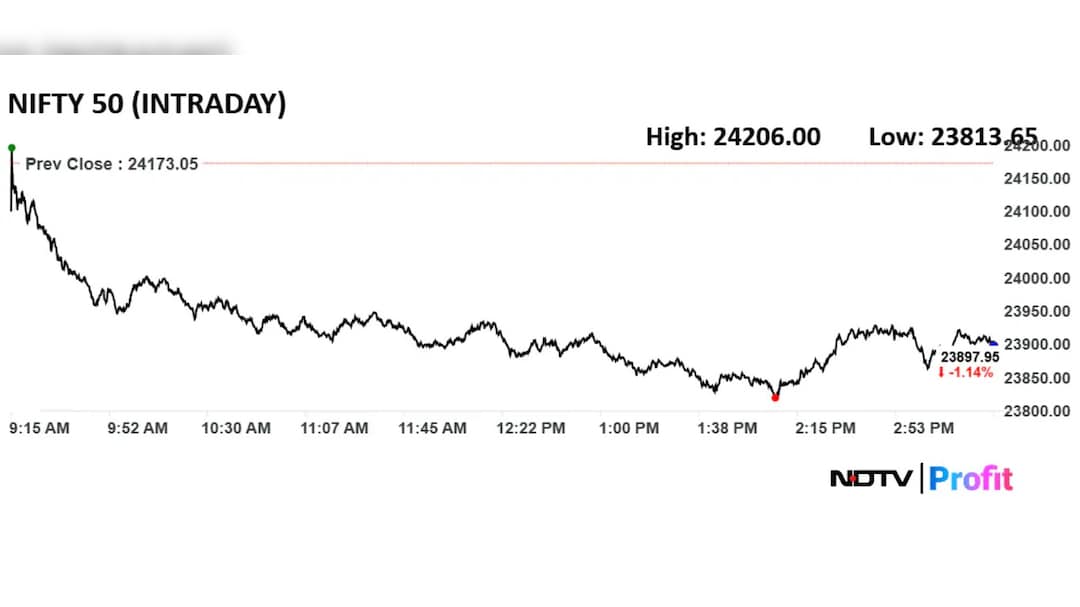
Nifty 50 intraday chart
Market Outlook
For investors seeking high returns, Desai said equities don't work on a six-month time frame and suggested one should look at equities from a 8-10 year time frame. ''If you want retyurns on a daily basis, then buy fixed deposits,'' he said. ''Default to buying mutual funds and stack your money in index funds,'' he said, adding, ''The results will be good.'' Amid the current geopolitical conflict, Desai's bear case is that crude oil hits $130 per barrel, which will create a 'real pain' for India.
According to the market expert, the strong macroeconomic drivers to Indian market's long-term performance which the country enjoys and no other country does, with a possible exception of the US are as follows:
-India's young population: Key to driving overall economic growth due to growth in workforce
-India's perfect balance between balance between savings and consumption. India's avings rate is 20% and consumption is 18%. In India, people are very secure of their assets, which is not the case in China and US is a consumerist society.
-India does not have excess capacity anywhere, but has shortage of capacity everwhere, which needs to be fixed gradually.
-Indian investors have a lot of respect for capital. Enterepreneurs in India are very frugal so the respect for capital ensures that share prices do well, as per Desai.
On a 30-year time frame, India is still one of the best performing stock markets in the world in dollar terms. One cannot say that about China even though its a faster growing economy as the respect for capital is not the same in that market. Coming to the impact of AI on markets, Desai believes that a lack of AI trade continues to hurt Indian equities. However, he pegs AI as a 'near-term risk', and not for the long-term.
ALSO READ: Not War, Not AI: Ridham Desai Highlights The One Scenario That Can Hurt India's Markets
Notably, the expert sees India to one of the biggest beneficiaries of AI. ''AI is not a bubble, it is here to stay. India is at the forefront of building AI applications,'' he claimed. Desai eyes large opportunities for Indian IT services companies and AI's benefits will start to show in IT companies' earnings by 2028. Currently, IT services majors are going through a transition phase in India, according to him.
Essential Business Intelligence, Sharp Market Insights, Practical Personal Finance Advice, Daily Fuel, Gold and Silver Prices and Latest Stories — On NDTV Profit.