(Bloomberg) -- With the blistering chip rally having already driven many stocks to record highs ahead of a full-fledged demand recovery, proving success in artificial intelligence may determine which ones push even higher and which fizzle out.
Indications of a big boost from AI in the latest results from leading foundry Taiwan Semiconductor Manufacturing Co. and Dutch chip-gear giant ASML Holding NV have given investors fresh reasons to continue buying suppliers of cutting-edge equipment and services. The consensus earnings estimate for TSMC and ASML has risen 3.1% and 1.1% this month so far, respectively. That compares with a 0.4% gain for the sector.
In contrast, reports from US chipmakers Advanced Micro Devices Inc. and Intel Corp. raised caution on AI expectations running ahead of reality as more mundane PC and data center markets continue to struggle. Real benefits of the new technology may not become widespread until the world's largest companies start to capitalize on it.
“We're not really seeing a lot of direct impact on profits for Meta, or Alphabet or even Microsoft — it's very, very minimal. They talked about it, but it doesn't really show up,” said Dan Morgan, senior portfolio manager at Synovus Trust Co., adding that he is focusing more on chipmakers that cater to data centers, which are key in training AI algorithms.
Read More: Microsoft, Alphabet and AMD Struggle to Meet AI Expectations
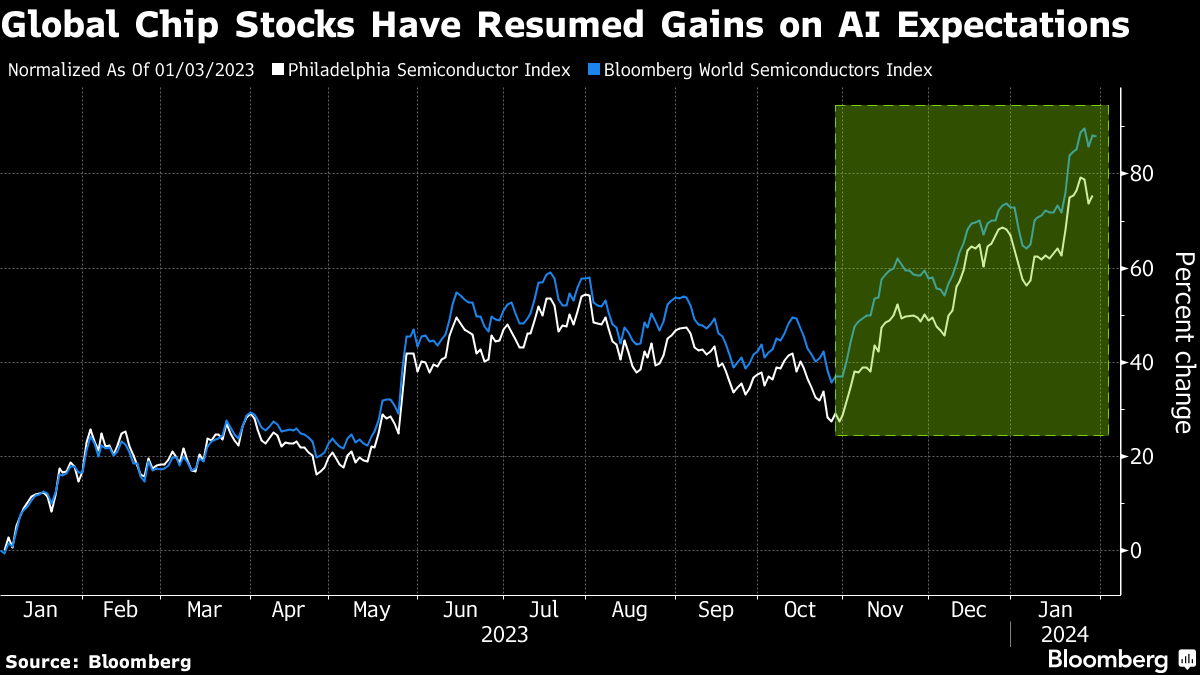
Upcoming results including those from smartphone chipmaker Qualcomm Inc. on Wednesday and AI chip king Nvidia Corp. on Feb. 21 will provide further clues on the rally, which has pushed benchmarks of chip stocks to all-time levels. The Philadelphia Semiconductor Index has climbed 34% since the end of October, doubling the gain the S&P 500 Index.
Beyond the continued AI hype, the main question is when there may be a rebound in demand for consumer products like electronics and cars. Texas Instruments Inc., the world's largest maker of analog chips, fanned investor concerns as it posted a third quarter of worsening industrial-related demand while indicating automotive business has only just started shrinking.
“Interest rates are still high compared with three to four years ago, so that's weighing on demand for products such as autos that consumers have to take loans for,” said Marcello Seongsoo Ahn, a portfolio manager at Quad Investment Management Co. Graphics processing units and memory chips seem “solid,” while inventories of analog chips remain high, he added.
Baik Gil-hyun, an analyst at Yuanta Securities Korea, echoed optimism on memory. Earnings for South Korea's Samsung Electronics Co. and SK Hynix Inc. may bounce back sooner than for some other semiconductor companies on AI server-related business. The pair may see a fresh tailwind in the second half of the year on recoveries in PCs and smartphones due to upgrades to newer models with AI features.
“I'd feel very uncomfortable if I didn't own memory,” said Young Jae Lee, senior investment manager at Pictet Asset Management Ltd. “We still have a few quarters to go before seeing a peak.” Lee has also been adding shares of TSMC this year, noting its valuation gap with Nasdaq-traded peers is too large, even considering concerns over Taiwan's relations with China.
More stories like this are available on bloomberg.com
©2024 Bloomberg L.P.
Essential Business Intelligence, Sharp Market Insights, Practical Personal Finance Advice, Daily Fuel, Gold and Silver Prices and Latest Stories — On NDTV Profit.