After spending nearly two decades building India's largest airline, IndiGo is entering a new phase of growth. Rather than chasing additional market share, the airline is now focusing on becoming passengers' preferred carrier through premium products, better customer experience, technology and long-haul international expansion.
The strategic shift comes at a time when IndiGo already commands more than 60% of India's domestic aviation market, leaving relatively limited room for further expansion through market share alone.
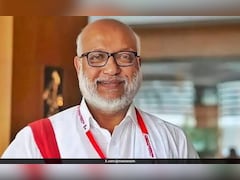
In his message to shareholders in InterGlobe Aviation's FY26 annual report, Co-founder and Managing Director Rahul Bhatia said the airline's ambitions have evolved beyond being India's biggest carrier.
"Our aspiration is not only to remain India's preferred airline but to become the airline of choice, recognised globally for operational excellence, customer experience and innovation," Bhatia said.
The change in strategy comes even as IndiGo reported its third-largest annual loss. InterGlobe Aviation posted a consolidated net loss of Rs. 2,394 crore in FY26, while revenue from operations increased 5% year-on-year to Rs. 84,962 crore.
From Market Leadership to Customer Preference
IndiGo's success over the past two decades has largely been built on low fares, operational efficiency and rapid network expansion. Those strengths helped the airline become India's dominant carrier with an unmatched domestic network.
However, with market leadership firmly established, the airline is now looking beyond scale.
Instead of measuring success only by market share, IndiGo wants to strengthen customer loyalty and attract higher-value travellers by improving the overall flying experience.
"Our journey has never been about size alone. It has always been about creating value for customers, employees, shareholders and the nation," Bhatia said, adding that IndiGo aims to build a globally respected Indian aviation brand.
The strategy reflects a broader shift in India's aviation industry, where rising incomes and growing international travel are creating demand for premium services even among passengers who traditionally chose low-cost carriers.
Also Read: IngiGo Airline Slips Into Net Loss Even As Revenue Climbs 20%; Fleet Count Falls
Premium Products Become the New Growth Engine
The airline has already begun laying the foundation for this transition.
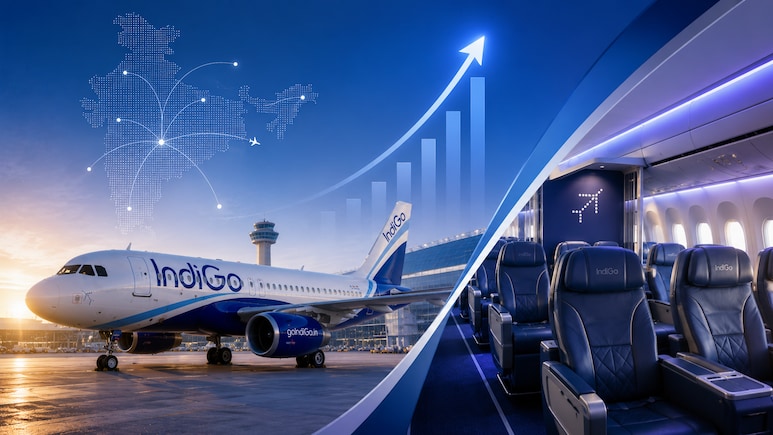
Over the past year, IndiGo introduced IndiGoStretch, its business-class style offering on select domestic routes, marking one of the biggest product changes in the airline's history. The carrier has also invested in digital capabilities and service improvements to deliver a more seamless customer experience.
At the same time, IndiGo has started inducting leased wide-body aircraft ahead of the arrival of Airbus A350s, which will enable it to expand aggressively into long-haul international markets where premium cabins generate significantly higher yields than short-haul domestic operations.
The investments signal that IndiGo is no longer relying solely on low fares and network reach to drive growth. Instead, it is attempting to increase revenue per passenger while competing more directly with full-service international airlines.
A Strategy Shaped by Last Year's Operational Crisis
The renewed focus on customer experience follows one of the most challenging periods in IndiGo's history.
In late 2025, the airline suffered the worst operational disruption seen in Indian aviation after failing to adequately prepare for the Directorate General of Civil Aviation's stricter Flight Duty Time Limitation (FDTL) rules, which introduced longer pilot rest requirements and tighter fatigue norms.
Between December 2 and December 12, IndiGo cancelled more than 4,500 flights, disrupting travel for over one million passengers during the peak winter holiday and wedding season.
The crisis also rattled investors. Shares of InterGlobe Aviation fell around 15% over a few trading sessions, wiping out an estimated Rs. 35,000 crore to Rs. 40,000 crore in market capitalisation.
The disruption highlighted the importance of operational resilience and customer trust, two areas the airline has since prioritised through investments in technology, staffing and service quality.
Building a Global Aviation Brand
Beyond premium travel, Bhatia reiterated the airline's belief that aviation plays a critical role in India's economic development.
He said every new route stimulates trade, tourism, investment and employment, reinforcing IndiGo's commitment to expanding connectivity across India and internationally.
The airline's growing international network, combined with its investments in premium offerings and technology, reflects a broader ambition to become a globally recognised Indian carrier rather than simply the country's largest low-cost airline.
With domestic market leadership already secured, IndiGo's next decade appears set to be defined less by the number of passengers it carries and more by the quality of experience it delivers.
The airline's challenge now is to transform its scale advantage into customer preference while maintaining the cost discipline that made it India's most successful airline.
Also Read: IndiGo Picks Kiran Thadimarri As New CFO; Shifts Gaurav Negi As Advisor To MD
Essential Business Intelligence, Sharp Market Insights, Practical Personal Finance Advice, Daily Fuel, Gold and Silver Prices and Latest Stories — On NDTV Profit.