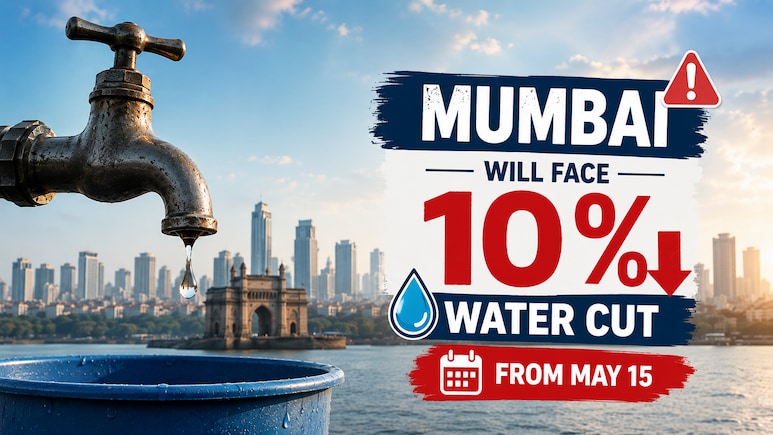
Brihanmumbai Municipal Corporation (BMC) will implement a 10% water cut across the city from May 15. The civic body is implementing the precautionary measure as levels in the lakes supplying water to the city have dipped.
???? बृहन्मुंबई महानगरात शुक्रवार, दिनांक १५ मे २०२६ पासून १० टक्के पाणी कपात
— माझी Mumbai, आपली BMC (@mybmc) May 11, 2026
???? जलाशयांमधील पाणीसाठा घटल्याने खबरदारी म्हणून बृहन्मुंबई प्रशासनाचा निर्णय
???? सर्व नागरिकांनी पाण्याचा काटकसरीने वापर करण्याचे आवाहन#MyBMCUpdates pic.twitter.com/PjpwgH3lQL
The water cut will also be imposed in Thane city, Bhiwandi-Nizampur Municipal Corporation, and other areas which receive BMC supply.
Also Read | Layoffs Are Rising In Tech, But These Skills Are Helping People Unlock Better Pay
Why Is Mumbai Facing Water Cut?
The city's drinking water needs are met through seven key lakes: Upper Vaitarna, Modak Sagar, Tansa, Middle Vaitarna, Bhatsa, Vehar and Tulsi. Collectively, these reservoirs hold up to 14.47 million lakh litres of water.
According to figures recorded on Monday, the available stock had reached 3.40 million lakh litres, or 23.52% of the total storage capacity. By comparison, water reserves on the same date last year were recorded at 20.26%, whereas in 2024 they had slipped to just 14.73%.
Authorities decided on the measure after the state water resources department recommended a controlled reduction in supply to help conserve reserves over a longer duration.
The BMC advisory was issued amid IMD forecasts suggesting below-average rainfall this monsoon season because of the El Nino phenomenon. Similar conditions were observed in 2015 and 2023, when the region experienced lower rainfall during the peak monsoon months along with higher temperatures.
BMC said Mumbai will receive an additional 1.5 lakh million litres of water from the reserve stock at Bhatsa Dam, along with another 90,000 million litres drawn from Upper Vaitarna Dam reserves.
ALSO READ || Mumbai Local Trains Get Upgraded Signal System For Error-Free Operations
Guidelines to Prevent Water Wastage: BMC
Some of the tips suggested by the BMC to conserve water include:
- Adopt water-saving habits in daily life to prevent wastage.
- Take only as much water as needed in a glass for drinking. Use a bucket instead of a shower for bathing to save significant amounts of water. Avoid keeping the tap running while brushing teeth or shaving.
- Do not leave taps running while doing household chores; use water in a container instead.
- To wash vehicles, use a bucket and a wet cloth instead of a hosepipe. Clean floors, galleries, and stairs with a damp mop instead of washing them with running water. Do not throw away "stale" water from the previous day.
- Run the washing machine only with a full load of clothes to reduce water consumption.
- Install water-saving nozzles or aerators on taps and washbasins. These are easily available and can save up to two-thirds of water. Hotels and restaurants should also implement this.
- In restaurants/hotels, serve water only when requested by the customer or provide bottled water to prevent full glasses from being wasted.
- Check plumbing and pipes in all homes and housing societies. Repair leaks immediately to prevent wastage and contamination.
- Ensure that overhead water tanks do not overflow while filling.
- Commercial and industrial establishments with high water usage must adopt water-saving work processes.
As per a Times of India report, a BMC official said, “Every year, we plan and account for the water stock to last till July 31 as we expect rainfall in the months of June and July. However, this year we have accounted for August 31, as rains may be delayed due to the El Nino and Indian Ocean Dipole conditions.”
“If rains are delayed or erratic, we have to ensure that the water stock lasts. The 10% water cut is being implemented as per the directions of the state government. But despite the precautionary measure, we don't expect much of an impact, as ours is a coastal region,” the official added.
Essential Business Intelligence, Sharp Market Insights, Practical Personal Finance Advice, Daily Fuel, Gold and Silver Prices and Latest Stories — On NDTV Profit.