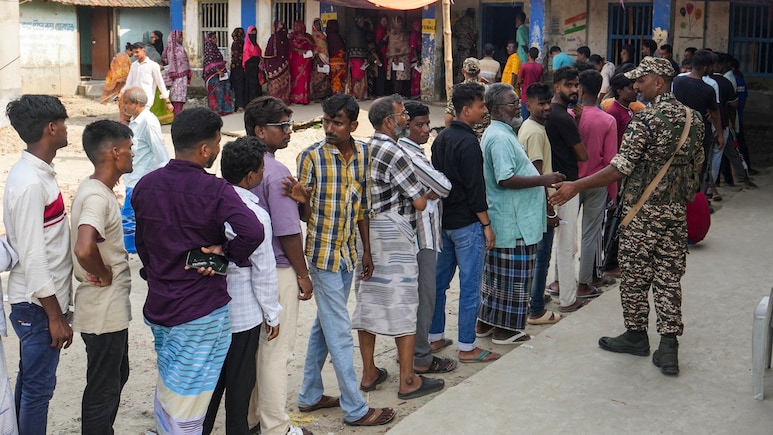
Polling for Phase 1 of the 2026 West Bengal Assembly elections concluded on Thursday across 152 constituencies, covering a politically crucial stretch of the state and setting the tone for the second and final phase of voting scheduled for April 29.
Phase 1 constituencies saw a record turnout of 91.4%, registering their highest-ever voter turnout since Independence, Chief Election Commissioner Gyanesh Kumar announced on Thursday.
ALSO READ | 'Highest Since Independence': West Bengal, Tamil Nadu Assembly Elections See Record Voter Turnout
The contest is being closely watched as Chief Minister Mamata Banerjee seeks another term for the ruling Trinamool Congress (TMC), while the Bharatiya Janata Party (BJP) looks to widen its footprint after emerging as the principal opposition in 2021. Official counting of votes for all 294 seats will take place on May 4.
The opening phase covered key battleground regions including North Bengal, Jangalmahal, parts of south Bengal and several border districts, areas that have historically produced mixed mandates and often shape the broader electoral narrative, as per ECI data.
These constituencies feature a blend of urban, semi-urban, rural, tribal and minority-dominated seats, making them central to all parties' strategies.
According to Election Commission data, 1,478 candidates were in the fray in Phase 1. The TMC fielded incumbents and local heavyweights, banking on welfare schemes and governance delivery.
The BJP campaigned aggressively on issues of law and order, corruption and employment, while the Congress-Left alliance sought to revive its relevance by focusing on price rise, unemployment and rural distress. Smaller regional outfits and independents are also in the contest in several pockets.
Security Deployment And Monitoring
The Election Commission mounted an extensive security and surveillance exercise for the first phase.
More than 8,000 polling booths were identified as “super sensitive”, while 55 constituencies were categorised as expenditure-sensitive to prevent inducements and monitor campaign spending, ECI told.
Central forces, state police personnel, micro-observers and webcasting systems were deployed widely. Enforcement agencies also reported seizures of cash, liquor, drugs and freebies during the campaign period.
Early trends suggested brisk participation in many districts despite scattered complaints of malfunctioning EVMs, long queues and isolated incidents of clashes between rival party workers, reports said. Authorities said polling was largely peaceful overall and continued under tight security arrangements.
When Will Exit Polls Be Released?
Under Section 126A of the Representation of the People Act, the publication or broadcast of exit polls is prohibited until polling in all phases of the election is completed.
Since West Bengal votes in two phases, exit polls can only be released after voting concludes on April 29 evening.
Hence, Exit polls will be released after the second phase of voting in Bengal. The voting for phase two will conclude around 6 p.m., after which broadcasters will start releasing the figures from 7 p.m. onwards.
What Is an Exit Poll? How Is It Calculated?
An exit poll is a post-voting survey conducted by polling agencies in which voters are asked, after leaving polling stations, which party or candidate they supported.
Responses are collected from a sample of voters across selected constituencies and then weighted using factors such as region, gender, caste, age, rural-urban mix and past voting patterns.
ALSO READ | India Simplifies Tourist Visa Rules For Chinese, Hong Kong Citizens After 5 Years
Based on this sample data, agencies estimate likely vote share and seat projections.
Exit polls are forecasts, not official results, and the final outcome can differ from the actual count declared by the Election Commission.
Essential Business Intelligence, Continuous LIVE TV, Sharp Market Insights, Practical Personal Finance Advice and Latest Stories — On NDTV Profit.