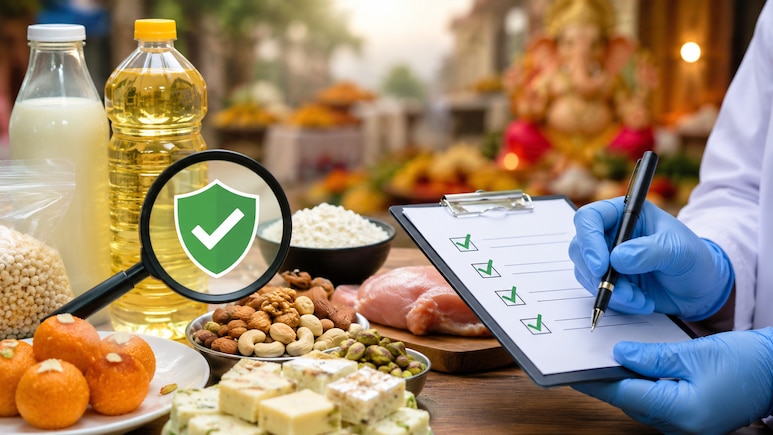
Maharashtra Food and Drug Administration (FDA) Commissioner Tukaram Mundhe has announced a year-round food safety plan aimed at curbing adulteration of high-risk food items during festivals across the state.
Speaking at a press conference, Mundhe said the FDA will no longer issue separate temporary orders for individual festivals. Instead, a permanent framework and an annual inspection calendar will guide food safety checks from January to December.
The plan categorises festivals into three tiers. Tier 1 covers major statewide celebrations such as Ganeshotsav, Navratri, Christmas and Eid. Tier 2 includes regional festivals such as Makar Sankranti, Holi, Gudi Padwa, Ashadhi, Dahi Handi, Kojagiri and Tulsi Vivah. Tier 3 covers local deity festivals, yatras, palkhis and urs.
Also Read | Layoffs Are Rising In Tech, But These Skills Are Helping People Unlock Better Pay
According to Mundhe, enforcement will begin 21 days before a festival and continue for 30 days after it ends, with inspections carried out in four phases.
The FDA will focus on 11 high-risk food categories, including fasting foods, milk and dairy products, meat, edible oils, dry fruits and bakery products. Officials will also monitor the reuse of frying oil and conduct checks at large community meals such as Mahaprasads and Iftar gatherings.
VIDEO | Mumbai: Maharashtra FDA, under Commissioner Tukaram Mundhe, issues a permanent festival implementation calendar with a standing order on food safety measures to be taken during all festivals and religious observances throughout the year. pic.twitter.com/C449yFVEaq
— Press Trust of India (@PTI_News) September 3, 2026
Festival-related demand for products such as sweets, mawa, paneer, milk, ghee and dry fruits often creates opportunities for adulteration, Mundhe said. The FDA will therefore risk-map vulnerable areas and alert testing laboratories in advance.
The second phase of enforcement will target production centres, mills and mawa godowns, while inspections will be tracked online and legal action will be expedited wherever violations are detected.
The FDA will also monitor the production and supply of fasting foods such as bhagar, kuttu, sabudana and rajgira, particularly around festivals such as Mahashivratri. Priority inspections will be given to products and ingredients vulnerable to fungal or mould contamination.
To tackle milk adulteration, officials will track and inspect supply vehicles during early-morning transportation routes. Ahead of Eid, slaughterhouses will face extensive inspections, while meat, water and ice, including ice used for ice golas, will also be checked.
ALSO READ | Tukaram Mundhe's Loose Oil Ban Crackdown Put On Hold, Traders Get Respite From FDA Action
Mundhe said only pure silver foil will be permitted for decorating sweets, with action against synthetic or adulterated alternatives.
Organisers of mass community meals, including Mahaprasads and Iftar events, will also be required to inform the authorities at least seven days in advance. This will allow food safety officers to inspect the venue and food arrangements before the event.
The Maharashtra FDA has adopted a zero-tolerance approach under the new framework, with the aim of replacing reactive festival-time checks with continuous, planned food safety enforcement.
Essential Business Intelligence, Sharp Market Insights, Practical Personal Finance Advice, Daily Fuel, Gold and Silver Prices and Latest Stories — On NDTV Profit.