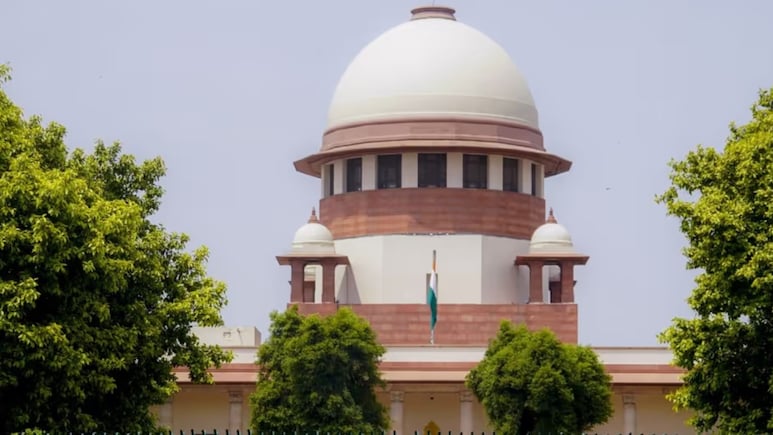
In a significant order, the Supreme Court on Wednesday quashed the Centre's 2021 Office Memorandum creating a mechanism for granting retrospective environmental clearances (ECs) to projects that had commenced work without obtaining prior environmental approval.
A bench comprising Chief Justice Surya Kant and Justices Joymalya Bagchi and Vipul M Pancholi, in its unanimous verdict, also gave some leeway to the government and held that the judgement will apply prospectively and the projects granted green nod earlier will remain undisturbed.

-
 Indian Markets Turning Corner After Two Tough Years, Says Sandeep Tandon
-
 NDTV Profit Ignite 2026: Experts See Opportunity In Equities, Stay Bullish For Long-Term
-
 Buy Right, Sit Tight Does Not Work for Individual Stocks, Says Dinshaw Irani
-
 'Worst Is Behind': Quant MF Sees Market Bottom, Flags 'Extreme Euphoria' In Midcaps
-
 India's Mutual Fund Industry Could Become A $1 Trillion Opportunity, Say Fund Managers
-
 'Foreign Investors Are Baraatis': Raamdeo Agrawal's Take On LTCG Tax
-
 Stay Invested Through Market Cycles: Raamdeo Agrawal at NDTV Profit Ignite
-
 Ramesh Damani Remains Bullish On India For Next 20-30 Years, Sees Bargains Amid Market Weakness
-
 CAS Came After A Long Consultation Process: SEBI Chairman Tuhin Kanta Pandey AT NDTV PROFIT IGNITE
-
 Aim To Cut FPI Onboarding Time From Mth To Five Days: SEBI Chairman Tuhin Kanta Pandey AT NDTV PROFI
The bench reaffirmed that prior ECs are the governing rule under the environmental framework and projects cannot ordinarily commence operations first and seek approval later.
Also Read | Layoffs Are Rising In Tech, But These Skills Are Helping People Unlock Better Pay
The bench, however, held that the Centre may, in exceptional circumstances and in the larger public interest, introduce a limited, time-bound amnesty scheme through a valid statutory notification.
It said such a mechanism cannot be created through an executive office memorandum or be allowed to operate as a permanent route for regularising violations.
The bench said that the top court, while exercising its power under Article 142 of the Constitution, can grant post-facto EC to projects if it deems fit.
On April 1, the top court had reserved its verdict on a batch of pleas, including review petitions, related to the granting of retrospective environmental clearances to projects found violating green norms.
(This story has not been edited by NDTV staff and is auto-generated from a syndicated feed.)
Essential Business Intelligence, Sharp Market Insights, Practical Personal Finance Advice, Daily Fuel, Gold and Silver Prices and Latest Stories — On NDTV Profit.