India's neighbors are seeking additional fuel from New Delhi as the war in the Middle East curtails access to energy supplies from the Persian Gulf, giving Asia's third-largest economy an opportunity to build goodwill across the region.
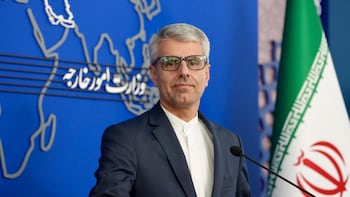
India is a major supplier of refined petroleum products to neighboring countries. Speaking at a press conference on Thursday, Ministry of External Affairs spokesperson Randhir Jaiswal said New Delhi is reviewing requests for additional fuel supplies from several nations, including Sri Lanka, Bangladesh and the Maldives. “These are being examined taking into account our own energy requirements and availability,” he said.
Bangladesh's government, in office for only a few weeks, is facing the prospect of acute fuel shortages if the crisis persists and has asked India to supply additional diesel beyond the 180,000 tons it receives annually under an existing contract.
Nepal has asked the state-run Indian Oil Corporation — India's largest refiner — to increase its monthly supply of liquefied petroleum gas. The Himalayan nation requested an additional 3,000 tons of LPG but was told that only the contracted volumes would be delivered for now, said Manoj Kumar Thakur, deputy director of the state-run Nepal Oil Corporation. Nepal currently receives about 48,000 tons of LPG a month from IOC under its existing agreement, he said.
Also Read | Layoffs Are Rising In Tech, But These Skills Are Helping People Unlock Better Pay
South Asian nations are among the most vulnerable to energy import disruptions. The effective closure of the Strait of Hormuz has left governments and companies across the region grappling with limited stockpiles and few alternative supply routes.
While India has yet to approve the additional fuel requests, its position as the world's fourth-largest refiner gives it room to respond to the crisis in a way that deepens regional ties and reinforces its standing as a dependable partner in South Asia.
“I am sure it will get India goodwill as all countries are struggling,” said Ashok Malik, a New Delhi–based partner at The Asia Group, a business consulting firm. As the largest country in the region, India has stepped in to help meet fuel demand in the past, he said.
Nepal, wedged between India and China, relies entirely on India for its fuel supplies. Panic buying in the nation has led households to stockpile cooking gas cylinders, prompting authorities to curb distribution, Thakur said. “The regular LPG cylinder is 14.2 kilograms, and from today, we have decided to reduce it to 7.1 kilograms,” he said.
Bangladesh, which imports more than 80% of its energy from the Middle East, imposed austerity measures last week, with the newly elected government shutting fertilizer plants and even curbing decorative lighting to conserve power. The push for additional supplies comes as New Delhi and Dhaka begin to mend previously strained relations.
“We have requested them to increase the oil supply slightly considering the crunch time,” said Bangladesh Energy Minister Iqbal Hassan Mahmood after meeting the Indian High Commissioner in Dhaka on Wednesday.
While India's energy ties with its neighbors are robust, it may not be able to resolve all of their supply challenges, Malik cautioned. Countries are also exploring alternative options.
Sri Lanka's Foreign Minister Vijitha Herath held an “emergency meeting” on Friday with Russia's ambassador in Colombo to discuss oil purchases under a temporary US sanctions waiver, according to a ministry statement.
India, which imports nearly 90% of its annual crude requirements, has been seeking alternative supply routes to offset the disruptions. Earlier this week, the country ordered about 30 million barrels of Russian oil after obtaining a waiver from the US and has been in negotiations with Iran for a safe passage for more than 20 tankers.
Essential Business Intelligence, Sharp Market Insights, Practical Personal Finance Advice, Daily Fuel, Gold and Silver Prices and Latest Stories — On NDTV Profit.