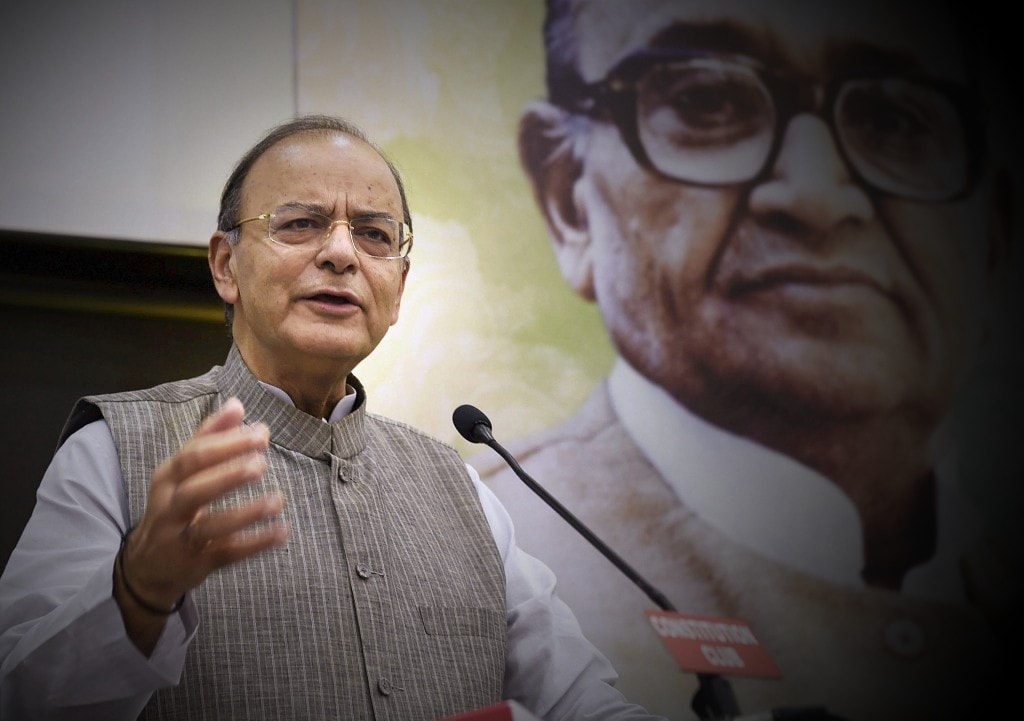
Days after the Supreme Court held privacy as a fundamental right, Finance Minister Arun Jaitley said a balance will now have to be struck between the need for transparency and privacy.
He said that the apex court's ruling cannot be cited to shield information on suspicious cash spending, including by politicians.
Speaking about what constitutes privacy, he asked if a bureaucrat can deny information about jewellery purchased by his wife under the shield of the lady's privacy.
Similarly, he asked if a politician contesting elections can use the garb of privacy to deny information about family wealth.
The Supreme Court's verdict exempts national security, crime detection and dissipation of social benefits from the purview of privacy, Jaitley added.
"I believe these three are examples, these are not conclusive. They are only illustrative," he said, adding that steps taken by the government to augment revenue realization cannot be restricted in the name of privacy.
The Supreme Court in its verdict last week held right to privacy as a fundamental right.
"For two decades we lived in an era of transparency, and court judgments were also in that direction. Now privacy has been added to transparency, hence, keeping personal things secret has become a fundamental right," Jaitley said in a lecture on transparency in political funding in New Delhi.
He said the big issue that will emerge now is how to balance transparency and privacy. “Is there a contradiction (between the two)?... So a balancing, reconciliation between the two is necessary.”
Also Read: The Right To Privacy Is Now Public
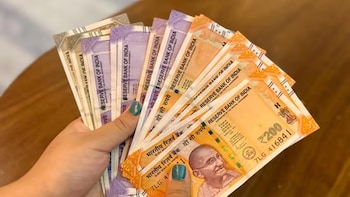
Jaitley said if somebody says he will spend Rs 1 crore in cash, but that the government has no right to know about it as it violates his privacy, then he is being dishonest to the country.
You keep violating tax laws in the name of privacy... So transparency and sharing information becomes important in the interest of revenue generationArun Jaitley, Finance Minister
With regard to political funding, Jaitley said he had announced the electoral bonds scheme to cleanse the system. "We are trying to finalise that," he said.
In a major move aimed at promoting transparency in political funding, the Finance Minister had announced capping of anonymous cash donations to political parties at Rs 2,000 and introduced electoral bonds in this year's Budget speech.
As per the electoral bond mechanism announced in the budget, the proposed bonds will resemble a promissory note and not an interest-paying debt instrument. They will be sold by authorised banks and can be deposited in notified accounts of political parties within the duration of their validity.
Also Read: The Privacy Judgement: An Institutional Response
Essential Business Intelligence, Sharp Market Insights, Practical Personal Finance Advice, Daily Fuel, Gold and Silver Prices and Latest Stories — On NDTV Profit.