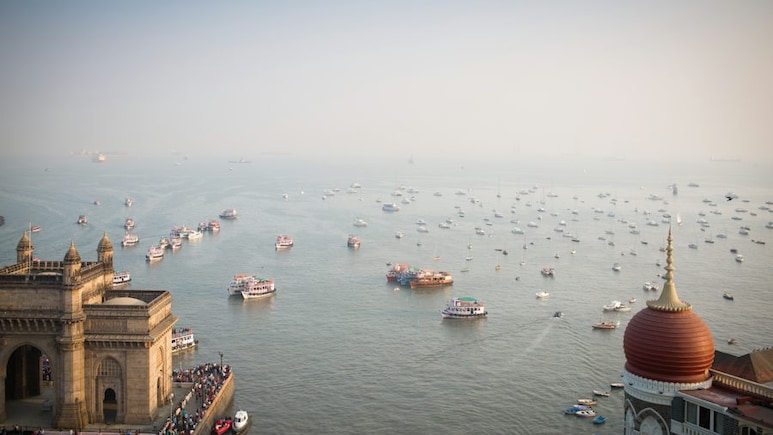
Mumbai has climbed from the fifth to the third most polluted city in the world in just a week, with deteriorating air quality raising concerns over the health risks for residents.
The deterioration has increased concerns about the health risks faced by residents across the city, particularly children, older people and individuals suffering from asthma and other respiratory conditions.
According to global monitoring body IQAir, the city has risen from fifth to third place on its list of 122 international cities, recording a "Unhealthy" AQI reading of 166. Kuala Lumpur led the global air pollution list with an AQI of 192, closely followed by Kolkata in second place at 170. PM 2.5 was flagged as the primary pollutant across all three top Indian cities.
Also Read | Layoffs Are Rising In Tech, But These Skills Are Helping People Unlock Better Pay
Experts say Mumbai's worsening pollution is being driven by a combination of weather conditions and urban emissions. Post-monsoon weather changes, rising temperatures and slow winds can keep pollutants trapped close to the ground, allowing harmful particles and gases to build up, according to The Indian Express.
The rising pollution levels directly lead to the ongoing El Niño, a natural climate phenomenon where surface waters in the central and eastern equatorial Pacific Ocean become abnormally warm.
ALSO READ: Got A Stock Tip On WhatsApp? Nithin Kamath Says Ask ChatGPT Or Claude First
On Monday, the Central Pollution Control Board (CPCB) reported Mumbai's overall AQI at 114 in the "Moderate" category. However, 13 of the city's 20 monitoring stations recorded higher levels, with Navy Nagar (Colaba) peaking at 158, followed by BKC (156), Andheri East (145), Worli (143), and Malad (138), reported The Indian Express.
Construction dust, vehicle emissions and waste burning are also among the sources contributing to Mumbai's air pollution. Ground-level ozone, which forms through chemical reactions involving pollutants in the presence of sunlight, can further affect air quality and pose risks to respiratory health.
Unfavourable meteorological conditions can intensify these sources of pollution, particularly in densely populated urban areas where traffic, construction and other human activities generate continuous emissions. When winds remain weak, pollutants can linger in the atmosphere for longer periods, worsening conditions for residents.
Civic authorities have been undertaking monitoring and mitigation measures aimed at controlling dust and reducing pollution. Sustained enforcement, improved public transport and measures to limit emissions from construction and other urban activities remain important to addressing the problem.
ALSO READ: No Long Hours: Why An Indian-Origin CEO Is Rethinking Silicon Valley's 9-9-6 Work Culture
The latest ranking underscores the challenge of managing pollution in a rapidly urbanising city, where emissions and weather conditions combine to influence the air residents breathe.
Essential Business Intelligence, Sharp Market Insights, Practical Personal Finance Advice, Daily Fuel, Gold and Silver Prices and Latest Stories — On NDTV Profit.