Mistry Firms Have To Wait Till April 17 To Know If They Have A Case Against Tata Sons
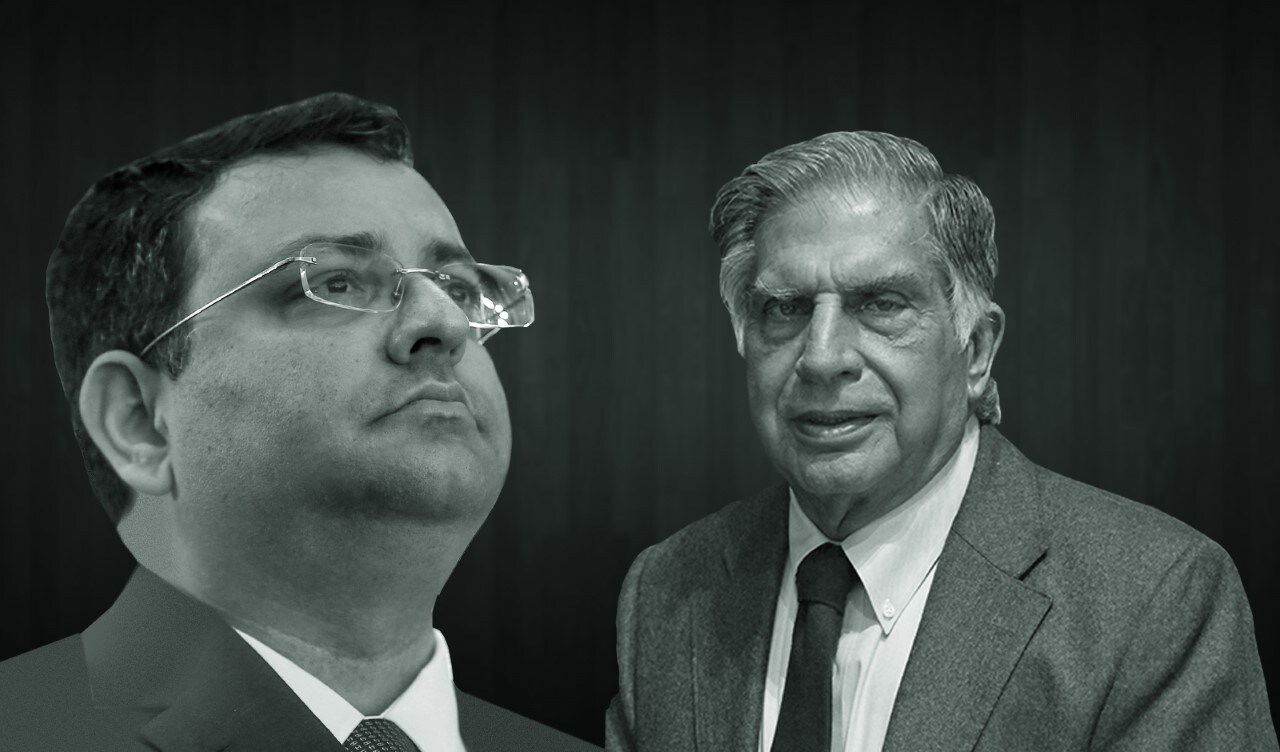
The two Cyrus Mistry family-promoted companies will know on April 17 if their suit alleging oppression and mismanagement against Tata Sons Ltd. will have its day in court. The Mumbai bench of the National Company Law Tribunal (NCLT ) heard both sides in a final round of arguments on Tuesday before reserving its order.
Mistry's Arguments
Aryama Sundaram, appearing for the two Mistry companies, and Janak Dwarakadas, appearing for Cyrus Mistry, argued that their case was deserving of a waiver of the threshold laid down in company law.
Section 241 of the Companies Act, 2013 permits only a party or group of parties who own ten percent or more of the total shareholding to bring a case of oppression and mismanagement.
The NCLT has already concluded that the two Mistry companies do not meet that threshold.
Sundaram argued that the proviso under Section 244 (4) of the Companies Act, 2013, that grants the tribunal discretionary power to allow parties with less than 10 percent of the total shareholding to bring a case, should not be strictly interpreted as a proviso which can be invoked only in exceptional circumstances.
Dwarakadas added that there were only two real groups with a sizeable chunk of equity shareholding in Tata Sons; the Mistrys who constituted the minority with an 18 percent stake and Tata Trusts that owned 67 percent. Given this and the fact that the allegations of mismanagement and oppression made by the Mistrys are of a serious nature, a waiver is warranted, he argued.
Also Read: Tata-Mistry Dispute: Five Key Arguments At Company Law Tribunal
Tata Sons' Arguments
Senior lawyers Abhishek Manu Singhvi and Ravi Kadam arguing for Tata Sons urged the tribunal not to grant a waiver. Kadam argued that a proviso is subordinate to the main enactment and that it must not be used to defeat the purpose of the enactment, which looks to prevent unnecessary litigation. He added that a proviso was to be applied only under exceptional circumstances and that a compelling case had to be made out for the same.
Singhvi told the NCLT that apart from the complainant (Mistry) having to establish a prima facie credible case at least one of two other conditions have to be fulfilled, to warrant a waiver . Either the complainant had to satisfy the tribunal that that it had no other remedy in law, or establish there is an element of national or public interest in the matter. He argued that neither criteria has been met. The Mistry petition mentioned national and public interest but did not contain a single word to substantiate it, said Singhvi. He also pointed out that the Mistry camp had amended their petition on Tuesday to say that the NCLT was the most appropriate jurisdiction, which means that there are other legal options available to them.
Also Read: Autonomy Versus Protection: A Delicate Balance For NCLT In The Tata-Mistry Battle
-
Unhedged Position: Can India See An Indonesia-Style Time Correction?

The Nifty is trading below levels it first clocked in 2024. Is there, then, as I have suggested in the headline, potential that the current time correction drags on painfully for the next three-five, even ten years?
-
Navigating Friction And Energy Realities: An Analysis Of Marco Rubio's October Visit To India
Occurring at a critical juncture marked by stalled trade negotiations and escalating geopolitical pressures over global energy supplies, the visit offers a profound window into modern US-India relations.
-
India Exports Capital. Why Not Export Trusteeship?
The big question, then, is whether India can build an institution that global borrowers, investors, banks, and lawyers can trust, even without an Indian connection.
-
France's Economy & Politics Are In Crisis | The Reason Why
Let's look at how the French economy and politics evolved under Nicolas Sarkozy, Franois Hollande and Emmanuel Macron.
-
You May Inherit The Business. You Must Earn Its Credibility.
Succession tests the founder's ability to share authority as much as it tests the next generation's readiness to assume it.
-
Signing Deals Is One Thing; Making Them Work Is Another | The Week In Whys
Sometimes, things don't turn out as planned. Indian companies have lost some bids to rivals, some projects won't produce until 2030.
-
FOMC Wall, PERM Suspension, Hospital Stocks | Talking Points This Week
A PERM suspension would directly affect green-card sponsorship rather than H-1B visas, so the near-term earnings impact could remain relatively limited. The key question is whether this marks a new phase in US scrutiny of Indian IT.
-
Everything, Everywhere, All At Once: Dalal Street's Week To Forget | Joining The Dots
Visa curbs, a Starlink spat and cancer drug caps: what connects this week's shocks for Indian markets
-
India Is Going Abroad For Critical Minerals. But It May Take Years To Pay Off | The Reason Why
Although India's steps are in the right direction, they remain modest compared with India's growing dependence.
-
When Everyone Has AI, What Gives You An Edge?
India's young workforce is entering an uncertain world of work where powerful AI tools are becoming widely accessible. The advantage will belong to those who combine deep expertise with digital fluency, and the distinctly human capabilities that technology cannot manufacture.