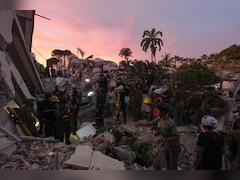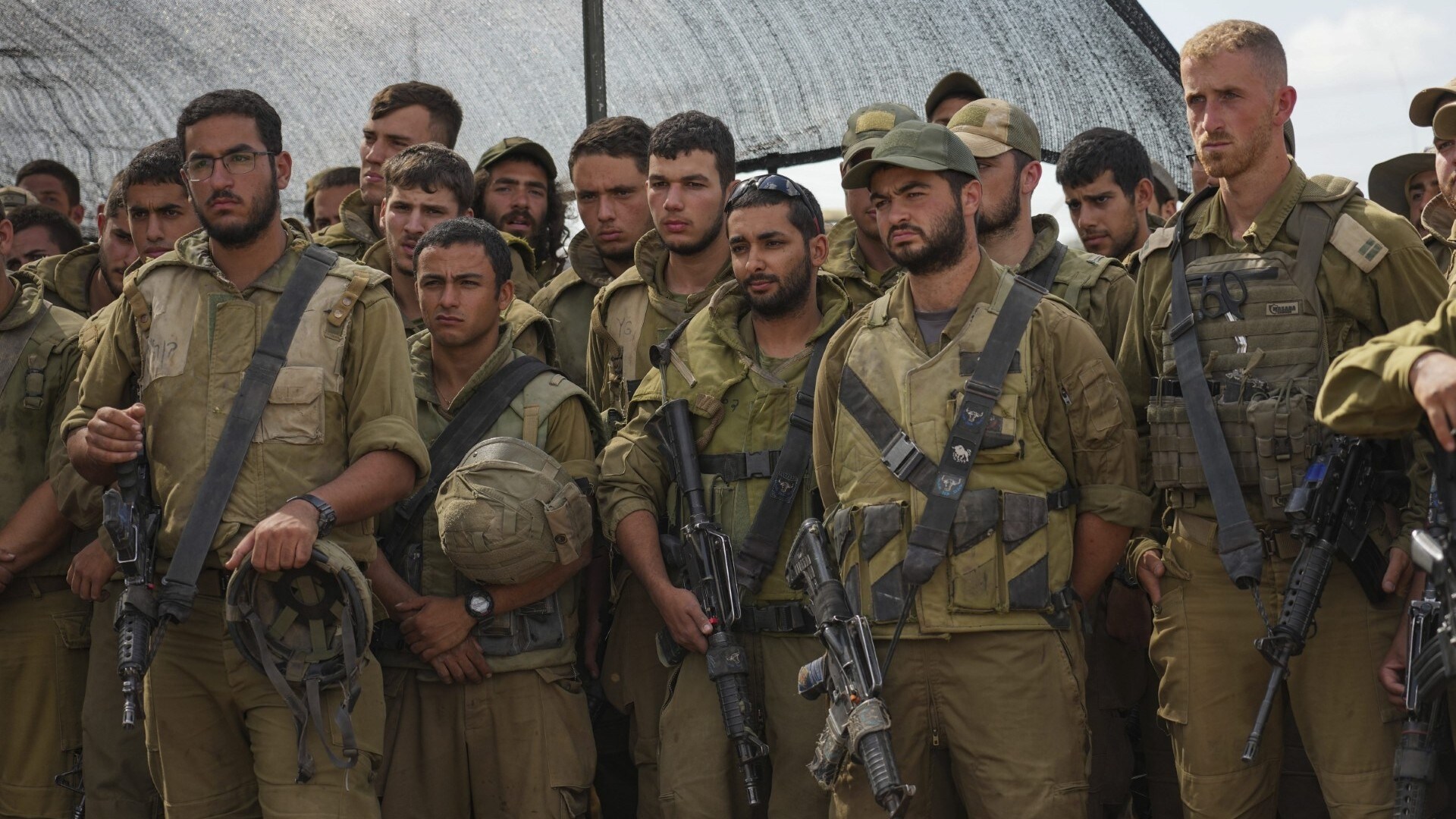
(Bloomberg) -- The Israeli military says it is engaged in its fiercest fighting in Gaza yet in the southern city of Khan Younis, where it hopes to kill or capture Hamas leaders presumed to be hiding in tunnels with hostages.
In a briefing, an Israeli military intelligence officer said that of Hamas' five fighting brigades, Israeli troops have killed or captured most of the commanders of two of them, both based in the north of Gaza.
The focus is now on the Khan Younis brigade, where Rear Admiral Daniel Hagari, chief military spokesman, said in a press conference last night that troops have “killed hundreds of terrorists and arrested more than 300 people suspected of terror activities.” Hagari also said that for the first time, troops are now fighting in the tunnel network that runs beneath Gaza.
Khan Younis is Gaza's second-largest city and is packed with tens of thousands of people. It is strategically important as it's where Hamas leader Yahya Sinwar and military chief Mohammed Deif are from, and where they're believed by Israel to be hiding.
Four months in, with such leaders still at large and much of Hamas's military infrastructure still intact, fighting in Gaza has been tougher than many Israeli military officials anticipated. Roughly 220 Israeli soldiers have been killed. But leaders insist they are making significant progress.
The intelligence officer said about 9,000 Hamas fighters have been killed out of an estimated army of 35,000. On Monday, Defense Minister Yoav Gallant told soldiers something similar, saying, “A quarter of the Hamas terrorists have been killed and at least another quarter wounded.”
More than 26,000 people have been killed in the Gaza war so far, with the vast majority being women and children, according to Hamas. It is not possible to independently verify any of these numbers.
The intelligence officer said Israel is still many months away from achieving its goals, which include capturing or destroying munitions and weapons, and rendering Hamas military bases and tunnels inoperative. Accomplishing that will take all of 2024 — and perhaps longer, he said.
In addition, the command structure of the two remaining brigades, one in the center of Gaza and the other in the southern city of Rafah, are still intact, he said. Each brigade is led by between 70 and 150 commanders, and killing or capturing them is vital to dismantling these units, he added.
The belief that destroying Hamas, which is labeled a terrorist organization by the US and European Union, will not happen quickly is one reason why Israeli officials are pushing back against a long-term or permanent cease-fire in exchange for the release of hostages.
Prime Minister Benjamin Netanyahu has maintained that nothing less than the total defeat of Hamas is acceptable after the Oct. 7 assault, in which 1,200 Israelis were killed and 240 were abducted. That prompted the Israeli counterattack, which has also displaced nearly 1.9 million people, according to the UN.
If Hamas isn't eliminated, Netanyahu said at a press conference on Saturday, “the next massacre is only a question of time.” He plans to almost double the defense budget this year and says that it will stay high for decades.
Khan Younis is seen as something of a crown jewel for Hamas, noted Lt.-Col. Richard Hecht, a military spokesperson, adding that its significance is evident in the amount of ammunition troops have found there as well as the extent of its tunnels and military infrastructure.
One of the most confounding issues for Israel is that Hamas continues to fire rockets into the country, although far fewer than before. A barrage was launched on Monday, with some reaching Tel Aviv. While residents took cover in bomb shelters, they were intercepted by the Iron Dome system.
At a press briefing earlier this month, former national security adviser Yaakov Amidror described these attacks as the result of a decentralized strategy. Citing “a huge amount of information on paper and computers taken from Hamas headquarters,” Amidror outlined a system in which hundreds of militants in Gaza are responsible for overseeing between five and seven camouflaged launch sites each, which they check on every few months.
When given an order to attack, he said, a militant will bring a timed battery-powered detonator covered in something like vegetables to a launcher, connect it and walk away. Half an hour later, as many as 15 missiles will be fired.
With Israel's military developing a clearer picture of Hamas and its infrastructure, Amidror said that officials now know that most of the organization's weapons are produced inside Gaza, not smuggled in. “They're more advanced and bigger than we'd realized,” he said of the armaments.
A lieutenant colonel involved in the Khan Younis ground operation also said that as soldiers push south they are finding aboveground arms manufacturing facilities, training and command centers as well as what he called “operational apartments.” Speaking by phone, he said such dwellings are used as storehouses for weapons and temporary bases for Hamas soldiers.
The fighting in Khan Younis is often house-to-house, he said, involving targeted operations on small Hamas cells. Many of the battles have been over control of the group's extensive underground tunnel network, which Israeli officials have also described as far larger and more sophisticated than they'd previously realized.
While Israel encouraged hundreds of thousands of civilians to move south during its attacks on northern Gaza, there are fewer places left for Palestinians to go. And troops aren't permitting civilians back into the northern part of the strip.
Amidror, the former national security adviser, said that the military now plans to move ground troops back into Israel, and then deploy them for quick raids in Gaza over the coming months.
“The whole of the coming year will be dedicated to low-intensity cleaning out of Gaza, and if it takes another six months into 2025, we can do it,” he said.
The other reason to bring troops back to Israel, he said, is to let them rest and retrain in case fighting breaks out on Israel's other front — its northern border with Lebanon.
More stories like this are available on bloomberg.com
©2024 Bloomberg L.P.
Essential Business Intelligence, Sharp Market Insights, Practical Personal Finance Advice, Daily Fuel, Gold and Silver Prices and Latest Stories — On NDTV Profit.