
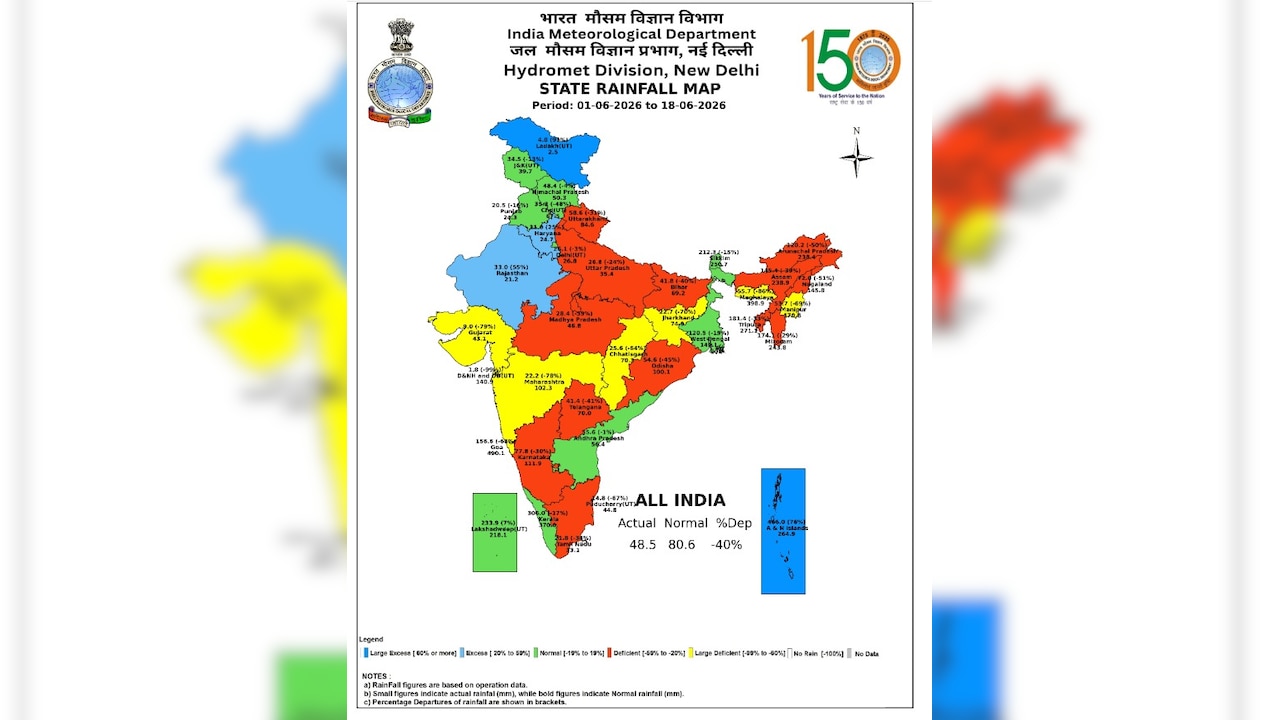
Nationwide monsoon rainfall was now nearly 40% below normal as of Wednesday, according to the latest data from the India Meteorological Department (IMD). There are concerns that the lackluster rains are likely to persist, driven by the El Nino weather pattern. This poor monsoon start threatens vital crops like rice and soybeans by disrupting the early planting season.
ALSO READ: Will It Rain In Mumbai Today? IMD Explains Reasons Behind Slow Monsoon Progress In Maharashtra
The southwest monsoon season runs from June to September and is key for sectors such as agriculture. However, this year its momentum has been weakened due to El Nino, which is expected to grow one of the strongest on record.
Also Read | Layoffs Are Rising In Tech, But These Skills Are Helping People Unlock Better Pay
El Nino is a climate pattern driven by unusually warm Pacific Ocean waters that typically suppress rainfall over parts of Asia, including India. Weather models are currently predicting abnormal dryness to persist in India through July and August, particularly over its northwest and central regions, Bloomberg reported.
Satellite images and IMD data confirm that the southwest monsoon remains stalled near the south Konkon region. Core agricultural regions such as Maharashtra, Gujarat, Madhya Pradesh and Rajasthan appear almost cloud-free in the images. This weakening monsoon activity has raised serious concerns about the rain-fed farming belt.
Overall, the country has received just 42.6 mm of rainfall against the normal 72.2 mm between June 4 and 18, according to the IMD data. It showed that central India is facing the worst hit with a 67% monsoon deficit. East and northeast regions are short by 42%, while the southern peninsula is facing a deficit of 22%. Northwest India is currently closest to normal, experiencing 6% drop in monsoon rains.
Why Is Monsoon Stalled?
Scientists have flagged five reasons which are hindering the monsoon's progress this year. Conditions over Arabian Sea are unfavourable, while low-level southwesterly winds and cross-equatorial currents over the western Indian Ocean have severely weakened.
Additionally, a weak Madden-Julian Oscillation is failing to push rain-bearing clouds northward. These factors, coupled with the impact of El Nino, have resulted in weakened monsoon momentum, heavily threatening the vital kharif crops.
There may be slight improvements to rainfall next week, helped by moist southwesterly winds that will allow the monsoon to continue advancing north, but broader conditions remain unfavorable beyond that period, Takahisa Nishikawa, senior decision support meteorologist at Atmospheric G2, told Bloomberg.
Essential Business Intelligence, Sharp Market Insights, Practical Personal Finance Advice, Daily Fuel, Gold and Silver Prices and Latest Stories — On NDTV Profit.