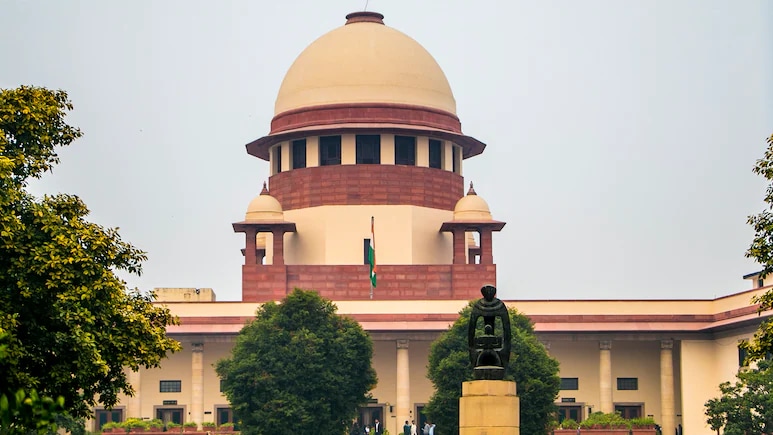
The Supreme Court of India has questioned the constitutional validity of laws that disqualify individuals with more than two children from contesting local body elections, observing that such restrictions may no longer be relevant in the context of changing demographic trends.
Referring the issue to a larger bench, the apex court indicated that the provisions could infringe citizens' right to reproductive autonomy, which forms part of the right to life and personal liberty under Article 21 of the Constitution.

-
 Indian Markets Turning Corner After Two Tough Years, Says Sandeep Tandon
-
 NDTV Profit Ignite 2026: Experts See Opportunity In Equities, Stay Bullish For Long-Term
-
 Buy Right, Sit Tight Does Not Work for Individual Stocks, Says Dinshaw Irani
-
 'Worst Is Behind': Quant MF Sees Market Bottom, Flags 'Extreme Euphoria' In Midcaps
-
 India's Mutual Fund Industry Could Become A $1 Trillion Opportunity, Say Fund Managers
-
 'Foreign Investors Are Baraatis': Raamdeo Agrawal's Take On LTCG Tax
-
 Stay Invested Through Market Cycles: Raamdeo Agrawal at NDTV Profit Ignite
-
 Ramesh Damani Remains Bullish On India For Next 20-30 Years, Sees Bargains Amid Market Weakness
-
 CAS Came After A Long Consultation Process: SEBI Chairman Tuhin Kanta Pandey AT NDTV PROFIT IGNITE
-
 Aim To Cut FPI Onboarding Time From Mth To Five Days: SEBI Chairman Tuhin Kanta Pandey AT NDTV PROFI
ALSO READ | China's One-Child Policy Legacy: Elderly Dependants Now Outnumber Children For First Time
Also Read | Layoffs Are Rising In Tech, But These Skills Are Helping People Unlock Better Pay
According to Live Law, a Supreme Court bench comprising Justices P.S. Narasimha and Alok Aradhe made the observations while hearing a plea challenging the disqualification of a local sarpanch under Maharashtra's panchayat laws for having three children.
The court stayed the disqualification proceedings and decided to revisit its landmark 2003 ruling in Javed vs. State of Haryana, in which a three-judge bench had upheld the constitutional validity of the two-child norm for candidates contesting panchayat elections.
The bench observed that the reasoning behind the 2003 ruling, which was based on concerns over rapid population growth, may no longer hold relevance.
At the time, India's Total Fertility Rate (TFR) was around three children per woman. The country's demographic landscape has since changed significantly, with the TFR declining to 1.9, well below the replacement rate of 2.1. Consequently, concerns over unchecked population growth have diminished, while policymakers are increasingly focusing on the challenges posed by an ageing population.
The court also observed that penalising candidates for having larger families places them in an unfair predicament. It noted that such laws deny a section of citizens the opportunity to participate in political representation on grounds unrelated to their ability to serve in public office.
ALSO READ | Why SC Froze BMC Chief Ashwini Bhide's Salary
The bench further highlighted that the restrictions force individuals to make an unreasonable choice between expanding their families and participating in grassroots democracy.
Submissions before the court indicated that seven states have withdrawn the two-child policy, while 15 others never implemented it. However, Maharashtra, Gujarat, Assam, Odisha and Uttarakhand continue to enforce the restriction. A larger bench will now examine the policy's constitutional validity.
Essential Business Intelligence, Sharp Market Insights, Practical Personal Finance Advice, Daily Fuel, Gold and Silver Prices and Latest Stories — On NDTV Profit.