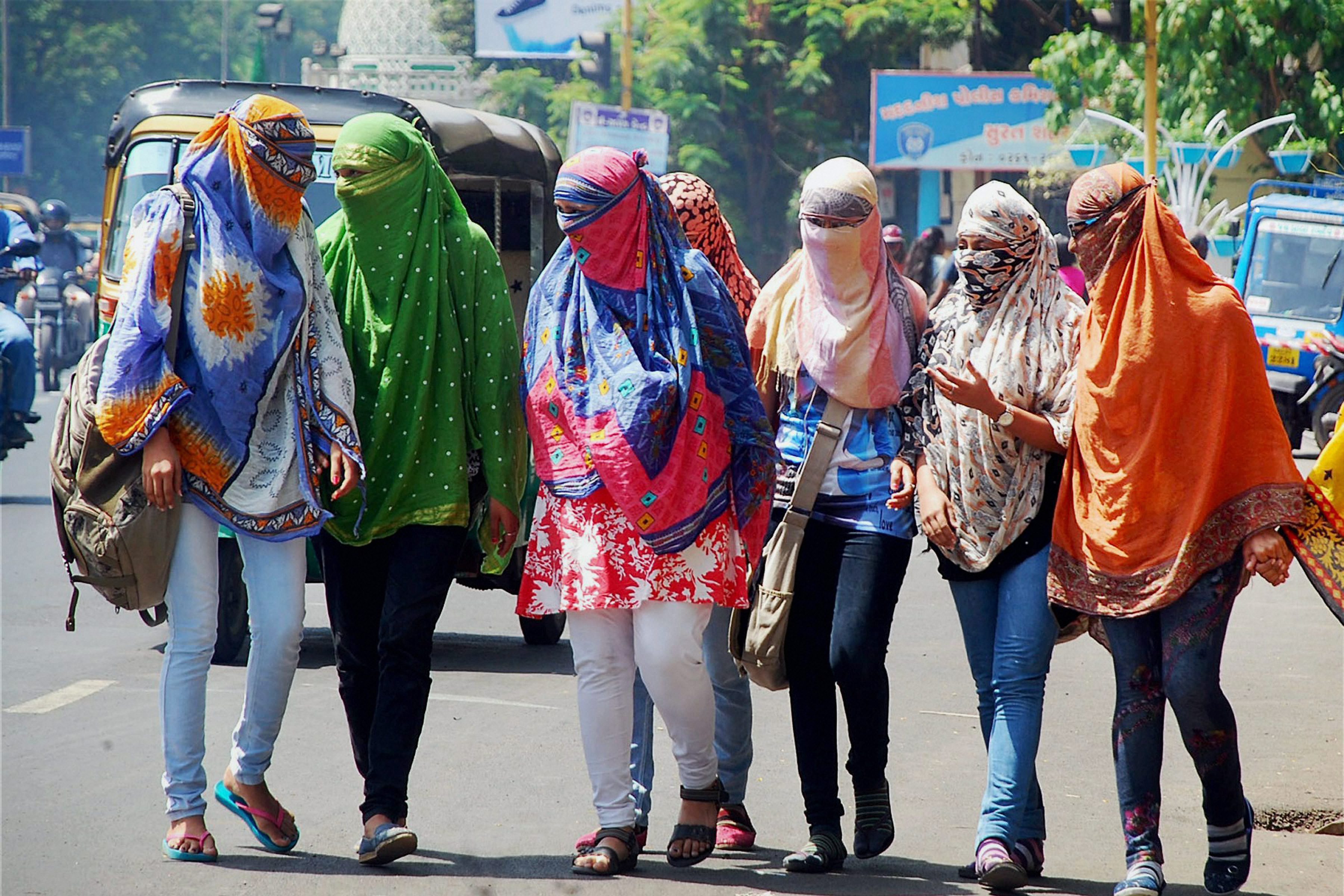
The year 2024 was the warmest on record in India since 1901, with the average minimum temperature settling 0.90 degrees Celsius above the long-period average, the Indian Meteorological Department said on Wednesday.
The annual mean temperature in 2024 was 25.75 degrees Celsius, 0.65 degrees above the long-period average.
The average maximum temperature stood at 31.25 degrees Celsius, 0.20 degrees above normal. The average minimum temperature was 20.24 degrees Celsius, 0.90 degrees above normal, according to IMD Director General Mrutyunjay Mohapatra.
Also Read | Layoffs Are Rising In Tech, But These Skills Are Helping People Unlock Better Pay
The year 2024 surpassed 2016, which had recorded a mean land surface air temperature 0.54 degrees Celsius above normal, making it the warmest year since 1901.
The average minimum temperature was the highest on record for July, August, September and October, and the second highest for February, the IMD chief said.
According to the European climate agency Copernicus, 2024 likely ended as the warmest year globally and the first with average temperatures 1.5 degrees Celsius above pre-industrial (1850-1900) levels.
According to a yearly review by two independent groups of climate scientists -- World Weather Attribution and Climate Central -- the world experienced 41 additional days of dangerous heat in 2024.
Mohapatra said the rise in minimum temperatures in 2024 was 'quite high'.
'Long-term data shows most parts of the country are witnessing a rising trend in minimum temperatures, particularly in post-monsoon and winter seasons,' he said.
The IMD said La Nina conditions, characterised by cooler ocean surface temperatures in the central Pacific Ocean and usually associated with colder winters in north India, were expected to develop in January but would be short-lived.
"It is unlikely to significantly impact the warming trend," an IMD scientist told PTI.
June 2023 marked the first instance of a monthly global temperature crossing the 1.5-degree threshold, a trend that persisted throughout the year, except for July 2024.
Under the Paris Agreement, a permanent breach of the 1.5-degree limit refers to sustained warming over 20-30 years.
Experts warn that the world is now entering a phase during which temperatures will consistently exceed this threshold.
The global average temperature has already risen by 1.3 degrees Celsius compared to the 1850-1900 baseline, driven by the rapid accumulation of greenhouse gases such as carbon dioxide and methane in the atmosphere.
Essential Business Intelligence, Sharp Market Insights, Practical Personal Finance Advice, Daily Fuel, Gold and Silver Prices and Latest Stories — On NDTV Profit.