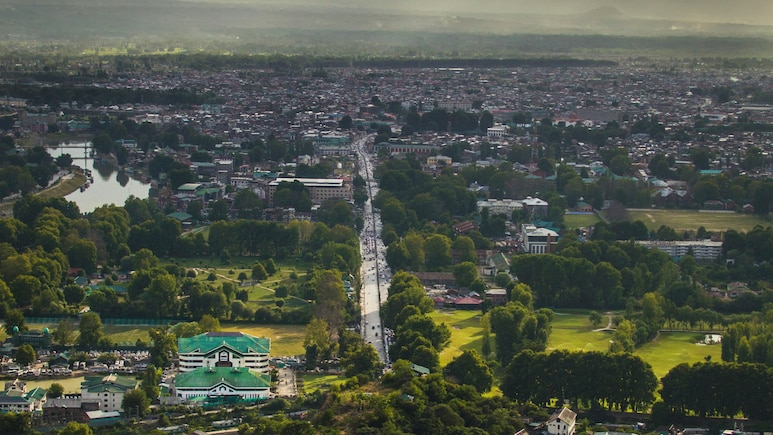
Srinagar, the summer capital of Jammu and Kashmir, known for its mountains, lakes and relatively clean Himalayan air, found itself at the top of an unwelcome global ranking on November 20. The Kashmir capital was named the world's most polluted city by third-party air quality monitoring platform AQI.in, which recorded an Air Quality Index (AQI) of 354.
However, government data painted a dramatically different picture. The Central Pollution Control Board recorded Srinagar's AQI at 59, placing it in the 'Satisfactory' category.
The stark difference between the two readings raises questions about the data being used to assess the city's pollution levels, even as winter sets in across the Valley.
Also Read | Layoffs Are Rising In Tech, But These Skills Are Helping People Unlock Better Pay
ALSO READ: India's 10 Most Polluted Cities: Bihar, West Bengal Dominate List; Saharsa Records AQI Of 498
According to AQI.in's live global rankings on November 20, Srinagar topped the list with an AQI of 354. Hisar in Haryana followed at 328, while Ludhiana and Amritsar recorded readings of 309 and 302, respectively. New Delhi stood ninth with an AQI of 277, while Gurugram was at 240.
AQI.in's dashboard showed Srinagar's reading at 2:51 pm, with PM2.5 concentrations at 191 micrograms per cubic metre and PM10 at 248 micrograms per cubic metre.
The difference in readings also warrants attention to the monitoring methods, stations and averaging periods used by the two platforms. AQI figures can vary depending on these parameters.
Srinagar's geographical location makes it particularly vulnerable to pollution during winter. Unlike cities situated on open plains, the Kashmir capital lies in a valley surrounded by mountains, which can restrict the movement of air under certain weather conditions.
Temperature inversion can make matters worse. During cold nights, the air near the ground cools rapidly, while warmer air above acts as a barrier, trapping pollutants closer to the surface.
The India Meteorological Department forecast generally dry weather between November 19 and 28. With little rainfall or snowfall, there are fewer opportunities for precipitation to wash pollutants out of the atmosphere.
ALSO READ: Delhi's Air Quality Remains 'Severe' As Chennai Nears 200; How Polluted Is Your City Today?
A study published in Science of the Total Environment has also linked low temperatures, weak winds and shallow atmospheric mixing to higher particulate pollution in the Kashmir Valley between November and January.
Vehicular emissions, construction activity, road dust, waste burning and diesel generators add to the pollution burden. Winter heating, which increases fuel consumption as temperatures fall, is another contributing factor.
AQI.in's historical data indicates a sharp deterioration in Srinagar's air quality. The platform recorded an AQI of 29 on November 13, before the reading surged to 402 on November 19. It stood at 354 on November 20.
Essential Business Intelligence, Sharp Market Insights, Practical Personal Finance Advice, Daily Fuel, Gold and Silver Prices, Watch Business News Live and Latest Stories — On NDTV Profit.