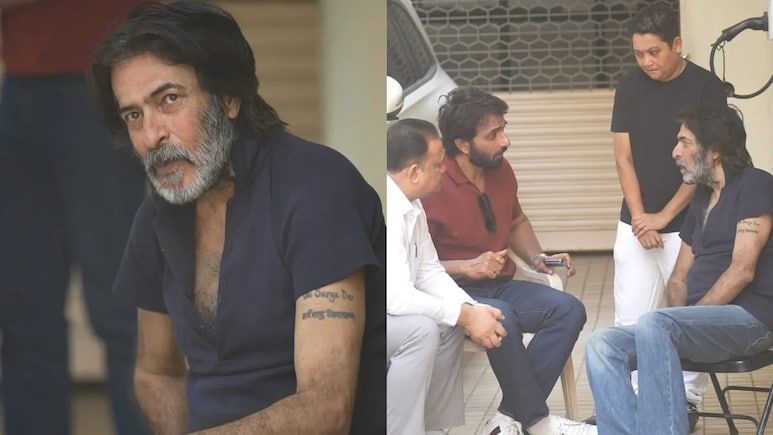
For anyone who grew up watching Hindi cinema in the late 1990s and 2000s, Sharad Kapoor is a familiar face. He held his own opposite Shah Rukh Khan in Josh, marched alongside Hrithik Roshan in Lakshya, and appeared in big-ticket films like LOC Kargil and Jai Ho.
Yet this month, the 50-year-old actor made headlines not for a comeback role, but for a heartbreaking viral video showing him parting with his four pet dogs because a debilitating leg injury and mounting financial strain left him unable to care for them.
In the days that followed, Kapoor released a candid appeal to the Cine & TV Artistes' Association (CINTAA) and the wider film industry. He was clear about what he wanted: not charity, but work. "Money is not the issue. The only issue is that I am just looking forward to start work again," he said.
Also Read | Layoffs Are Rising In Tech, But These Skills Are Helping People Unlock Better Pay
Almost on cue, the familiar Bollywood rescue machinery kicked in. Stars like Salman Khan and Sonu Sood stepped forward to offer support. The All Indian Cine Workers Association (AICWA) praised them—and on November 18, went a step further by writing to Prime Minister Narendra Modi, proposing a national welfare fund and pension scheme called the Cine Aashray Kosh.
The episode is heartwarming on the surface. Beneath it, however, lies an uncomfortable question that Mumbai's film industry has avoided for decades: why does a veteran actor have to go viral on social media just to access a safety net?
The "Black Truth" of Irregular Work
For the top one per cent of Bollywood, a single hit can secure generational wealth. For character actors, supporting artists, and daily-wage crew members, the economics are brutally unforgiving. Speaking in support of Kapoor, AICWA president Suresh Shyamlal Gupta summed up the industry's open secret: "A black truth is that you will get one job in the industry today and another job after 10 days, or after one year, or after two years—or not at all".
Because actors operate largely as freelancers, there is no employer-backed provident fund, no paid medical leave, and no guaranteed pension. When an injury strikes—as it did for Kapoor during a football match in Barcelona—or when a personal crisis forces a hiatus, the income stops overnight while the bills keep climbing.
Where Do Industry Bodies Fall Short?
On paper, bodies like CINTAA and the Cine Artistes Welfare Trust (CAWT) exist to bridge this exact gap. CINTAA does offer dispute resolution for unpaid dues, emergency financial aid, and limited medical assistance.
In practice, however, the system is stretched thin and riddled with caveats:
Strict eligibility: Aid often hinges on maintaining active, uninterrupted membership. In the past, actors whose memberships lapsed during lean years have found themselves locked out of direct association funds.
Limited corpus: Association welfare funds rely heavily on modest annual subscriptions and sporadic donations. During major crises—such as the COVID-19 lockdowns—even CINTAA had to publicly appeal to A-list stars and OTT platforms to bail out its registered members.
Bureaucratic delays: Reimbursements and medical sanctions require executive committee approvals, which can take months—a lifetime for someone facing an immediate hospital bill.
Charity Is Not Infrastructure
Whenever a yesteryear actor falls on hard times, Bollywood's response follows a predictable script: a viral video, a wave of social media sympathy, and quiet cheques from benevolent superstars. While individual generosity from actors like Salman Khan or Sonu Sood is commendable, relying on celebrity philanthropy is a terrible substitute for institutional security. Charity depends on visibility. It helps the actor whose story trends on Instagram, while hundreds of less recognisable junior artists and technicians slip through the cracks in complete silence.
AICWA's recent letter to the Prime Minister highlights what the industry actually needs: structured, long-term social security. Industry observers have long pointed to potential solutions—such as mandatory group health insurance funded by a tiny percentage of film budgets, enforceable residual payments (royalties) when films and shows are re-telecast or streamed on OTT, and a centralised pension corpus backed by major production houses.
Sharad Kapoor's insistence on earning his living rather than accepting handouts is a reminder that struggling artists aren't looking for pity. They are looking for dignity. Until Bollywood builds a real, institutional safety net for the people who hold its stories together, the industry's most reliable welfare scheme will remain a viral video and a prayer.
Essential Business Intelligence, Sharp Market Insights, Practical Personal Finance Advice, Daily Fuel, Gold and Silver Prices, Watch Business News Live and Latest Stories — On NDTV Profit.