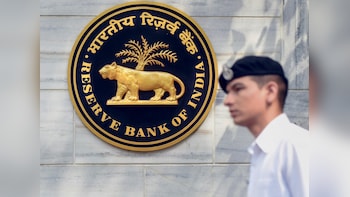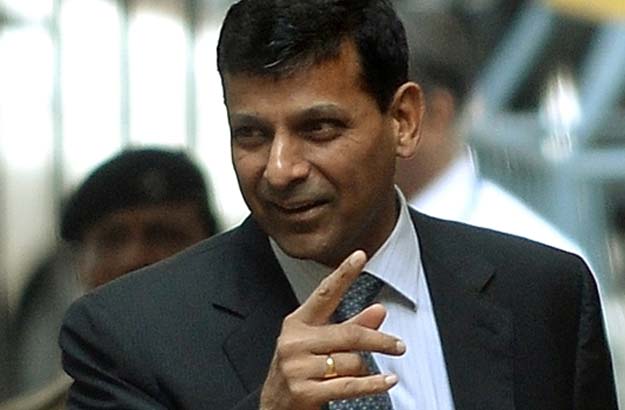
Reserve Bank Governor Raghuram Rajan will be under the burden of huge expectations when he delivers his bi-monthly monetary policy on Tuesday. Indian stock markets have run up to record highs on expectations of a rate cut.
Finance Minister Arun Jaitley has repeatedly asked for interest rate cuts citing falling demand and weak growth. Finally, home and auto loan consumers, whose equated monthly installments (EMIs) are tied to the RBI's repo rate, are also hoping for a cut.
The central bank had last cut rates in May, 2013. Since then rates have gone up three times to 8 per cent now.
The clamour for a rate cut has grown because of the sharp fall in consumer price or retail inflation, which has eased for three straight months. Falling crude oil prices have raised hopes that inflation will trend lower for the coming years.
Secondly, interest rate cuts are generally beneficial for the economy. Lower rates tend to revive domestic investment, spur higher spending by consumers and boost demand. Rate cuts may come handy at a time when credit offtake is at multi-year lows.
Bank of America-Merrill Lynch economists Indranil Sen Gupta and Abhishek Gupta say lower cost of capital will give a good fillip to the Indian economy.
"The incentive to invest will surely ultimately depend on visibility of rising demand that will come with lower rates... real rates faced by industry are at historical highs hurting economic recovery," they add.
But economists who expect Dr Rajan to cut rates are in a hopeless minority. Only 4 out of 45 economists in a Reuters poll say the RBI will cut rates on Tuesday. Here's why:
1) In October, the CPI inflation eased to a record low of 5.52 per cent. This is lower than RBI's target of 8 per cent inflation by January 2015, but there are chances of a spike in inflation early next year. According to Care Ratings, if current forecast for lower kharif output comes true, inflation may start rising again.
2) Pranjul Bhandari, chief economist (India) at HSBC, says commodity prices can change course quickly. If that happens, the expected fall in inflation may not materialise.
3) When economic growth picks up, core inflation could shoot back up even faster, as seen in 2010, Mr Bhandari adds.
4) According to Crisil, the real lending rates between 2012-13 and 2013-14 averaged 2.4 per cent, but investment growth dropped to 0.3 per cent down from an average 16.2 per cent during 2004-2008, when rates were 7.4 per cent. So, low rates do not necessarily translate into higher investment.
5) A cut in interest rates will translate in to lower bond yields making investment in Indian debt less attractive. As a result, the rupee will come under pressure. It hit a nine-month low of 62.25 per dollar on Monday.
Clearly, those pressing for a rate cut do not have a watertight case, but then Dr Rajan is known to surprise markets. Whether he obliges the finance minister or sticks to the RBI's stated hardline stance on inflation will be known in a matter of hours.
Essential Business Intelligence, Sharp Market Insights, Practical Personal Finance Advice, Daily Fuel, Gold and Silver Prices and Latest Stories — On NDTV Profit.