The reciprocal tariffs imposed by US President Donald Trump on Wednesday seemed to surprise the world in more ways than one. While all imports now draw a minimum tariff of 10%, the levies are higher on countries like China and India, whose products will be charged at 34% and 27%, respectively.
For months, Trump had promised "reciprocal tariffs" designed to mirror the duties and barriers other nations impose on US goods — a pledge that fueled anticipation of a tit-for-tat trade policy.
The White House now claims these announced tariff rates represent 50% of the tariffs placed by other countries on US imports, framing it as a measured response to foreign trade practices.
Also Read | Layoffs Are Rising In Tech, But These Skills Are Helping People Unlock Better Pay
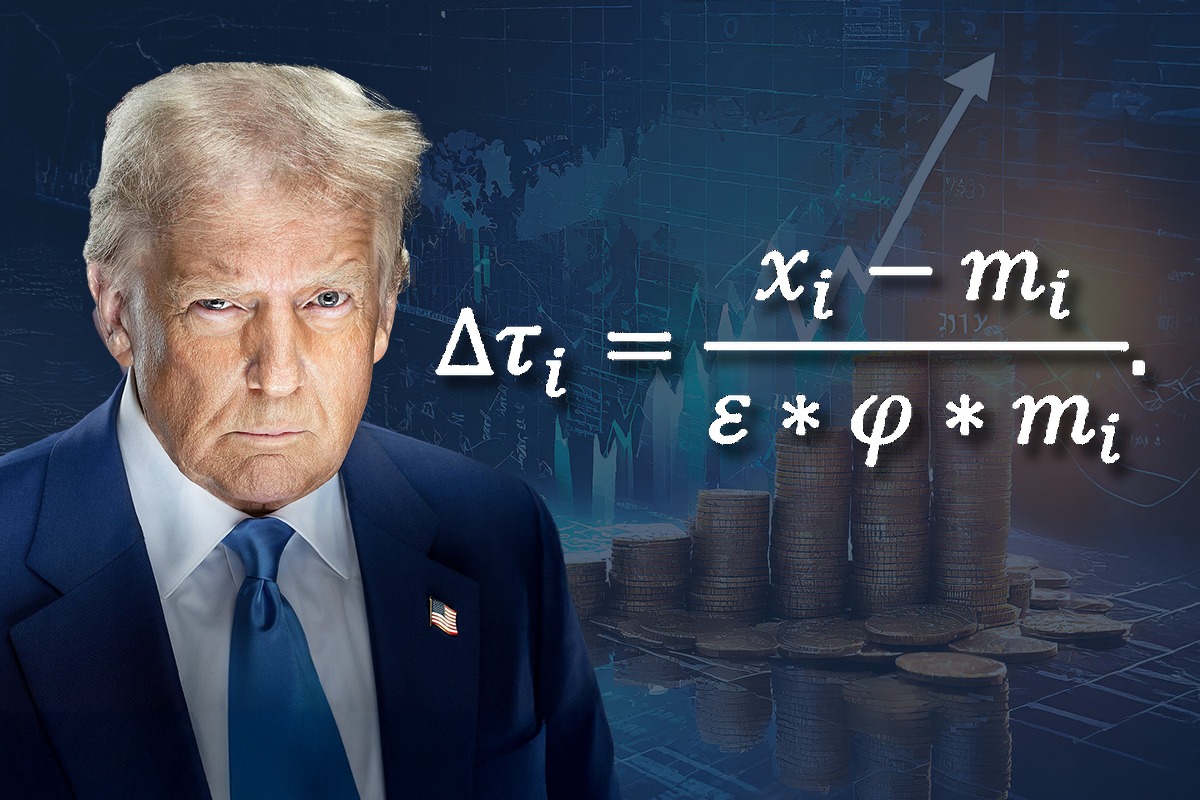
However, the tariffs cited by Trump—those supposedly levied on the US by other nations—don't align with the conventional method of calculating a weighted average tariff rate based on the value of imports across various commodities. Instead of this, the White House announced a complex formula crafted by the US Trade Representative, featuring Greek variables like elasticity (ε) and non-tariff barrier adjustments (ψ), suggesting a sophisticated economic model at work. The USTR has admitted this ratio serves as a proxy for the "combined effects" of trade barriers rather than a direct measurement of specific tariffs or restrictions.
Yet, a closer look reveals a simpler reality: the tariff rates Trump attributes to other countries appear to stem from a basic ratio of the US trade deficit with each nation divided by US imports from that country, derived from 2024 US Census Bureau data.
"We find it hard to understand why White House's calculation of reciprocal tariffs follows a very simple formula," Citi Research said in a note.
In a sample of 37 countries selected by the brokerage, the reciprocal tariffs imposed on various countries seem to follow a simple rule: US trade deficit versus a country, divided by US imports from the country, halved.
This policy's simplicity stands in stark contrast to the intricate rhetoric used to promote it, raising questions about the gap between promise and execution. Adding to the complexity, an annexure to the announcement includes a 37-page list of commodities excluded from these tariff regulations—beyond pharmaceutical items, which had been a focal point of debate in the lead-up to this announcement.
Essential Business Intelligence, Sharp Market Insights, Practical Personal Finance Advice, Daily Fuel, Gold and Silver Prices and Latest Stories — On NDTV Profit.