- Reserve Bank of India to boost AI and cybersecurity frameworks in FY27 for banks and finance
- RBI to create AI innovation sandbox and set clear AI regulatory norms for financial sector
- Central bank warns global fuel price spikes may raise bond yields and inflation risks
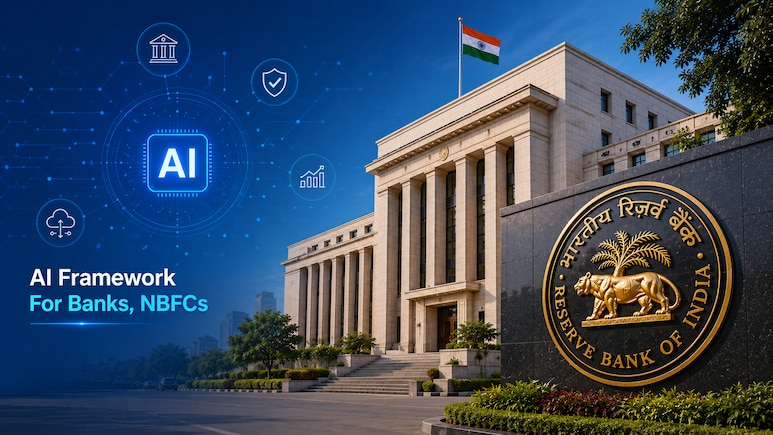
The Reserve Bank of India will make a massive push into the artificial intelligence and cyber security framework for banks and financial institutions in the current fiscal 2026-27 (FY27), while keeping a close eye on global economic risks. In a bid to safely foster technological advancements, the RBI plans to develop an AI innovation sandbox for financial companies alongside establishing clear regulatory norms for AI utilization across the financial sector, the central bank said in its Annual Report on Friday.
On the macroeconomic front, the central bank warned that bond yields could rise if the global easing cycle stalls, identifying potential spikes in global fuel prices as a primary risk to inflation. To keep its economic forecasting sharp, the RBI will review its Quarterly Projection Model and estimate the country's potential GDP, growth rate, and natural real rate of interest in FY27.
RBI increases scrutiny on AI tools
Also Read | Layoffs Are Rising In Tech, But These Skills Are Helping People Unlock Better Pay
Furthermore, the regulator aims to streamline financial operations by merging government securities (gilts) secondary market transactions' norms into a single Master Circular. Cyber resilience is also taking center stage with the upcoming launch of a micro-data analytics project for cyber risks and new guidelines on digital forensic readiness. Finally, on a broader economic note, the report highlighted that upcoming trade pacts are expected to significantly boost trade and investment opportunities.
ALSO READ: RBI Annual Report: India Growth To Hold At 6.9% In FY27 Despite Middle-East Conflict Risks
The central bank has outlined a proactive financial stability agenda heavily focused on early risk detection due to AI in banking systems, customer protection, and credit strengthening for FY27. In its report, the RBI highlighted that while the existing capital buffers remain sufficient to withstand adverse shocks, external pressures like geopolitical tensions pose key risks to India Inc's corporate earnings, just as global economic stress threatens corporate loan portfolios.
To mitigate the evolving threats, the RBI is shifting its FY27 agenda toward the early detection of systemic risks, specifically targeting the technological landscape by assessing cyber risks emerging from AI tools and systems. For non-banking financial companies (NBFCs), RBI plans to conduct a comprehensive cyber mapping exercise and review existing risk stress-testing norms to ensure institutional resilience. The forward-looking agenda will be anchored around strengthening the Know Your Customer (KYC) framework, robust credit monitoring, and bolstering overall customer protection across the financial ecosystem.
RBI agenda for FY27
The RBI also plans strategic roadmap aimed at upgrading supervision and enhancing the digital ecosystem. As part of its latest initiative, the central bank plans to migrate select NBFCs to a rigorous Risk-Based Supervision framework to ensure better financial stability. On the digital innovation front, the RBI is set to expand its Central Bank Digital Currency (CBDC) pilot to cover new real-world use cases while simultaneously scaling up the Unified Lending Interface (ULI) via partnering lenders to streamline credit delivery.
ALSO READ: RBI Annual Report: RBI Expands Digital Rupee Pilots, Begins Tokenised Certificate Of Deposit Trial
Alongside these expansions, a major priority will be placed on enhancing digital safety across the board. To back this up with stronger customer support, the central bank will also develop its Consumer Complaint Management System (CMS) 2.0, ensuring a safer, more efficient environment for financial consumers. In its outlook, the RBI warned that Indian bond yields could face upward pressure if the global monetary easing cycle stalls or reverses, though it noted that continued fiscal consolidation and strategic liquidity injections could help contain these shifts.
While the central bank expects the Indian banking system to remain fundamentally resilient in FY27, it flagged that the ongoing supply chain disruptions may pose near-term risks to corporate earnings and, consequently, could hit banks' loan portfolios. Moving forward, the RBI reiterated that its core focus will be firmly anchored around ensuring robust customer protection and strengthening the broader credit ecosystem against these emerging vulnerabilities.
Essential Business Intelligence, Sharp Market Insights, Practical Personal Finance Advice, Daily Fuel, Gold and Silver Prices and Latest Stories — On NDTV Profit.