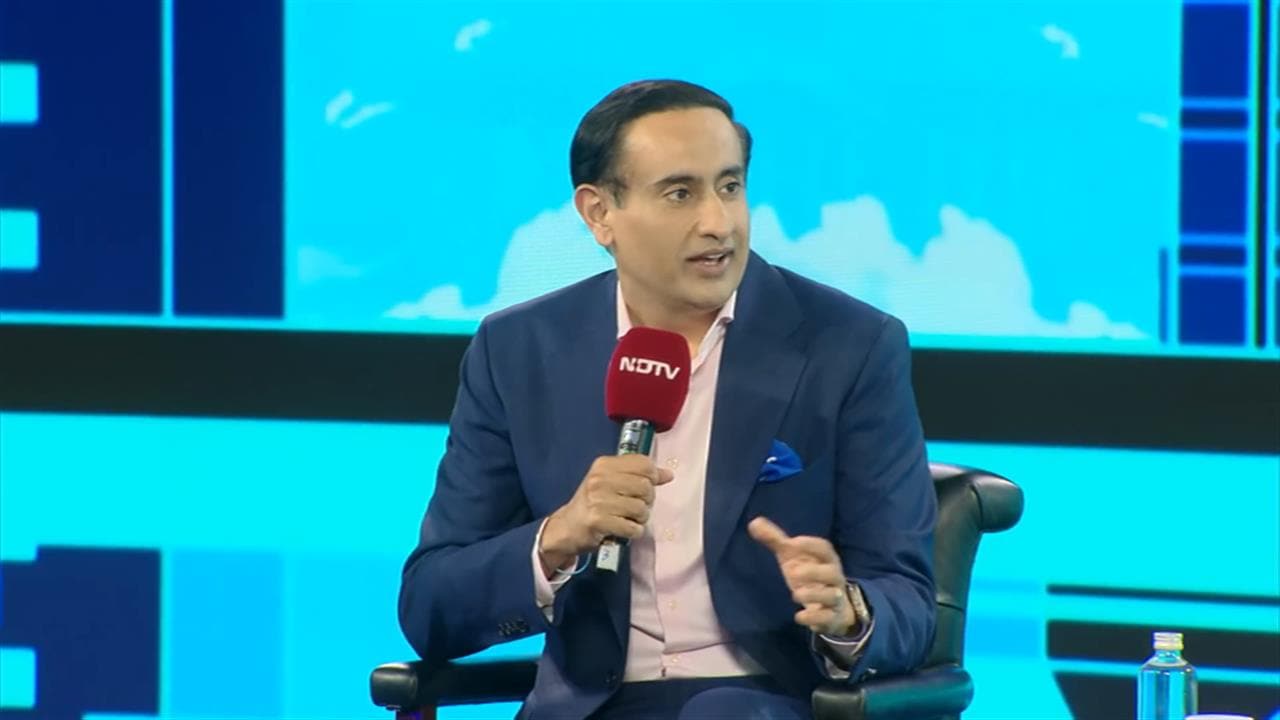
(Jaiman Patel is a senior tax professional at EY)
The Union Budget 2015 was a much anticipated one in the recent times and was closely watched both in India and outside to decipher the statement of economic intent of the new government. Several representations were made to the government to rationalise the taxes and provide certainty, and the corporate sector would be pleased that several of their concerns, if not all, have been heard and addressed.
It is obvious that India is in need of foreign capital. The finance minister has made more than a few changes to the Income-tax Act, 1961 to achieve this. The finance minister has extended the avenues for investment by foreign investors by permitting foreign investment in all categories of alternative investment funds (AIF), erstwhile restricted to Category I AIF.
The government has a clear direction to incentivize companies in the start-up phase. As the AIF sector is a major investor in such companies, the long standing demand of tax pass through has been extended to all sub-categories of Category I AIF and Category II AIF. However, the losses of the AIFs are not allowed to be passed through to the investors but would be carried forward to be adjusted against income of the next year. Tax pass through provides certainty to AIFs and does not lead to any revenue leakage.
There was ambiguity on applicability of the MAT provisions to capital gains arising from transactions in securities to foreign portfolio investors (FPI). To allay their concerns, it is proposed that such capital gains earned by FPIs will be exempted from MAT liability. Additionally, though the provisions relating to indirect transfer have been rationalized, FPIs have not been specifically excluded from its purview.
Further, the sunset clause for concessional tax rate of 5 per cent on interest received on certain securities by FPIs has been extended from 30 June 2015 to 30 June 2017.
It is proposed that the distinction between different types of foreign investments shall be removed, especially between foreign portfolio investors and foreign direct investors. The same are to be replaced with composite cap.
Generally, interest earned by a foreign bank from its Indian permanent establishment (PE) is not taxable in India based on the concept of income from self. Now, interest received by a foreign bank (or any of its non-Indian branches) from its Indian PE will be taxable in India. For this specific purpose, the Indian PE and the foreign bank/ overseas branches would be treated as separate persons. Correspondingly, the Indian PE will be required to withhold tax on such interest payment.
The government is moving towards establishing India as an International Finance Centre. In my earlier article, I indicated that the finance needs to take steps to address the apprehension of fund managers of constituting a PE of the offshore fund in India. The finance minister has clarified that an eligible investment fund shall not be said to be resident in India merely because the eligible fund manager, undertaking fund management activities on its behalf, is situated in India. Eligible fund manager is defined to mean any person registered and engaged in the activity of fund management and satisfies the prescribed conditions. Further, the regulations for operationalising the first phase of Gujarat International Finance Tec-city (GIFT) being a Finance SEZ are proposed to be issued in the month of March 2015. However, no concessions in tax rates for a Finance SEZ have been provided to make India competitive with other international financial centres.
The business climate and investor sentiment has been positive in recent months. The finance minister has taken steps to ensure that the same continues. The General Anti-Avoidance Rules dreaded by India Inc have been deferred by two years and would only apply prospectively to investments made after April 1, 2017.
The real estate industry has been sluggish in the recent past. The guidelines for real estate investment trust (REIT) were issued by the Sebi last year. However, there were some concerns over the taxability of the sponsors of the REITs on exit. The capital gains on exit by the sponsors of REITs on listing of units have been rationalized, subject to payment of securities transaction tax. Further, tax 'pass-through' has been granted to REITs on the rental income earned.
The finance minister has done a commendable job to define the broad contours of the tax policy and lay down the roadmap for the future. This is clearly a step in the right direction to steer the Indian economy to a high growth trajectory. One would have to wait and see if the finance minister's intent of a stable, non-adversarial tax regime would be translated into credible action by the tax department in years to come.
Asrar Jalili, senior tax professional at EY, contributed to the article.
Disclaimer: The opinions expressed within this article are the personal opinions of the author. NDTV is not responsible for the accuracy, completeness, suitability, or validity of any information on this article. All information is provided on an as-is basis. The information, facts or opinions appearing in the article do not reflect the views of NDTV and NDTV does not assume any responsibility or liability for the same.