"Nobody knows", said US Fed Chair Jerome Powell when asked how the oil shock would impact the economy. However, he acknowledged that the increase in oil prices will push inflation up and reduce demand and employment. The war has made analysts and central bankers' jobs harder - their crystal balls have turned foggy. It will be interesting to see how the RBI sees it in the ongoing monetary policy committee meeting.
Oil Dependence Has Gone Down
But here's the interesting part - this confusion exists even though the world today uses far less oil to produce the same amount of GDP than it did a few decades ago.
Also Read | Layoffs Are Rising In Tech, But These Skills Are Helping People Unlock Better Pay
Over the past three decades, improved fuel efficiency, the widespread use of renewables, and the rise of electric vehicles have quietly made us less reliant on oil. Take China as the most striking example. It used 464 kilograms of oil (or equivalent energy source) to add $1,000 in GDP in 1990, which has dropped to 126 kgs in 2022. That's a massive improvement of over 70%. For India, it's more than 40%. This has been a trend everywhere, whether it's the US, Europe, or emerging markets.
ALSO READ: Brent May Ease To $80/Barrel By Year-End, Says Goldman Sachs After Middle East War Spike
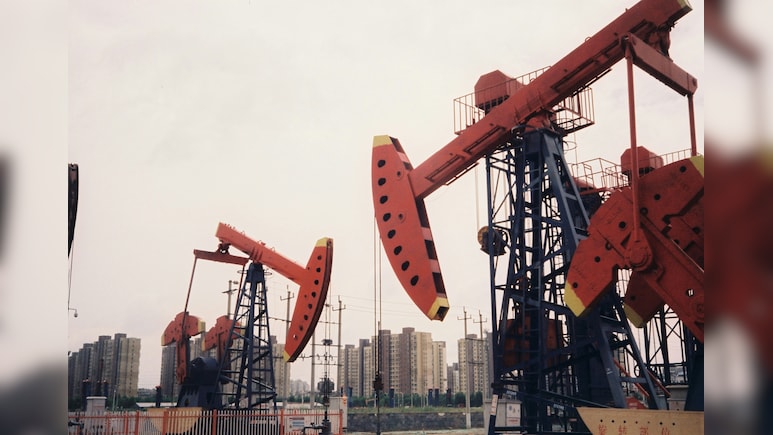
So, on paper, oil and oil prices should matter less than before. But it doesn't. Even if economies use less oil per dollar of GDP, the absolute volume of oil used is still large enough to cause panics and crises. Aviation, long-haul trucking, maritime shipping, fertiliser production, and the entire petrochemical chain - plastics, paints, synthetic fibres, chemicals - is linked to oil. Thus, despite all this efficiency, one geopolitical shock is still enough to unsettle central bankers and ministers.
Oil & Inflation Nexus
And that brings us to the real issue - how oil seeps into inflation.
The pump price is where most people feel the shock first. But the transmission doesn't stop there. Higher diesel prices raise freight costs for every truck in India, where roughly 70% of the country's freight moves by road. That feeds into the prices of vegetables, packaged goods, medicines, and raw materials.
Farmers are impacted even more. Buying fertilisers and running irrigation pumps, machines, tractors, etc., all get more expensive. India imports around 40% of its fertilisers from the Gulf countries, and urea is made from natural gas whose price is linked to oil.
Then, the rupee's value makes it even worse. The dollar usually gains in such times, while emerging market currencies like the rupee weaken. This makes every imported item, including oil, fertilisers, raw materials, and machinery, more expensive, leading to higher inflation.
Then, there's the behavioural side. When people see higher fuel prices for a few months, they demand more pay, and, in turn, businesses have to raise prices to keep the bottom line intact. This cycle causes inflation to rise and persist.
The RBI's study reveals that a 10% increase in global crude prices raises headline inflation by around 20 to 30 basis points, depending on how much the prices are finally passed on to consumers.
ALSO READ: Brent Crude Steady Above $110 As Trump's Iran Deadline Fuels Market Anxiety
India's Difficult Past With High Oil Prices
That's important because fuel pricing in India is not entirely market-driven. Oil companies and the government mostly try to protect consumers through subsidies, and pump prices don't rise as much as the international crude prices. This creates a lagged effect. Initially, inflation appears low but rises later.
Between 2010 and 2013, India faced a difficult phase that placed it among the "Fragile Five" economies alongside Brazil, Indonesia, Turkey, and South Africa. What made that episode particularly damaging was the delayed pass-through problem. The government had asked oil companies to sell fuel at a discount, compensating them through oil bonds.
Although fiscal prudence in later years helped India's macroeconomic fundamentals, low oil prices sped up the process. Oil stopped being a constant source of stress for policymakers. But that comfort may not last. The government still supports people through subsidies in LPG, fertilisers and food security. If high oil prices persist, policymakers will once again face tough trade-offs between controlling inflation, supporting livelihoods, protecting growth, and managing fiscal pressures.
Why Forecasting Becomes Challenging?
If fiscal pressures increase, bond yields could rise and dampen the growth outlook. That's why central banks are so wary of oil shocks, even if fuel's weight in inflation numbers isn't that big. Forecasting, in the current situation, has become difficult for Powell, or for that matter, any analyst, for several reasons.
First, no one knows how long the war in Iran will last or how quickly supplies will normalise. Second, oil price increases tend to pass through quickly, but declines are slower and incomplete. Third, the source of the shock matters - a demand-driven increase behaves differently from a supply disruption. And finally, in India's case, there is added uncertainty around how much of the price increase the government will absorb through subsidies and for how long.
ALSO READ: North American Oil Is In Demand As World Grasps For Supplies
Where The Real Fix Lies
There are always quick fixes. But moments like this force a rethink at a more systemic level. I'm not getting into the geopolitical or diplomatic side of this. But one economic issue that warrants more attention is freight.
India relies on diesel-heavy logistics. Although rail is more fuel efficient, it ends up being costlier because it cross-subsidises passenger fares. Shifting freight from roads to rail could meaningfully cut diesel consumption, lower logistics costs, and reduce the economy's exposure to oil shocks. India needs a deliberate policy push and execution in that direction.
Final Take
What makes this moment different is not just the rise in oil prices, but the uncertainty around it. Policymakers are navigating a mix of geopolitical risks, currency pressures, and domestic constraints - all at once. Oil shocks don't just push up inflation - they test how credible and prepared policymakers really are.
Therefore, Powell's "nobody knows" frankly admits the complexity and unpredictability of the situation.
Disclaimer: The views expressed in this article are solely those of the author and do not necessarily reflect the opinion of NDTV Profit or its affiliates. Readers are advised to conduct their own research or consult a qualified professional before making any investment or business decisions. NDTV Profit does not guarantee the accuracy, completeness, or reliability of the information presented in this article.
Essential Business Intelligence, Sharp Market Insights, Practical Personal Finance Advice, Daily Fuel, Gold and Silver Prices and Latest Stories — On NDTV Profit.