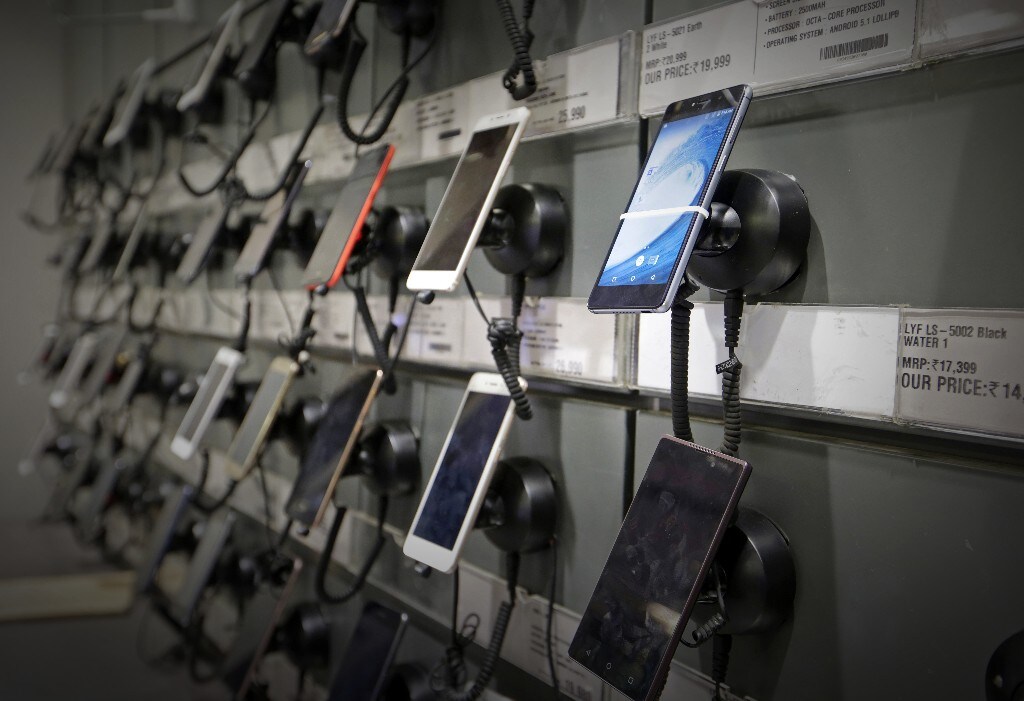
Prime Minister Narendra Modi's 'Make in India' initiative will get a push from the government's latest move to impose a 10 percent basic customs duty on mobile phones imported into the country. The levy is also applicable on parts like chargers, headsets, battery and USB cable, with immediate effect.
The duty differential earlier was about 11.5 percent, but as the Goods and Services Tax subsumes additional duties, that benefit was taken away, said Rajeev Jain, chief financial officer and director at Intex Technologies Ltd, a smartphone manufacturer. “The 10 percent customs duty will help push local manufacturing”, he told PTI.
He added that with this move status quo will be maintained in the favour of domestic manufacturing.
Also Read | Layoffs Are Rising In Tech, But These Skills Are Helping People Unlock Better Pay
The announcement about the duty came simultaneously with the roll-out of GST on the midnight of June 30. Many phone makers, who assemble their devices at facilities in the country, also import small quantities of phones from countries like China.
The (import) quantities, at least for us, is very small and therefore, the customs duty will not make much difference.For the end-customer, there is no impact as he/she pays 12 percent GST for the handsetRajeev Jain, CFO and Director, Intex Technologies
The government however, has kept certain parts like printed circuit board assembly (PCBA), camera modules, touch panels, cover glass assembly, vibrator motor and ringer, out of the levy of basic customs duty.
Echoing a similar view, BMR Advisors Partner, Mahesh Jaising said that till Friday, companies importing handsets were of the view they would have benefited under GST, given the manufacturing duty differential scheme going away.
"Consequently, consumers were expecting (prices of) imported phones (typically the high end phones which are usually imported) to come down. However, with the 10 percent customs duty last night, the tax structure is again in favour of local manufacturing," he added.
But Telephone Bills Will Still Go Up
Incidentally, telephone bills of consumers will go up under GST regime, while prepaid customers are getting lesser talktime than before. This is because, under GST, telecom services are being taxed at 18 per cent compared to 15 percent earlier.
Users are now getting talktime of about Rs 80 on a recharge of Rs 100, compared to about Rs 83 earlier. Similarly, costs for postpaid users will also go up to the extent of three percentage points, starting this month. So, for a monthly usage of Rs 1,000, users will have to pay Rs 1,180 instead of Rs 1,150 earlier.
With the GST rolling out at midnight, some consumers faced issues getting recharges in the early hours of Saturday. Some retailers complained of slow recharge processing initially but these issues seemed to have been ironed out as the day progressed.
Essential Business Intelligence, Sharp Market Insights, Practical Personal Finance Advice, Daily Fuel, Gold and Silver Prices and Latest Stories — On NDTV Profit.