- India's online retail market reached $65-66 billion GMV in 2025, growing 19-21% annually
- E-retail market projected to hit $170-180 billion by 2030 with over 20% yearly growth
- Quick-commerce now accounts for 16-17% of e-commerce GMV and is growing rapidly
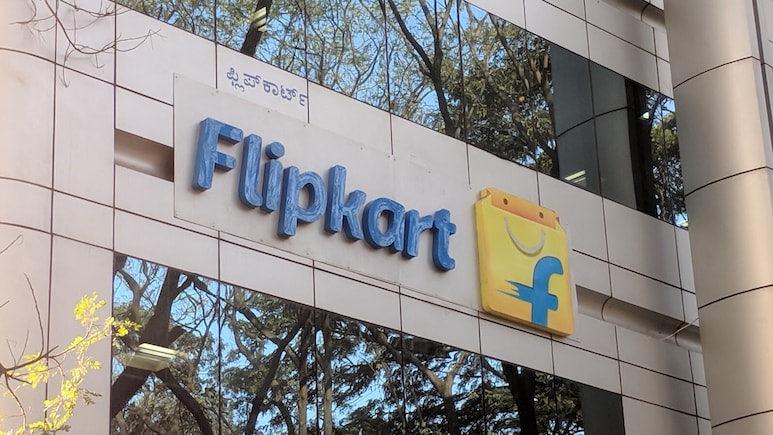
India's online retail market capped 2025 with renewed vigour as e-retail gross merchandise value (GMV) scaled to nearly USD 65-66 billion, growing 19-21 per cent in value terms, according to a report by Bain & Company compiled in collaboration with Flipkart.
The report - How India Shops Online 2026 - sees India's e-retail market at USD 170-180 billion by 2030, sustaining 20 per cent-plus annual growth, propelled by rising shopper penetration and spend per shopper.
It said India has emerged as a global leader in quick-commerce (a term that denotes instant and ultra-fast local delivery service), with 16-17 per cent of e-commerce GMV flowing through q-commerce, significantly ahead of most markets, including China.
ALSO READ | CBI Files FIR In Rs 550 Crore Haryana Fund Embezzlement Case Involving IDFC First Bank
The segment has doubled annually over the past two years, reaching USD 10-11 billion GMV (or total sales value) in 2025.
Looking ahead, it is expected to reach USD 65-70 billion by 2030 and contribute 45-50 per cent of incremental e-retail GMV as traditional e-retail continues to anchor the overall e-retail market with 60-65 per cent share by 2030.
The report said that overall growth also accelerated through the year, supported by improving macroeconomic conditions and consumer sentiment.
The private consumption growth rose from 8 per cent (2022-24) to 10.5 per cent in 2025, driven by GST cuts, income tax relief, easing inflation, and lower lending rates.
"This momentum drove second-half growth of 22-24 per cent and an estimated 23-25 per cent growth in Q1 2026, reflecting a broader revival in consumption and discretionary spending," the report said.
As per the report, India is emerging as a critical global consumption engine, poised to capture 1 in 8 incremental consumption dollars over the next five years.
While India's e-retail market witnessed a healthy growth in the previous year, the broader retail sector's trajectory towards USD 1.6 trillion by 2030 underscores that offline infrastructure remains indispensable to reaching the majority of Indian consumers.
India's online shopping market has more than doubled over the last five years, with the shopper base doubling to 290-300 million shoppers in 2025, supported by rapid seller ecosystem expansion (that tripled over the past five years) and deeper geographic penetration.
"Gen Z has emerged as a critical cohort accounting for 40-45 per cent of e-retail shoppers, contributing 50 per cent of incremental e-retail orders in 2025, with 2.5x (times) faster spend per shopper growth versus other cohorts in metros," it observed.
This generation of customers demonstrate distinct shopping preferences across categories like lifestyle, beauty and electronics, such as influencer-led trend discovery on social media, immersive videos/feeds, and use of instant credit.
ALSO READ | TCS Salary Hike: IT Giant To Roll Out Revised Pay Across All Grades Effective April 1
Growth is increasingly well diversified geographically, with Tier II plus cities contributing about 50 per cent of incremental online orders in 2025, despite shopper penetration of just 25-30 per cent of internet users (against 45-50 per cent in Metros/Tier 1).
Shyam Unnikrishnan, Managing Partner at Bain & Company, said as India's GDP per capita approaches the USD 4,000 inflection point, where discretionary spending has historically accelerated in other emerging markets, this will provide further tailwinds for e-retail.
The next five years will certainly unlock the next wave of growth in India's e-retail market, Unnikrishnan said.
The strong expansion notwithstanding, India's e-retail penetration remains structurally low at about 1.6 per cent of GDP, compared to other parts of the world -- 13-14 per cent in China and 4-4.5 per cent in Indonesia -- indicating a substantial long-term runway for growth.
The majority of the next 500 million shoppers are already in the digital funnel, with only 30 per cent of internet users shopping online (compared to 92 per cent in China and 74 per cent in the US), the report said, noting "a large untapped base remains".
Q-commerce has given a fillip to the e-retail story, with structural advantages like high population density, low manpower and real estate costs, as well as low online grocery penetration acting as key enablers.
The q-commerce space is accelerating online grocery adoption, with e-grocery penetration growing about 5 times since its launch and now accounting for nearly 1.5 per cent of the overall grocery market.
"Q-commerce with a dual role of a convenience channel for household essentials (85-90 per cent of GMV) and a fulfilment channel for discretionary categories (use speed as a customer delight) now operates over 7,000 micro-fulfilment centres across 200 plus cities, with two-thirds of new capacity added in the top 10 cities," the report said, documenting the rapid scale-up.
Operating scale has materially improved profitability; however, customer adoption and sustainable unit economics remain unproven beyond top metros and Tier 1 cities, the report further said.
Vijay Iyer, VP and GM, Flipkart Ads, said: "The next era of commerce isn't about teaching users how to search; it's about replacing traditional category navigation with fluid, intent-driven conversations."
Through the amalgamation of GenAI and fit-for-purpose technology, digital commerce will soon feel less like an interface and more like a natural dialogue for every Indian.
"Commerce in India is evolving fast. Shoppers today arrive knowing what they want, with shorter sessions and higher intent, especially on quick commerce," Iyer said.
(This story has not been edited by NDTV staff and is auto-generated from a syndicated feed.)
Essential Business Intelligence, Sharp Market Insights, Practical Personal Finance Advice, Daily Fuel, Gold and Silver Prices and Latest Stories — On NDTV Profit.