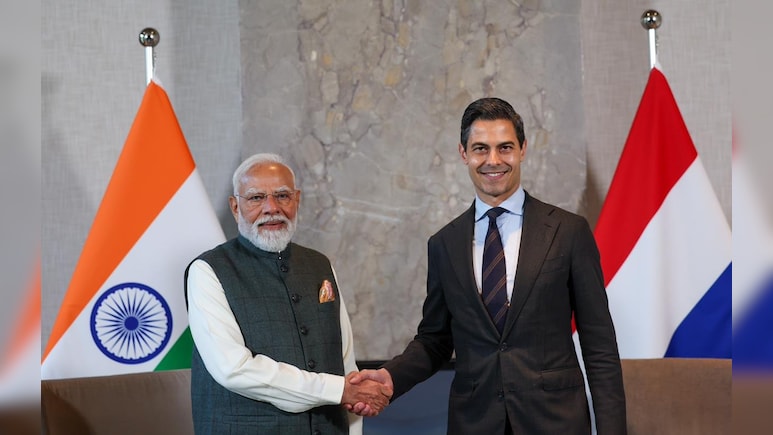
India and the Netherlands have upgraded their relationship to a strategic partnership, marking a broad-based expansion in cooperation across technology, defence, trade and sustainability. The two countries also finalised a five-year roadmap for 2026–30 and signed 17 agreements covering areas such as semiconductors, critical minerals, renewable energy, migration and water management. The announcements followed detailed discussions between Prime Minister Narendra Modi and his Dutch counterpart Rob Jetten in The Hague.
The elevation of ties signals a sharper alignment of priorities, particularly at a time when global supply chains are being reconfigured and countries are seeking trusted partners in key sectors. Both leaders underlined the need to combine complementary strengths, with Modi highlighting India's scale and growth momentum alongside Dutch leadership in high-technology and innovation-driven sectors.
Mijn gesprekken met premier Rob Jetten waren uitgebreid en bestreken een breed scala aan onderwerpen. Een daarvan was defensie en veiligheid. Ik sprak over de mogelijkheid om zo snel mogelijk een stappenplan voor de defensie-industrie op te stellen. We kunnen ook samenwerken in… pic.twitter.com/hwgrBZzCsC
Also Read | Layoffs Are Rising In Tech, But These Skills Are Helping People Unlock Better Pay
— Narendra Modi (@narendramodi) May 16, 2026
Calling the Netherlands a key partner, Modi pointed to strong economic linkages and shared values underpinning the relationship. He emphasised the scope to deepen cooperation in innovation, investment and sustainability, while expanding engagement in newer areas such as defence and advanced manufacturing.
A central focus of the partnership is semiconductors, where both sides aim to build capabilities across the value chain. A key development includes collaboration between Tata Electronics and Dutch chip equipment maker ASML to support semiconductor manufacturing in India, particularly the planned fabrication facility in Dholera, Gujarat. In parallel, the two countries have agreed to connect their semiconductor ecosystems by linking the Netherlands' Semicon Competence Centre with the Indian Semiconductor Mission.
Academic and research collaboration is also being strengthened through a “brain bridge” initiative involving leading Dutch universities and top Indian institutes such as IISc and multiple IITs. Industry players including ASML, NXP, Tata and CG Semi are expected to support this effort, which is aimed at developing talent and advancing research in chip design and manufacturing.
Beyond technology, the partnership extends to defence cooperation. Both sides agreed to pursue structured military engagement, including joint interactions between defence institutions and closer coordination between industry bodies. Work will also begin on a defence industrial roadmap to promote collaboration between manufacturers and research organisations. Discussions included the possibility of a logistics support agreement to facilitate joint training exercises.
On global issues, the two leaders expressed concern over tensions in West Asia and their impact on energy markets. They welcomed the ceasefire between the United States and Iran announced in April 2026 and reiterated the need to maintain freedom of navigation, particularly through the Strait of Hormuz, a critical artery for global energy flows. Both stressed the importance of diplomacy and dialogue in ensuring long-term stability in the region.
The joint statement also reflected a firm stance on terrorism, with both countries calling for a zero-tolerance approach and stronger international cooperation to tackle terror financing and networks. Emerging threats, including the misuse of new technologies by extremist groups, were also highlighted as an area requiring coordinated response.
Migration and mobility formed another pillar of the expanded framework. The two sides agreed to facilitate the movement of skilled professionals while strengthening efforts to curb irregular migration and trafficking. The approach, officials said, would be anchored in fair mobility practices and protection of workers' rights.
Economically, the Netherlands remains one of India's largest investors and a key trade partner within Europe. Both leaders flagged significant room for further growth, especially in the context of the India-European Union trade agreement. They also welcomed steps to streamline customs cooperation and improve the ease of doing business, including mechanisms to boost investment flows and strengthen innovation ecosystems.
Essential Business Intelligence, Sharp Market Insights, Practical Personal Finance Advice, Daily Fuel, Gold and Silver Prices and Latest Stories — On NDTV Profit.