India's banking system liquidity slipped into deficit for the first time in about five months, as recent tax outflows reduced cash with lenders.
Lenders borrowed a net 128.25 billion rupees ($1.4 billion) from the Reserve Bank of India as of Nov. 21, the first such occurrence since June 29, latest data from the central bank show. Net borrowing from the central bank represents deficit liquidity conditions.
Banking system liquidity has fallen since hitting a record high in September, when massive dollar inflows under an RBI capital-raising program to support the rupee flooded lenders with cash. The central bank has since drained excess cash through aggressive operations, including bond sales and forex swaps, to prevent it from fueling price pressures. The latest trigger pushing the system into deficit was outflows related to goods and services tax payments, according to IDFC First Bank.
Also Read | Layoffs Are Rising In Tech, But These Skills Are Helping People Unlock Better Pay
“Going forward, the key drain will be currency leakage which picks up in October-March period and has shown a significant surge this year,” Gaura Sen Gupta, chief economist at the Mumbai-based lender said, referring to cash withdrawals from banks. The liquidity deficit may persist into the next quarter, she added.
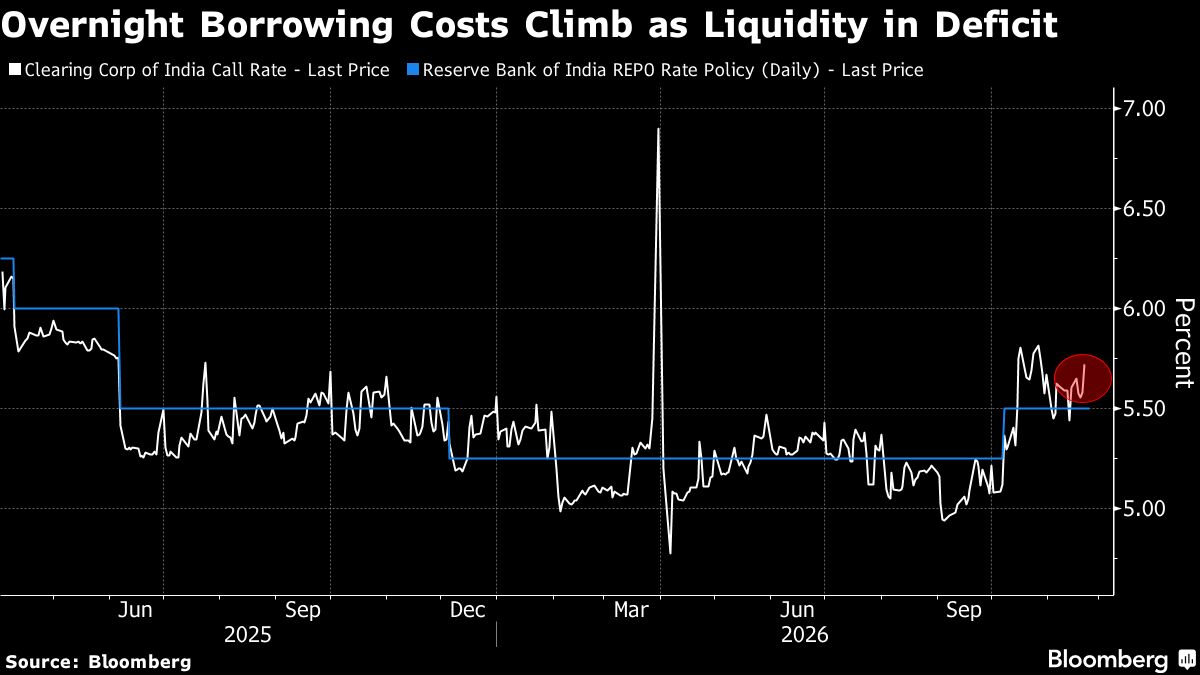
Overnight Borrowing Costs Climb as Liquidity in Deficit
Photo Credit: Bloomberg
The cash crunch has pushed lenders' overnight borrowing costs above the central bank's policy rate, with the so-called weighted average call rate trading about 25 basis points above the RBI's 5.50% benchmark on Monday. The call rate, which is the price at which banks lend funds to each other is usually supposed to be anchored to the policy rate.
Higher overnight funding costs for banks typically push up shorter-tenure bond yields too, translating into higher overall cost of borrowing in the economy and potentially weighing on growth. Yields on five-year sovereign notes were 4 basis points higher on Monday.
To ease the immediate crunch, the central bank undertook two rounds of cash injections on Monday, providing lenders with a total of 1 trillion rupees via transactions reversing in coming days.
(This story has not been edited by NDTV staff and is auto-generated from a syndicated feed.)
Essential Business Intelligence, Sharp Market Insights, Practical Personal Finance Advice, Daily Fuel, Gold and Silver Prices, Watch Business News Live and Latest Stories — On NDTV Profit.