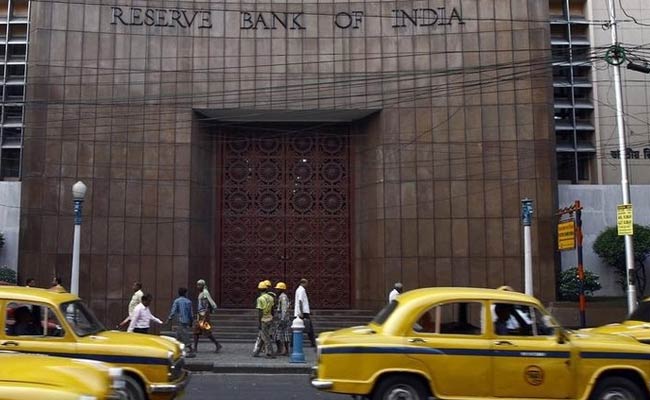
The RBI released its Financial Stability Report on Thursday.
Mumbai: Income disclosure schemes are likely to help the government in meeting the fiscal deficit target as additional collections will compensate for the lower revenues through disinvestment and telecom spectrum auctions, the Reserve Bank of India said in its Financial Stability Report released on Thursday.
The government has projected fiscal deficit at 3.5 per cent of GDP during the financial year 2016-17.
"While lower-than-expected revenues through disinvestments and telecom spectrum auctions may stretch the fiscal deficit, the additional revenue from measures such as income disclosure schemes may compensate for this," said the report.
Though the short-term impact of the measures undertaken to contain the shadow economy and tax evasion, both in terms of changes in GDP and revenues, is difficult to capture, these measures are expected to have a positive impact both on GDP and fiscal deficit in the long run, it said.
The country's external sector vulnerability indicators improved in the first quarter of the FY17.
The current account deficit has narrowed to 0.6 per cent in the second quarter of the FY 2016-17 from 1.1 per cent of GDP in the previous financial year, it said.
External debt - both in absolute and relative terms (as ratio to GDP) - has declined and the foreign exchange reserves now cover a larger portion of total external debt and about 11 months of imports, the report said.
One of the potential sources of stress in the country's balance of payments is decline in remittances, it said.
Globally, remittance flows are expected to increase only marginally in 2016 and the projections suggest a decline in remittances only in the case of India among the top five remittance receiving countries, it said.
A major portion of remittances to India come from Gulf countries, the report noted, adding that low oil prices, subdued growth in source countries and change in labour policies in some Gulf Cooperation Council (GCC) countries among other factors adversely affected remittance flows.
Essential Business Intelligence, Sharp Market Insights, Practical Personal Finance Advice, Daily Fuel, Gold and Silver Prices and Latest Stories — On NDTV Profit.