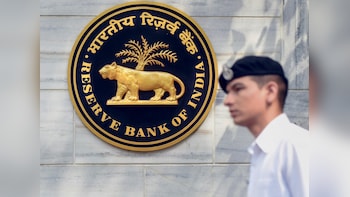
The Index of Industrial Production (IIP) expanded for the first time in three months in January 2013, an early sign that Asia's third largest economy may have turned a corner, but a sluggish recovery will likely keep the Reserve Bank of India (RBI) on track to ease monetary policy further next week.
Production at factories, mines and utilities grew 2.4 per cent in January 2013 from a year earlier, government data showed on Tuesday. The outcome was more than double the 1 per cent forecast in an NDTV Profit poll, and marked an encouraging bounce from a contraction of 0.5 per cent in December.
"...really glad with the numbers," Planning Commission Deputy Chairman Montek Singh Ahluwalia told NDTV Profit, adding that the downslide is over. "The numbers fits in with the signals we have been getting ...have to see how fast the turnaround happens."
The IIP stood at 181.8 in January 2013. The cumulative growth for the April-January 2012-13 period over the year-ago period was 1 per cent.
The index for the mining, manufacturing and electricity sectors for the month of January 2013 were 134, 193.7 and 160.7, respectively, with corresponding growth rates of (-) 2.9 per cent, 2.7 per cent and 6.4 per cent over the year-ago period.
In terms of industries, 11 out of the 22 industry groups in the manufacturing sector -- which constitutes about 76 per cent of industrial production -- grew in January 2013.
"We certainly believe (that) the economy is bottoming out. We are going to see some growth impulses, and I am confident that we will also have further good news," Arvind Mayaram, Economic Affairs Secretary, said.
However, the data highlighted pockets of weakness and underscored the challenges facing the economy as it struggles to motor on from a sharp slowdown. While production of consumer goods recovered, posting an annual growth of 2.8 per cent in January, capital goods output -- a key investment indicator -- fell an annual 1.8 per cent. The sector has grown just once in the last 10 months.
"It is difficult to draw convincing trends from this number because they have been volatile. We know from data on the ground that the consumption story is pretty weak right now. It is an encouraging headline number, but nothing to get excited about," Jyotinder Kaur, economist at HDFC Bank, told NDTV Profit.
Although a pick-up in retail inflation has tempered expectations for an aggressive monetary easing, investors are betting a sluggish economy will force the RBI to cut rates by another 25 basis points at its upcoming policy review on March 19. Consumer price inflation inched up to 10.91 per cent in February from 10.79 per cent a month ago, according to separate data on Tuesday.
February wholesale price index data, which the RBI gives more weight to in setting policy, is due Thursday.
"It's a tale of two diverse numbers. IIP has come in much higher than anticipated which is a positive news, but is a short-lived relief as the CPI came in significantly higher and the concern on food continues," Shubhada Rao, chief economist at Yes Bank, told Reuters.
"On IIP, our full year forecast is 1.5-2 per cent, but the larger focus in terms of the monetary policy takeaway would be CPI. It would weigh on policy concerns. However, as of now we retain our call for a 25 basis-points rate cut on Tuesday," she added.
Worried about the deepening economic slump and encouraged by a slowing trend in inflation, the RBI in January cut interest rates for the first time in nine months. But it warned that room for further monetary easing was limited unless inflation and a high current account deficit improved by more than expected.
''I don't know (if the RBI will cut rates)... the RBI will obviously factor in and assess. Inflation numbers have also come down, so there is certainly a case for further impulses for growth," Mr Mayaram added.
The Indian economy has been hamstrung by weak capital investment and flagging consumer demand. A series of government policy U-turns and a slowdown in the rate of implementing key industrial and infrastructure projects have added to investor gloom.
To support growth, the government last month unveiled a surge in spending - despite expectations of an austere budget to shore up its finances - and imposed new taxes on the rich and large companies.
With inputs from Reuters
Essential Business Intelligence, Sharp Market Insights, Practical Personal Finance Advice, Daily Fuel, Gold and Silver Prices and Latest Stories — On NDTV Profit.