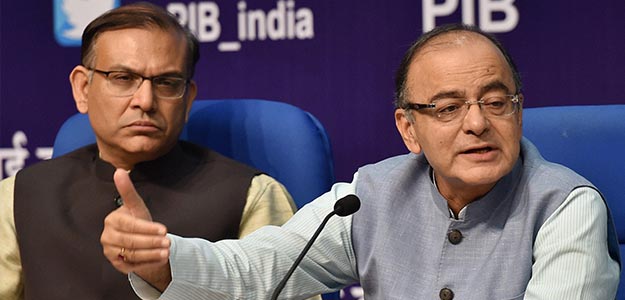
Finance Minister Arun Jaitley said any decision on a reversal of EPF taxation would be taken by Prime Minister Narendra Modi.
New Delhi:
As the government issued a detailed clarification on its controversial new Budget proposal to tax Employees Provident Fund or EPF withdrawals, top government sources ruled out an immediate rollback of the move.
This morning, as he briefed BJP lawmakers on the Budget he presented yesterday, Finance Minister Arun Jaitley said any decision on a reversal would be taken by Prime Minister Narendra Modi, in an indication that the government is standing its ground for the moment, but is also watching the situation closely.
There has been massive criticism of the move to tax EPF withdrawals, both from people affected and political parties.
Mr Jaitley told NDTV today that the idea is to create a pensioned society, especially among employees in the private sector who have no pension provisions.
The Budget provides that after April 1, 2016, 60 per cent of the amount deposited in the EPF account of the employee will be taxable at the time of withdrawal, and 40 per cent will be tax free. Earlier, the entire amount was tax free at the time of withdrawal if the employee has completed five years of continuous service.
The finance ministry has clarified in its statement today that the new rule will keep the Provident Fund corpus tax free if only 40 per cent is withdrawn outright at the time of retirement and 60 per cent is re-invested in an annuity or pension fund.
The government sources also clarified that the EPF corpus built till April 1, 2016 will be exempt from taxes.
The ministry said the new rule will affect only high earners in the private sector - about 60 lakh of the 3.7 crore people who contribute to the EPF. The others are government employees who are covered under government's provident fund and not EPF or private employees in a lower income group with a monthly salary bracket of Rs 15,000, and will not be included in the tax scheme, it said.
The EPF is a retirement benefit scheme for salaried employees. Any company with over 20 employees is required by law to register with the Employees' Provident Fund Organisation (EPFO).
On Tuesday morning news agency Press Trust of India quoted Revenue Secretary Hansmukh Adhia as saying that only interest accrued on 60 per cent of the withdrawal would be taxed, but the finance ministry statement clarified that it has received such a suggestion and the Finance Minister will "take a view on it in due course".
The opposition has alleged that the government is already going back on its Budget proposal. Sources say the government will go for a clarification of intent behind the move in Parliament.
This morning, as he briefed BJP lawmakers on the Budget he presented yesterday, Finance Minister Arun Jaitley said any decision on a reversal would be taken by Prime Minister Narendra Modi, in an indication that the government is standing its ground for the moment, but is also watching the situation closely.
There has been massive criticism of the move to tax EPF withdrawals, both from people affected and political parties.
Mr Jaitley told NDTV today that the idea is to create a pensioned society, especially among employees in the private sector who have no pension provisions.
The Budget provides that after April 1, 2016, 60 per cent of the amount deposited in the EPF account of the employee will be taxable at the time of withdrawal, and 40 per cent will be tax free. Earlier, the entire amount was tax free at the time of withdrawal if the employee has completed five years of continuous service.
The finance ministry has clarified in its statement today that the new rule will keep the Provident Fund corpus tax free if only 40 per cent is withdrawn outright at the time of retirement and 60 per cent is re-invested in an annuity or pension fund.
The government sources also clarified that the EPF corpus built till April 1, 2016 will be exempt from taxes.
The ministry said the new rule will affect only high earners in the private sector - about 60 lakh of the 3.7 crore people who contribute to the EPF. The others are government employees who are covered under government's provident fund and not EPF or private employees in a lower income group with a monthly salary bracket of Rs 15,000, and will not be included in the tax scheme, it said.
The EPF is a retirement benefit scheme for salaried employees. Any company with over 20 employees is required by law to register with the Employees' Provident Fund Organisation (EPFO).
On Tuesday morning news agency Press Trust of India quoted Revenue Secretary Hansmukh Adhia as saying that only interest accrued on 60 per cent of the withdrawal would be taxed, but the finance ministry statement clarified that it has received such a suggestion and the Finance Minister will "take a view on it in due course".
The opposition has alleged that the government is already going back on its Budget proposal. Sources say the government will go for a clarification of intent behind the move in Parliament.
Essential Business Intelligence, Sharp Market Insights, Practical Personal Finance Advice, Daily Fuel, Gold and Silver Prices and Latest Stories — On NDTV Profit.