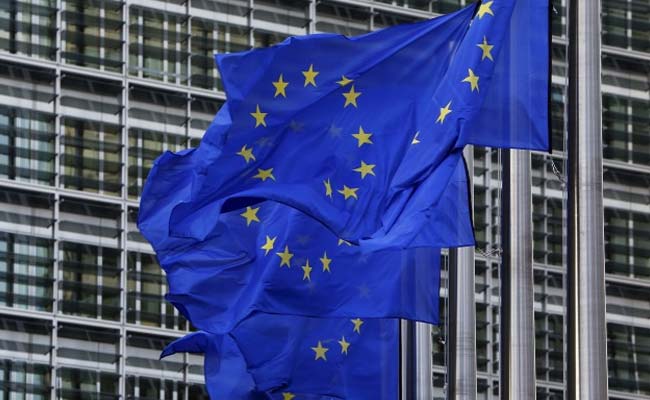
The European Union will challenge the China-US trade agreement at the World Trade Organisation if it creates "distortions" in the market that harm EU companies, the bloc's envoy to Beijing said on Friday.
Ambassador Nicolas Chapuis told reporters the 28-nation EU "will monitor the implementation" of the "phase one" deal that was signed on Wednesday by President Donald Trump and Chinese Vice Premier Liu He.

-
 Indian Markets Turning Corner After Two Tough Years, Says Sandeep Tandon
-
 NDTV Profit Ignite 2026: Experts See Opportunity In Equities, Stay Bullish For Long-Term
-
 Buy Right, Sit Tight Does Not Work for Individual Stocks, Says Dinshaw Irani
-
 'Worst Is Behind': Quant MF Sees Market Bottom, Flags 'Extreme Euphoria' In Midcaps
-
 India's Mutual Fund Industry Could Become A $1 Trillion Opportunity, Say Fund Managers
-
 'Foreign Investors Are Baraatis': Raamdeo Agrawal's Take On LTCG Tax
-
 Stay Invested Through Market Cycles: Raamdeo Agrawal at NDTV Profit Ignite
-
 Ramesh Damani Remains Bullish On India For Next 20-30 Years, Sees Bargains Amid Market Weakness
-
 CAS Came After A Long Consultation Process: SEBI Chairman Tuhin Kanta Pandey AT NDTV PROFIT IGNITE
-
 Aim To Cut FPI Onboarding Time From Mth To Five Days: SEBI Chairman Tuhin Kanta Pandey AT NDTV PROFI
"In our opinion, quantitative targets are not WTO-compatible if they lead to trade distortions," Mr Chapuis said. "If it were to be the case, we will go to the WTO to settle this matter."
Also Read | Layoffs Are Rising In Tech, But These Skills Are Helping People Unlock Better Pay
He said that during a meeting at the Chinese foreign ministry, he was given "formal assurances that in absolutely no way would European businesses be affected by the US-China deal".
The WTO's principle of most-favoured-nation treatment says countries cannot discriminate between trading partners.
Under the deal, China agreed to import an additional USD 200 billion in US products over two years, above the levels purchased in 2017, including an additional USD 32 billion in agricultural goods.
Beijing also pledged to improve protections of US intellectual property.
The US has pledged to slash in half tariffs of 15 per cent that were imposed on about USD 120 billion worth of Chinese consumer goods such as clothing in September.
But punitive border taxes will remain on two-thirds of more than USD 500 billion in imports from China.
Paul Tan of Rajah & Tann law firm in Singapore, who specialises in international dispute resolution, told AFP the deal "may not violate WTO rules because the type of goods being bought from the US could be different from other countries'', or even unavailable".
"I don't think the trade deal reversed the increase in tariffs on US goods after the trade war broke out, for example, so I doubt this could be read as more preferential treatment," he said.
China's agreement to buy more from the US in effect cushions some of the impact from increased tariffs over the past two years, he added.
He noted, however, that such bilateral trade deals seem to be the US administration's preferred method of developing economic relations with its major trading partners, rather than through the WTO -- meaning further trade disputes with the US will have to be resolved outside the global trading system.
Kerstin Braun, president of Stenn Group, said on Thursday, "With a weakened WTO and the general trend away from multilateral trade agreements, we're only going to see more trade squabbles."
Essential Business Intelligence, Sharp Market Insights, Practical Personal Finance Advice, Daily Fuel, Gold and Silver Prices and Latest Stories — On NDTV Profit.