A mark down of zero coupon bonds, issued to a few public sector banks in lieu of capital, to fair value could adversely affect the banks' tier-1 capital levels, according to India Ratings and Research. The ratings agency pegs this impact in the range of 50-175 basis points compared to the currently reported levels.
Zero coupon bonds carry no interest and are usually issued at deep discounts. They are redeemable at par.
The government had infused capital amounting to Rs 20,000 crore via zero coupon bonds into Central Bank of India, UCO Bank, Bank of India, Indian Overseas Bank and Punjab and Sindh Bank. This was done at a time when government finances were strained and banks needed additional capital infusion.
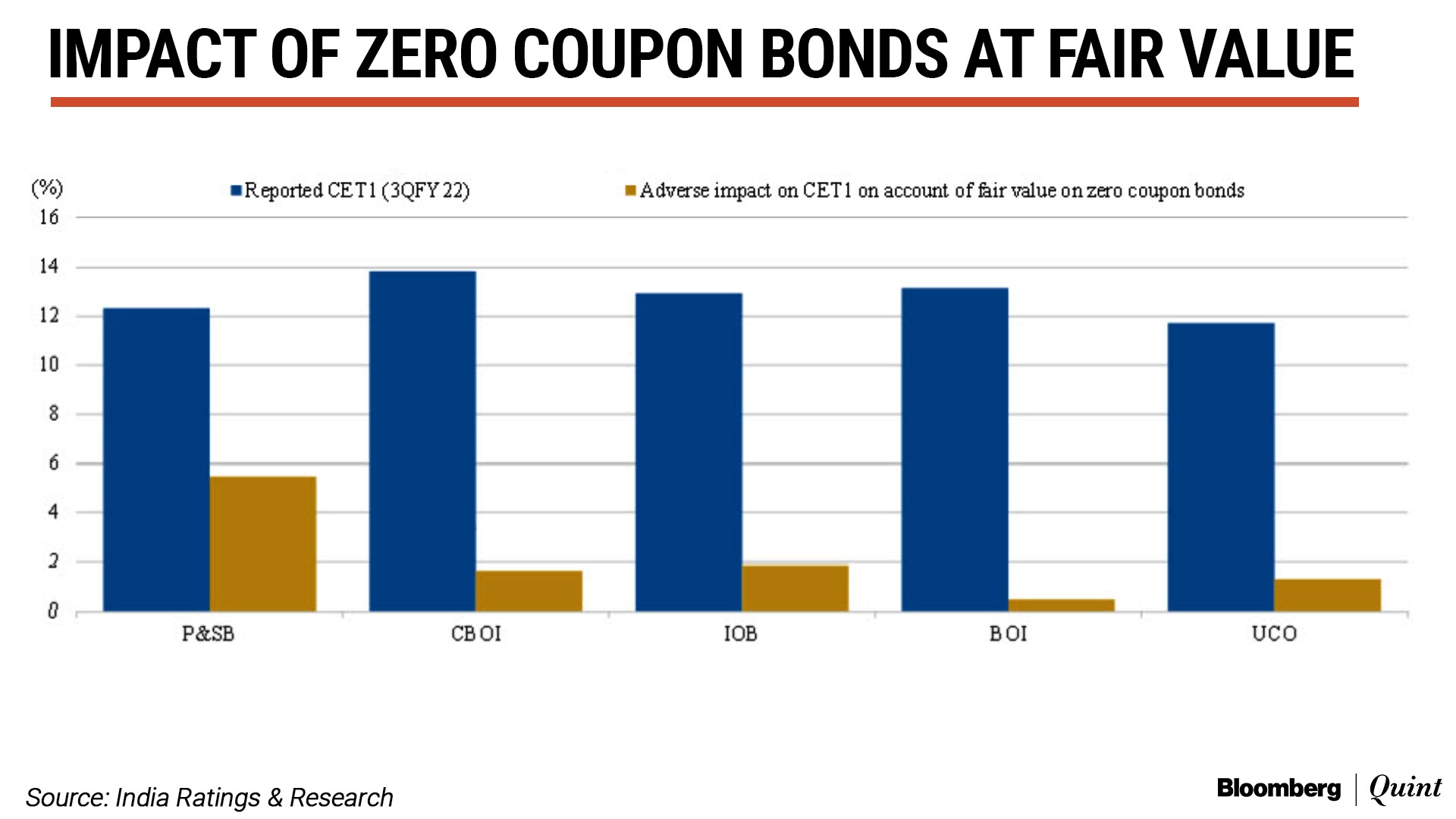
The capital infused via zero coupon bonds varied from 11%-44% of the tier-1 capital for these banks. These securities are currently valued at par. However, the Reserve Bank of India has directed the recipient banks of these bonds to list them at fair value.
The intrinsic net worth of these instruments could be lower by almost 50% at the end of FY22, given they do not carry any interest, India Ratings said. The illiquid, non-trading nature of these securities could add to the discount, according to the agency.
Marking these bonds down to fair value would lower the capital adequacy ratio of the recipient banks and would create the need to raise further capital to fulfill regulatory requirements.
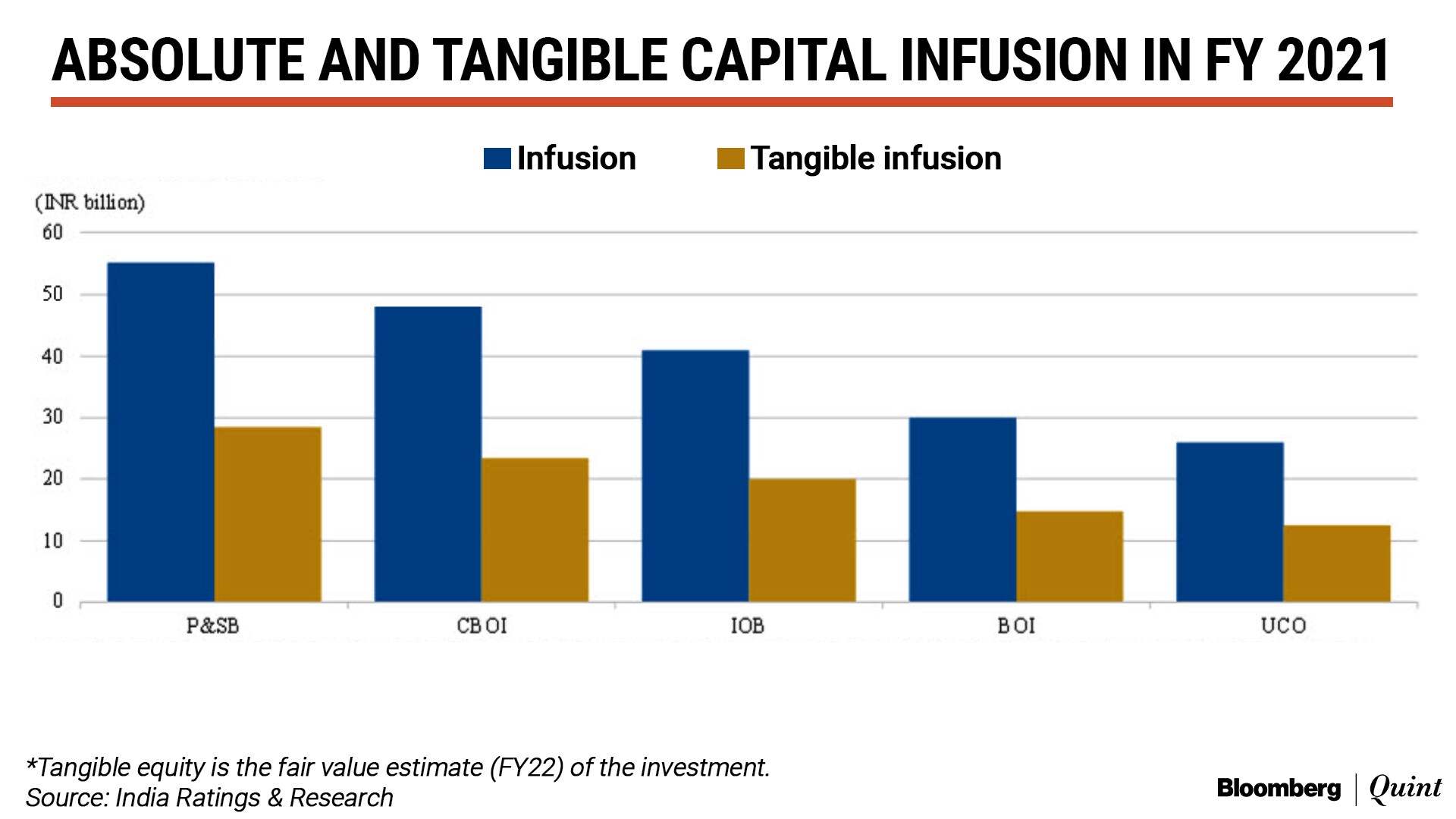
To be sure, the PSBs are in a better shape in terms of capital, provision cover, profitability and net bad loans compared to a year ago and may be able to raise capital from the markets, albeit at a higher cost.
“Valuing these zero-interest bonds at a fair level could coerce these banks to raise either equity or AT-1 in the near term solely on account of this factor,” India Ratings said. These banks now have “moderate competitiveness (albeit better than last year) to raise equity and would need to offer materially higher yields to raise additional tier 1 (AT-1) capital from the markets”.
Furthermore, these banks have sizable deferred tax assets, the utilisation of which could also release common equity tier 1 or CET-1 for these banks over the next few quarters, it added.
Essential Business Intelligence, Continuous LIVE TV, Sharp Market Insights, Practical Personal Finance Advice and Latest Stories — On NDTV Profit.