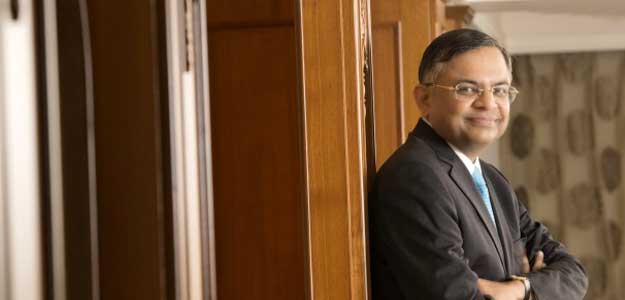
Tata Consultancy Services CEO and managing director N Chandrasekaran said the US visa fee hike is more of a cost issue than a revenue issue.
Mumbai: A recent hike in H-1B visa fee by the US is not a "big concern" and Tata Consultancy Services (TCS) will use its resource deployment model to mitigate the impact, the country's largest software services company said on Tuesday.
Talking to reporters, TCS chief executive and managing director N Chandrasekaran said the visa fee hike was more of a cost issue than a revenue issue.
"We have an idea about what the impact will be, based on the trend, but we need to see going forward our resource deployment model to mitigate some of that. So, we have got multiple options, I would not overly write that as a big concern," he added.
The US, under the 9/11 Health and Compensation Act, has imposed a special fee of $4,000 on certain categories of H-1B visas and $4,500 on L1 visas.
Almost all Indian IT companies would pay between $8,000 and $10,000 per H-1B visa from April 1, when the next annual H-1B visa filing session starts, thus making it quite economically unsustainable for them.
A series of other fee has also been added in the H-1B visa application over the past one decade. Notably, the original H-1B visa application fee is $325. India has been in talks with the US in this regard.
According to IT body Nasscom, this is expected to have an impact of about $400 million annually on the country's technology sector.
The Indian technology industry paid $22.5 billion in taxes during the financial years 2011-15, besides investing $2 billion in 2011-13 in the US, as well as supported 4,11,000 jobs in FY15 directly or indirectly, according to a Nasscom report.
"I think fundamentally I have always maintained that till job growth happens in all markets, you will see certain protectionist tendencies in different markets," Mr Chandrasekaran said.
"The visa fee hike is more of a cost issue than a revenue issue and it depends on how many visas we use and how much work we do offshore etc.," he added.
Talking to reporters, TCS chief executive and managing director N Chandrasekaran said the visa fee hike was more of a cost issue than a revenue issue.
"We have an idea about what the impact will be, based on the trend, but we need to see going forward our resource deployment model to mitigate some of that. So, we have got multiple options, I would not overly write that as a big concern," he added.
The US, under the 9/11 Health and Compensation Act, has imposed a special fee of $4,000 on certain categories of H-1B visas and $4,500 on L1 visas.
Almost all Indian IT companies would pay between $8,000 and $10,000 per H-1B visa from April 1, when the next annual H-1B visa filing session starts, thus making it quite economically unsustainable for them.
A series of other fee has also been added in the H-1B visa application over the past one decade. Notably, the original H-1B visa application fee is $325. India has been in talks with the US in this regard.
According to IT body Nasscom, this is expected to have an impact of about $400 million annually on the country's technology sector.
The Indian technology industry paid $22.5 billion in taxes during the financial years 2011-15, besides investing $2 billion in 2011-13 in the US, as well as supported 4,11,000 jobs in FY15 directly or indirectly, according to a Nasscom report.
"I think fundamentally I have always maintained that till job growth happens in all markets, you will see certain protectionist tendencies in different markets," Mr Chandrasekaran said.
"The visa fee hike is more of a cost issue than a revenue issue and it depends on how many visas we use and how much work we do offshore etc.," he added.
Essential Business Intelligence, Sharp Market Insights, Practical Personal Finance Advice, Daily Fuel, Gold and Silver Prices and Latest Stories — On NDTV Profit.