(Bloomberg) -- Remote work risks wiping $800 billion from the value of office buildings in major cities, highlighting the potential losses that landlords are facing from post-pandemic changes in employment trends.
Covid-19's push toward hybrid work has driven the need for office space down with vacancy rates rising, McKinsey Global Institute said Thursday in a report that modeled the impact on valuations by 2030 in nine cities globally.
The estimate for $800 billion in valuation losses represents a 26% decline compared to levels in 2019, with the blow at risk of deepening to as much as 42%, the consultancy firm said.
“The impact on value could be even greater if rising interest rates compound it,” McKinsey said. The bearing “could increase if troubled financial institutions decide to more quickly reduce the price of property they finance or own.”
McKinsey's model is offering a window on how property owners and lenders are grappling with the changes in where people work in the wake of the pandemic. The shift is also affecting the value of retail and residential real estate as people's new habits influence where they shop and live.
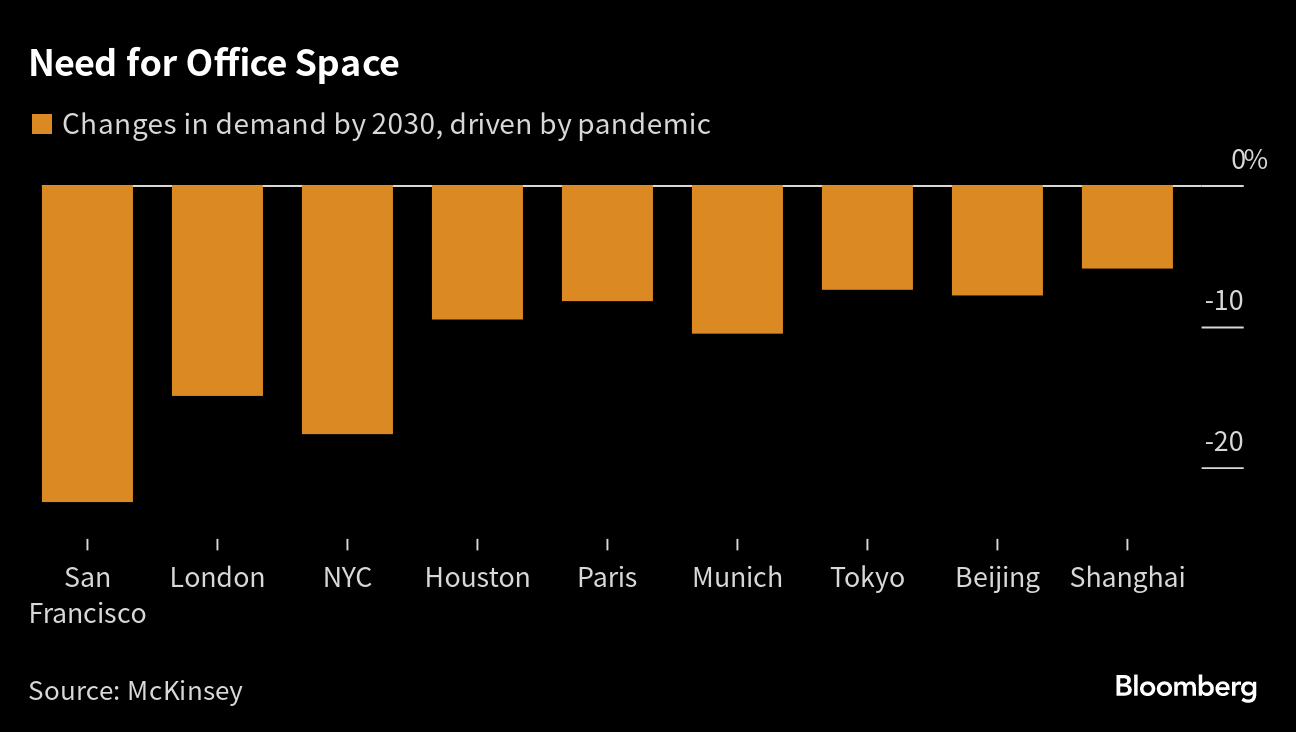
In a moderate scenario, demand for office space will be 13% lower by the end of the decade, McKinsey said. Attendance remains 30% lower than what it was before the pandemic and only 37% of people are back at the office every day.
Lower attendance has driven down asking rents in real terms. US cities have generally seen sharper drops, with San Francisco and New York City showing declines of 28% and 18% respectively, while European centers such as Paris, London and Munich have been more resilient.
The trend is set to continue with more employers downsizing space to reduce costs as soon as long-term leases come to an end.
“Some tenants have chosen not to wait for their renewal dates and instead have bought their way out of long-term contracts,” McKinsey said.
Developers can adapt to the declining demand for office and retail space through the creation of hybrid buildings whose design and infrastructure could be modified to serve different uses, McKinsey says.
Such designs “would protect owners from shifts in preferences that are impossible to predict now,” the report said. Also, “because tenants will now be moving in and out more frequently, buildings might become more valuable if they grow more adaptable.”
--With assistance from Jack Sidders.
More stories like this are available on bloomberg.com
©2023 Bloomberg L.P.
Essential Business Intelligence, Sharp Market Insights, Practical Personal Finance Advice, Daily Fuel, Gold and Silver Prices and Latest Stories — On NDTV Profit.