(Bloomberg) -- Venice, long plagued by what some observers have described as overtourism, introduced a new fee for day trippers, a world first that's likely to become a closely watched experiment as cities grapple with how to balance the wants and needs of tourists and residents.
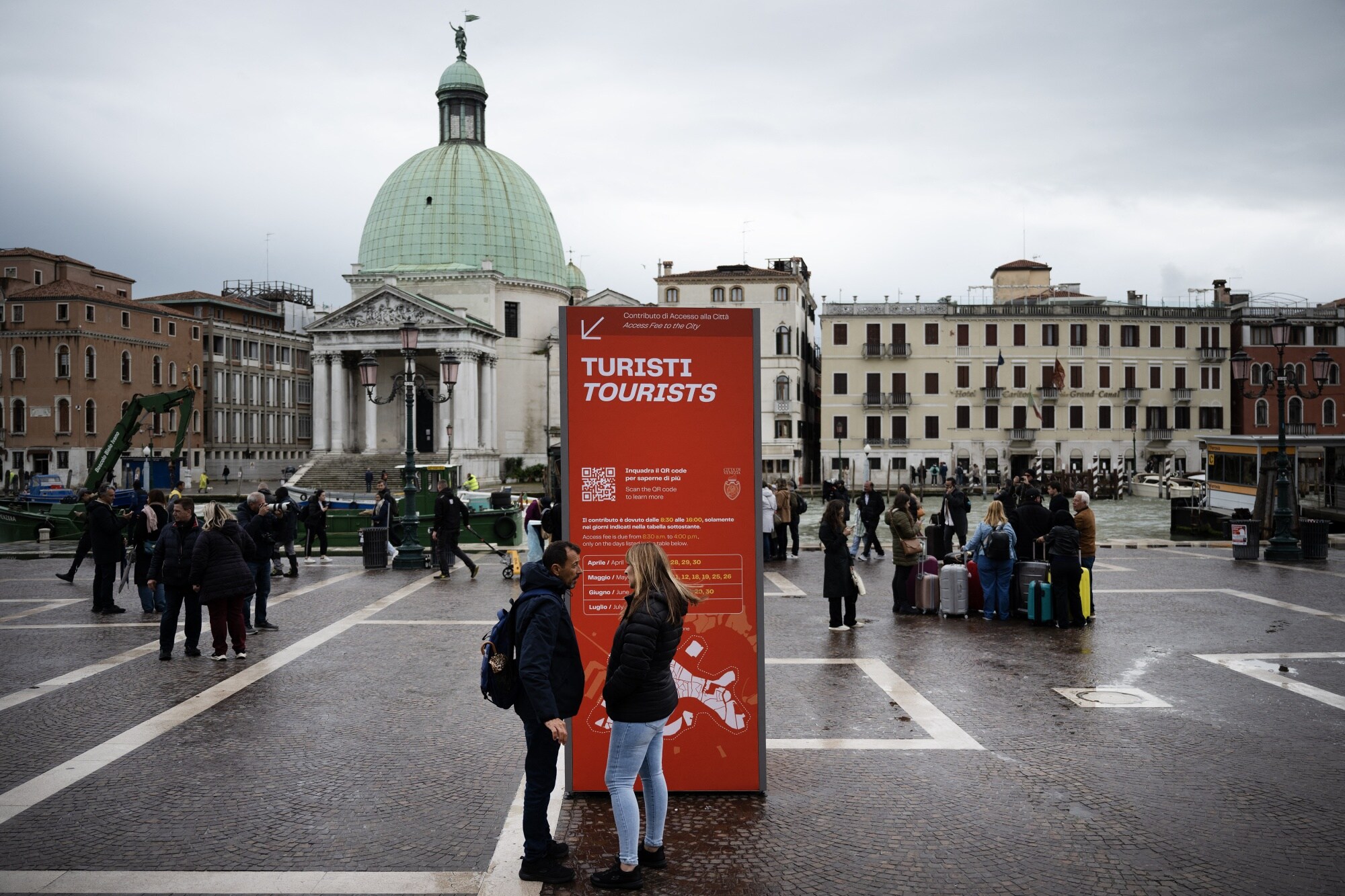
Visitors who do not live, work or study in Venice will have to start paying a 5 euro ($5.34) fee on Thursday, for a total of 29 select days, mostly weekends, until mid-July, from 8:30 a.m. to 4 p.m. Those who stay in hotels or registered accommodation overnight won't have to pay, Venice Mayor Luigi Brugnaro said.
Those who do not pay will face fines ranging from 50 to 300 euros, but authorities have said they don't expect penalties to extend beyond that or to include jail time. Visitors will be able to pay in advance or pay once they arrive at key access points such as Venice's Santa Lucia train station.
“Venice will the be first city to experiment with an access payment, even if overtourism is a problem that doesn't just plague this city,” Brugnaro said. “With this fee, we want to improve the quality of life in Venice, make it safer, cleaner, and give it more services, to give citizens and tourists happiness.”
Protesters waving placards reading messages such as “Venice should be defended, not put up for sale” demonstrated at entry points to the old city on Thursday. They say the city should regulate overtourism not by charging visitors, who may include legitimate residents who do not have all the right papers to prove their status, but by increasing services and housing supply to those who already live there. TV footage showed moderate scuffling between police and some protesters, who chanted “Shame.”
“It's a big lie and propaganda,” Federica Toninello, the spokeswoman of the National Assembly for Homes, said of the new fee. “The problems of tourism in Venice run much deeper, affecting, most of all housing … with Airbnbs eating the city.”
Venice in 2021 banned large cruise ships from docking to limit the number of visitors.
“How can they tell us they want to reduce tourism when they're doing exactly the opposite,” said Ruggero Tallon, spokesman for a group fighting to keep the cruise ships out, citing proposed measures to bring the vessels back to Venice and create a direct link between the airport and the old town.
The pilot scheme will run for an initial period and authorities will then assess whether and how to keep it running, including potential caps on the daily numbers of tourists allowed in. Venice has seen a constant outflux of residents from its ancient part, built on islands in a lagoon with a fragile ecosystem under constant threat from rising sea levels, with historic neighborhoods losing affordable rentals and even key services such as doctors because of the overtourism.
Though discussions on whether and how authorities should implement a system to regulate tourist access to Venice's old city started before the pandemic, timelines were brought forward after last year's threatened move by Unesco, which lists the city as a world heritage site, to put it on its list of endangered locations. The UN body didn't go ahead with the designation in the end.
There had also been speculation on whether there would be turnstiles or hard barriers to the city, but city officials opted for a more fluid model instead, with stewards helping visitors pay for entry or check their status, which is displayed in a QR code. Brugnaro, the city's mayor, insisted Venice would not become a “closed city.”
The access fee's utility will extend far beyond simply regulating arrivals and overtourism, according to its proponents. It could also help the city identify and monitor all residents — Italian daily il Corriere della Sera reported there are about 20,000 citizens in Venice who do not have a rental contract but still live and work there, which would in turn help the state collect all taxes it is owed. And tourists with overnight accommodation — exempt from paying the daily fee — whose hosts are not registered with the city would in effect report hotels and BnBs to the city.
Venice will always “remain inclusive and open, but asks everyone that it be respected,” Brugnaro said.
People born in Venice are also exempt, as are residents of the broader region, called the Veneto, once their status has been certified.
More stories like this are available on bloomberg.com
©2024 Bloomberg L.P.
Essential Business Intelligence, Sharp Market Insights, Practical Personal Finance Advice, Daily Fuel, Gold and Silver Prices and Latest Stories — On NDTV Profit.