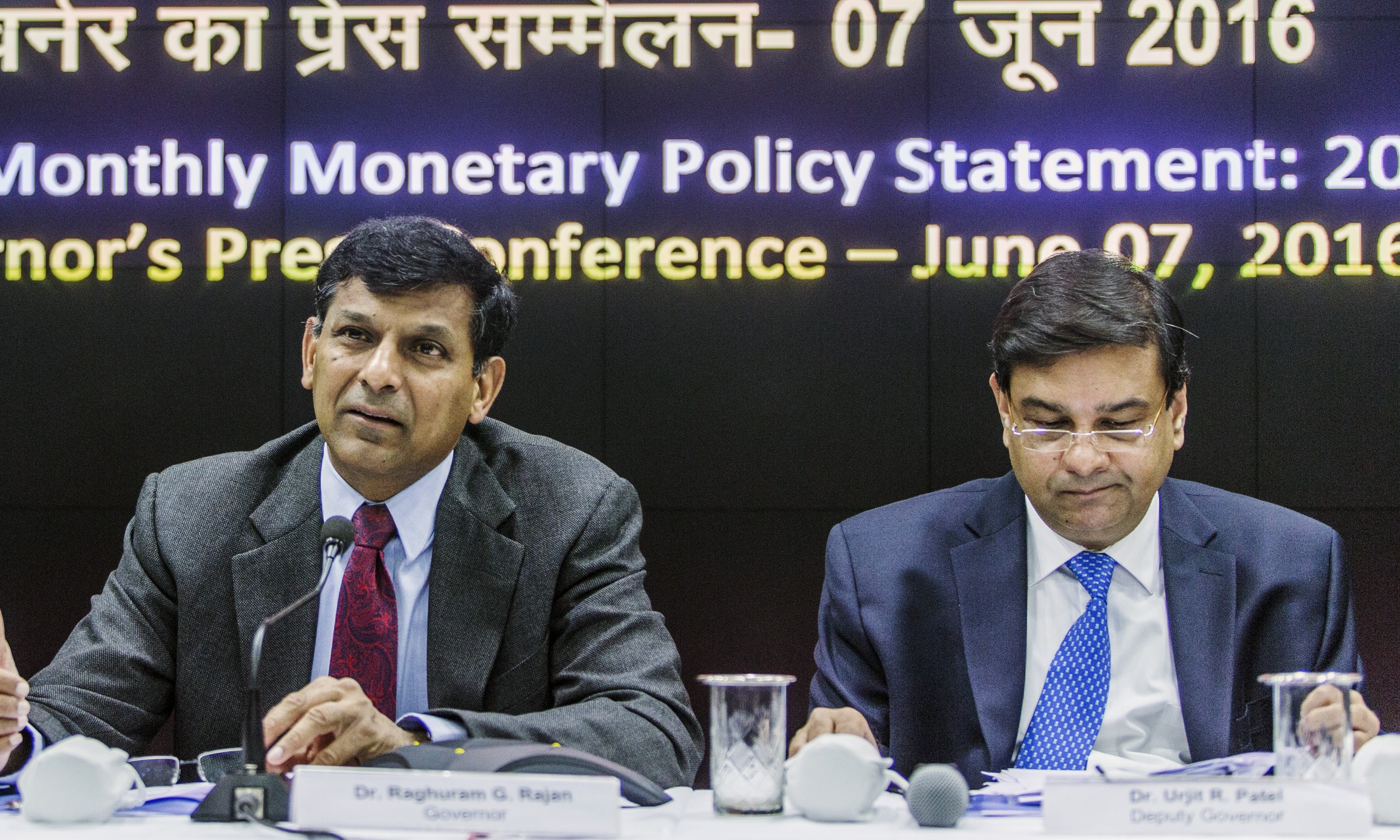
Raghuram Rajan didn't have the luxury of easing into the Reserve Bank of India (RBI) Governor's job. Neither did D. Subbarao before him. The former took over when the Indian currency was under attack, while the latter had barely stepped into office when Lehman Brothers went bankrupt.
In contrast, Urjit Patel is kicking off his tenure at a time when the economy is in cruise control. Barring an untoward incident, the economy is expected to follow a predictable path where inflation remains moderate and growth continues its slow recovery.
If that sounds too good to be true, it probably is.
Also Read | Layoffs Are Rising In Tech, But These Skills Are Helping People Unlock Better Pay
While Patel may have inherited an economy with steady fundamentals and a banking system where the process of repair has begun, there are a handful of issues that may prove to be niggling worries for the new governor.
.png)
The first of these concerns, highlighted in the chart above, will be core inflation.
Headline retail inflation fell to 5.05 percent in August from 6.07 percent in July, after a strong monsoon helped pull down prices of vegetables. Inflation in the pulses category, which has been a persistent problem, also showed some signs of easing in the latest data release. Most economists are of the view that these two components of inflation will remain in check which will help keep the headline number at near or below 5 percent, which is the RBI's target for March 2017.
Remember, though, that the RBI's eventual goal is to bring inflation down to 4 percent. That distance between 5 percent inflation and 4 percent inflation may not be easy to cover.
Core inflation, which has a 52 percent weight in the index, has remained close to the 5 percent mark. If you look at the three major components of core inflation (Housing, Education and Personal Care), it is difficult to see where the downside will come from.
The pace of increase in housing prices has fallen from 7 percent in fiscal 2015 to 4.9 percent in fiscal 2016 but a further fall may be prevented by the increase in house rent allowance as part of the seventh pay commission awards. Inflation in the education segment has also remained above the 5 percent mark and there is no reason to believe that these costs will rise at a slower pace. The personal care segment, though, may see some drop if gold prices fall since purchases of jewelry fall within this category.
The only other way that core inflation may ease is through the spillover of lower inflation expectations. HSBC economist Pranjul Bhandari, for instance, believes that lower food prices could feed into lower inflation expectations and eventually into core inflation.
Even so, it won't be an easy task to nudge core inflation lower and meet the 4 percent inflation target set under the new monetary policy framework, particularly if demand picks up following a good monsoon.
.png)
The second chart that Patel should keep his eyes fixed on is one which shows the change in market interest rates and in bank lending rates.
The RBI has now cut interest rates by 150 basis points since the start of 2015. It is possible that it will cut rates by another 25-50 basis points before the end of this financial year. That works out to a substantial 150-200 basis point cut in the policy rate over the course of the cycle.
The cut in rates is now being complemented by an easy liquidity policy, which Rajan and Patel had initially opposed but finally gave into. The combination of the two has brought down market rates substantially.
The benchmark 10-year bond yield is down to 6.80 percent levels -- the lowest since 2009. Corporate borrowing costs have also plummeted. Companies borrowing from the market can also now pick up three month money through a commercial paper issuance at under 6.8 percent. There is also enough liquidity in the market. As an example, consider the Rs 4000 crore that Nirma managed to raise in September. The acquisition financing deal was closed at a comfortable 8.68 percent.
No such luck for bank borrowers.
After the initial round of rate cuts in 2015, State Bank of India reduced its benchmark lending rate (then the base rate) from 10 percent to 9.3 percent. Since the marginal cost lending rate system came into effect, rates have come down a little further and the one-year MCLR charged by SBI is now 9.1 percent.
The point is that transmission remains hopelessly incomplete. There are a host of reasons for this from the build-up of bad loans to the lack of demand for long term credit. The RBI has been grappling with the problem of inadequate monetary policy transmission for some time now but Patel will have to keep chipping away at it if he wants the broader economy to benefit from lower rates.
.png)
A third indicator that the new Governor needs to watch closely is stressed assets in the banking sector and the state of corporate balancesheets.
The asset quality review initiated under Rajan pushed banks to recognize visibly stressed assets rather than sweep troubled loans under the carpet. The result was a surge in gross non performing assets (NPAs) to 8.7 percent at the end of June 2016 compared to 4.6 percent in March 2015.
Recognition was the first step of the process. Adequate provisioning and eventually resolution are the next two steps. Both will prove to be troublesome.
Public sector banks need capital well in excess of what the government has provided. Capital requirements will increase in fiscal 2018 and fiscal 2019 as we move towards full implementation of Basel III norms. Given that the market's appetite for public sector paper is not strong, where will the capital for increased provisioning come from?
Equally worrying, how will banks resolve the assets declared as bad. Will a turn in the economic cycle help? It may to some extent but a number of projects have now become commercially unviable. One option is for banks to sell bad assets to reconstruction companies but experts say that there is still a 25-30 percent gap in the price that banks are demanding and what reconstruction companies want to pay.
It is also difficult to rule out a further build-up of stressed assets, albeit at a slower pace. In a 26 September report, Credit Suisse pointed out that 39 percent of the debt held by a sample of 3700 companies is held by firms which have an interest coverage ratio of less than one. As such, incremental stress is possible. Credit Suisse expects overall impaired assets (which includes restructured loans) to rise to 16 percent.
According to a 27 September report in Mint newspaper, Patel has adopted a more “conciliatory approach” towards the issue of bad loans in initial meetings with bankers. Given the size and seriousness of the problem, he can't afford to.
Essential Business Intelligence, Sharp Market Insights, Practical Personal Finance Advice, Daily Fuel, Gold and Silver Prices and Latest Stories — On NDTV Profit.