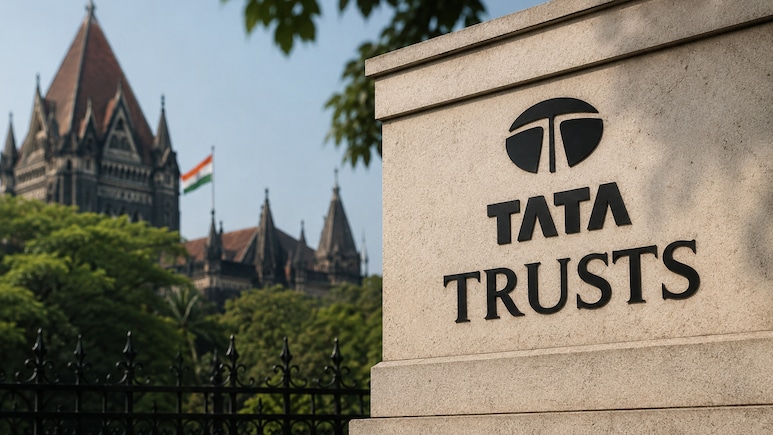
The Bombay High Court on Thursday declined to urgently hear a petition seeking cancellation of a Tata Trusts meeting scheduled for May 8, after the petitioner pressed for immediate listing of the matter.
The petition, filed by Suresh Tulsiram Patilkhede, challenged the validity of the proposed meeting and alleges violations of Maharashtra's public trusts law by entities within the Tata Trusts network.
Senior advocate Janak Dwarkadas, appearing for Tata Trusts, told the bench that the matter had already been mentioned before the court on Wednesday and that the court had then declined urgent circulation after finding no urgency in the case.
Also Read | Layoffs Are Rising In Tech, But These Skills Are Helping People Unlock Better Pay
The bench, led by the chief justice, observed that once the court had concluded there was no urgency, the matter could not be mentioned again for the same relief. The court directed the petitioner to approach the vacation bench if any urgent relief was sought.
The matter was mentioned by the petitioner's counsel, who pressed for urgent hearing of the plea. Dwarkadas also informed the court that a caveat had already been filed on behalf of the Trusts.
The petitioner's counsel, former T Raja judge T Raja, sought liberty from the court to mention the matter before the vacation bench. The court replied that no separate liberty was required.
The writ petition seeks cancellation of the May 8 meeting on grounds that the Sir Ratan Tata Trust and related entities allegedly violated amendments introduced to Maharashtra's trust laws in September 2025.
The plea argues that decisions taken after the amendment should be treated as invalid if the trusts are found to be non-compliant with the revised framework.
Governance Questions
At the centre of the dispute is a provision in the Maharashtra Public Trusts Act that caps the number of lifetime or perpetual trustees at 25% of a trust's board strength. The petition claims the Sir Ratan Tata Trust breaches that threshold because three of its six trustees - Noel Tata, Jimmy Tata and Jehangir Jehangir - are perpetual trustees.
The legal challenge comes amid wider governance questions across the Tata Trusts network relating to trustee appointments, board procedures and compliance with trust deeds.
The Trusts function through several independent charitable entities, each governed by separate boards and rules. Legal experts said exits or disagreements in one trust do not automatically affect another entity, though such developments can influence broader governance discussions across the network.
Governance concerns have intensified in recent months after objections were raised over reappointment procedures and the validity of resolutions passed by certain trusts.
At the Tata Education and Development Trust, Mehli Mistry voted against the proposal to reappoint Srinivasan and Singh, whose terms expire on May 11. The board comprises five trustees - Mistry, Noel Tata, J N Mistry, Srinivasan and Singh - and requires unanimous approval for agenda items.
The immediate issue now is whether Srinivasan's continuation as vice-chairman of Tata Trusts could come under focus after his exit from the Tata Education and Development Trust.
Last month, Srinivasan also stepped down from the Bai Hirabai Jamsetji Tata Navsari Charitable Institution, citing other commitments. His resignation came days after Mistry approached Maharashtra's charity commissioner questioning the eligibility of Srinivasan and Singh under the trust deed.
Complaints before the charity commissioner have raised concerns over trustee eligibility, board processes and compliance with governing rules across entities linked to Tata Trusts.
Essential Business Intelligence, Sharp Market Insights, Practical Personal Finance Advice, Daily Fuel, Gold and Silver Prices and Latest Stories — On NDTV Profit.