SBI Recurring Deposit Account: Interest Rates, Investment Limits And More
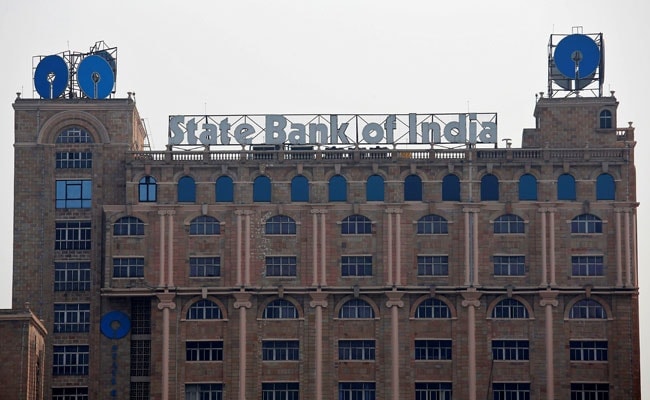
- In SBI's RD accounts, customers are required to make monthly deposits of a minimum Rs 100 and in multiples of Rs 10 thereafter. There is no maximum limit on the deposits.
- The minimum period of RDs is 12 months while the maximum is 120 months, according to SBI. (Also read: All You Need To Know About SBI Flexi Deposit Scheme)
- The interest rate payable to SBI staff and pensioners is kept at 1 percentage point above the applicable rate. The rate applicable to senior citizens is 0.50 per cent above the applicable rate, according to the SBI website.
- Passbooks are also issued for RD accounts.
- The recurring deposit account is subject to tax deducted at source. However, form 15G/H can be submitted by the depositor to get exemption from tax deduction as per income tax rules.
- Transferability among branches is also allowed in case of SBI RD account.
- SBI imposes the following penalty charges for non-deposit of monthly instalments in case of a RD account: for account of period five years and less - the bank charges Rs 1.50 per Rs. 100 per month and for account of period above five years- the lender charges Rs 2 per Rs. 100 per month.
- A service charge is levied on recurring deposit accounts paid out on or after the date of maturity, wherein there is default in payment of three or more consecutive instalments and the account has not been regularized, according to SBI.
- In case six consecutive instalments are not received, the account is prematurely closed and balance is paid to the account holder. Instructions for disposal of maturity proceeds are accepted at the time of opening of accounts, said SBI.
- Premature withdrawal is allowed on RDs and for this, rules for fixed deposits (FDs) or STDR (special term or fixed deposits) are applicable.
-
High US Salaries, No Green Card Certainty: The Financial Calculation Facing Indian H-1B Families

The suspension of PERM processing at eight technology employers does not cancel existing H-1B visas. What it does is force a question many Indian families have been avoiding: is the US salary worth tying your career and family plans to one employer?
-
Swiggy vs Eternal: Food Delivery's Two Rivals Are No Longer In The Same Race
Eternal is building a private AI assistant, dark.ai. Swiggy is still working out how to make Instamart pay, with an operating loss of Rs 895 crore in the July-September quarter while Blinkit stayed profitable.
-
Where You Live Shapes How You Get To Work | The Reason Why
Two-wheelers are the most popular way to get to work in India, accounting for nearly 43% of workplace commutes.
-
Unhedged Position: Can India See An Indonesia-Style Time Correction?
The Nifty is trading below levels it first clocked in 2024. Is there, then, as I have suggested in the headline, potential that the current time correction drags on painfully for the next three-five, even ten years?
-
Navigating Friction And Energy Realities: An Analysis Of Marco Rubio's October Visit To India
Occurring at a critical juncture marked by stalled trade negotiations and escalating geopolitical pressures over global energy supplies, the visit offers a profound window into modern US-India relations.
-
India Exports Capital. Why Not Export Trusteeship?
The big question, then, is whether India can build an institution that global borrowers, investors, banks, and lawyers can trust, even without an Indian connection.
-
France's Economy & Politics Are In Crisis | The Reason Why
Let's look at how the French economy and politics evolved under Nicolas Sarkozy, Franois Hollande and Emmanuel Macron.
-
You May Inherit The Business. You Must Earn Its Credibility.
Succession tests the founder's ability to share authority as much as it tests the next generation's readiness to assume it.
-
Signing Deals Is One Thing; Making Them Work Is Another | The Week In Whys
Sometimes, things don't turn out as planned. Indian companies have lost some bids to rivals, some projects won't produce until 2030.
-
FOMC Wall, PERM Suspension, Hospital Stocks | Talking Points This Week
A PERM suspension would directly affect green-card sponsorship rather than H-1B visas, so the near-term earnings impact could remain relatively limited. The key question is whether this marks a new phase in US scrutiny of Indian IT.