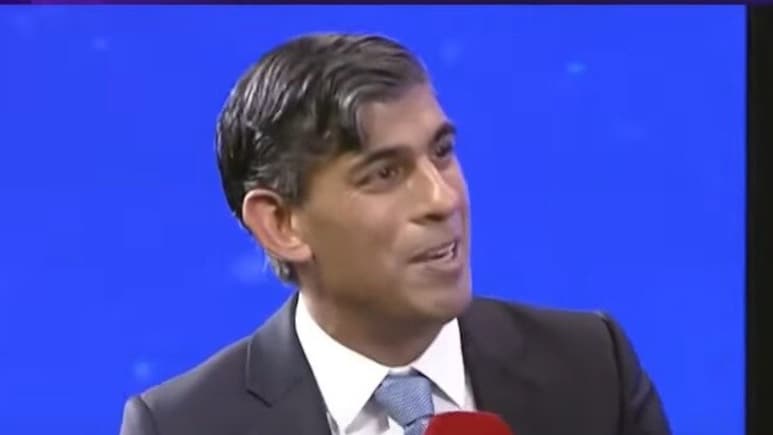
Former UK Prime Minister Rishi Sunak has said that artificial intelligence is beginning to change hiring patterns in sectors such as law and accountancy, making it more difficult for young people to secure entry-level roles.
He noted that AI is already affecting employment opportunities, especially for those entering professional fields for the first time.
In an interview with BBC, Sunak said companies are increasingly depending on AI tools, which is reducing the need to hire junior employees.
While he said he remains positive about the long-term benefits of AI, he also stated that concerns among graduates struggling to find jobs are “reasonable and understandable.”
Also Read | Layoffs Are Rising In Tech, But These Skills Are Helping People Unlock Better Pay
He added that senior executives have privately indicated that hiring levels for young workers are no longer growing as before due to the rising use of AI.
Explaining the shift in hiring strategies, Sunak said business leaders are adopting a new model of growth where companies increase output without significantly expanding their workforce.
ALSO READ: 'Don't Carry Bags for Others': India Warns Travellers As Maldives' Death Penalty For Drugs Kicks In
“They believe they can keep growing their companies without needing to hire many more people,” he said, referring to how AI is helping firms improve productivity with fewer employees.
This change is being seen in sectors like law, accountancy and creative industries, where entry-level roles have traditionally provided starting points for young professionals.
To address this issue, Sunak suggested that governments should consider long-term changes in taxation policies.
He proposed gradually removing National Insurance contributions and replacing them with taxes on corporate profits.
According to him, as AI improves productivity, company profits are expected to rise, which could provide an alternative source of revenue for governments. He said such a change could encourage companies to hire more workers by reducing the cost of employment.
Sunak also said policymakers need to ensure that AI is used to support jobs rather than replace them.
ALSO READ: 'Great Country, Good Friend At Top': Trump Praises Modi, India After Reposting 'Hell-Hole' Remark
He stated that governments must “adjust the balance so AI supports workers and improves productivity rather than reducing jobs.”
He added that the impact of AI on employment may be different from previous technological changes, and therefore new policy approaches will be required instead of relying on past experiences.
He also warned that increasing automation could reduce tax revenues from employment, making it necessary for countries to explore new fiscal strategies.
Addressing concerns related to AI safety, Sunak referred to developments at Anthropic, where a new AI model named Claude Mythos has been introduced. The company said the model can perform better than humans in certain cyber-security and hacking-related tasks.
ALSO READ: 'Highest Since Independence': West Bengal, Tamil Nadu Assembly Elections See Record Voter Turnout
This has led to discussions among regulators and financial institutions about possible risks to digital systems.
Sunak cautioned against allowing companies to regulate themselves, stating that independent oversight is important.
He pointed out that the UK's AI Security Institute, established during his time in office, was the first to test the system's capabilities. He also mentioned his advisory roles with Anthropic and Microsoft while discussing these developments.
Despite these concerns, Sunak expressed confidence in the UK's position in the global AI sector. He highlighted the presence of major companies such as Google DeepMind, Anthropic and OpenAI as indicators of the country's growing role in AI development.
He also said that he recently worked with David Lammy to promote investment in the UK technology sector at an AI summit.
Sunak said the UK has the potential not only to build advanced AI systems but also to become one of the most effective users of the technology.
Essential Business Intelligence, Sharp Market Insights, Practical Personal Finance Advice, Daily Fuel, Gold and Silver Prices and Latest Stories — On NDTV Profit.

















%20India%20Aviation,%20aeroplane,%20aircraft%20(6).jpeg?im=FeatureCrop,algorithm=dnn,width=350,height=197)