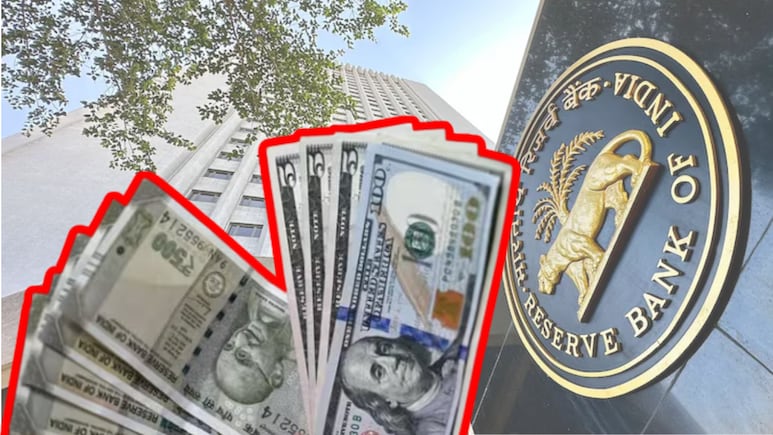
In a bid to arrest the depreciation of Indian rupee, the Reserve Bank of India (RBI) on Friday mandated that banks must ensure their net open position (NOP) in onshore deliverable market does not exceed $100 million mark. While this helped the rupee recover by 133 paise in Monday market opening hours, banks are likely to face a hit to their trading income in Q4FY26. NDTV Profit explains the implications of the RBI's new diktat:
What has the RBI Done?
The RBI essentially barred banks from making upwards of $100 million of bets in the onshore deliverable markets. Before the diktat, banks were allowed to park 25% of their tier-1 capital in such markets. Industry sources suggest that large banks including State Bank of India, HDFC Bank, ICICI Bank and Axis Bank, among others, have $250-300 million dollars invested in these markets. With the new diktat, banks will have to sell-off their excess NOP by April 10, as mandated by the RBI.
ALSO READ: Banks Dial RBI Seeking Relaxation On $100-Million NOP-Ceiling Diktat
Also Read | Layoffs Are Rising In Tech, But These Skills Are Helping People Unlock Better Pay
First, What is a "Net Open Position"?
Net Open Position is a risk management metric, measuring the difference between a bank or firm's total foreign currency assets and liabilities (including off-balance sheet items). It represents the unhedged exposure to currency fluctuations, where a positive balance is a "long" position and a negative balance is a "short".
Why did RBI act now?
There are multiple reasons behind the RBI's move. These include arresting the fall in Indian rupee. The Indian rupee has come under sharp pressure, breaching the 94.00 mark and slipping to a record low of 94.84 against the US dollar Friday. The primary driver behind this move is the surge in crude oil prices, which have climbed back above $100 per barrel, experts say.
At the core of this pressure is the ongoing Iran-related conflict and, more importantly, the uncertainty around its resolution. Furthermore, the regulator also likely observed that banks had built up large arbitrage positions, taking advantage of the pressure on the rupee amidst geopolitical and energy tensions, promoting the new directive.
Immediate impact of RBI's move
The rupee opened higher against the US dollar on Monday. It appreciated 1.4% to 93.47 at the open against the greenback. The dollar index, which gauges the strength of US unit against six major currencies, was trading steady at 100.10 as of 9:00 a.m. Bank shares, however, were trading in the red.
How are banks reacting to this?
Banks have approached the RBI seeking relaxation on the NOP diktat, as NDTV Profit reported on Sunday. Large banks' officials met with RBI officials on Saturday and conveyed their concerns on the immediate hit to profitability if the new rules are implemented from next month.
The RBI, they say, should consider making these rules applicable from a prospective manner and give lenders a three-month timeline to wind-down positions. According to Jefferies, banks' positions may be large, at $30-40 billion in the onshore deliverable markets.
ALSO READ: Rupee Under Pressure: Is 95/$ The New Normal? Experts Weigh In
Essential Business Intelligence, Sharp Market Insights, Practical Personal Finance Advice, Daily Fuel, Gold and Silver Prices and Latest Stories — On NDTV Profit.