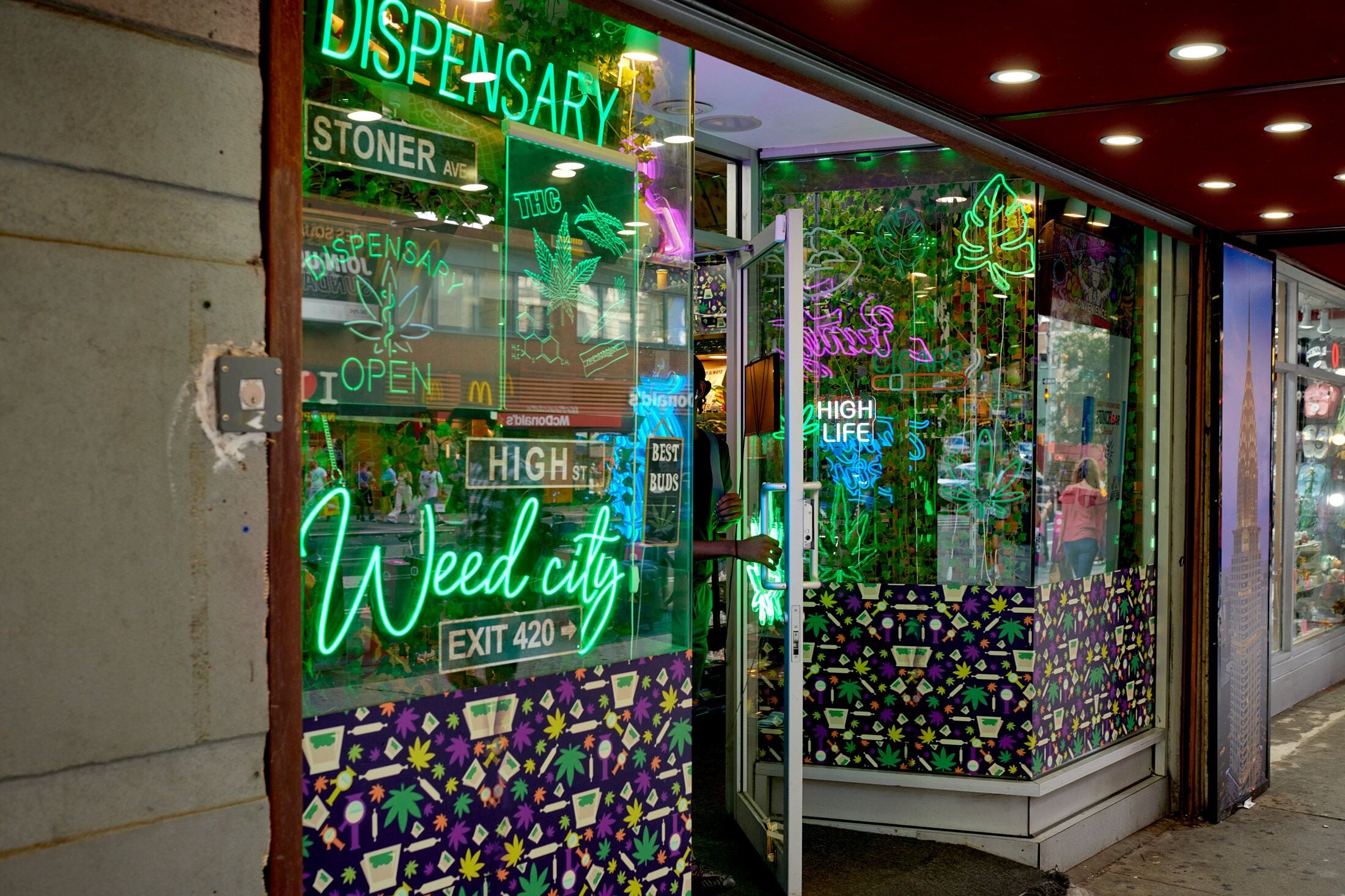
(Bloomberg) -- The proliferation of unlicensed marijuana stores across New York City the last two years has had an unexpected consequence for banks and real estate owners: Many are now intertwined in the cannabis business.
The shops appeared slowly and then seemingly all at once, with the unlicensed sellers taking advantage of a regulatory vacuum in the aftermath of the state's 2021 legalization of recreational marijuana. There are now as many as 2,000 in the five boroughs, even though the unauthorized sale of cannabis products is illegal.
More than two dozen landlords had multiple unlicensed sellers as tenants, according to an analysis by Bloomberg News and real estate intelligence firm PincusCo. In addition, JPMorgan Chase & Co., Signature Bank and New York Community Bank had at least 25 mortgages to pot shop landlords, according to public records for more than 400 unlicensed shops that received a warning letter from the Manhattan District Attorney's Office earlier this year.
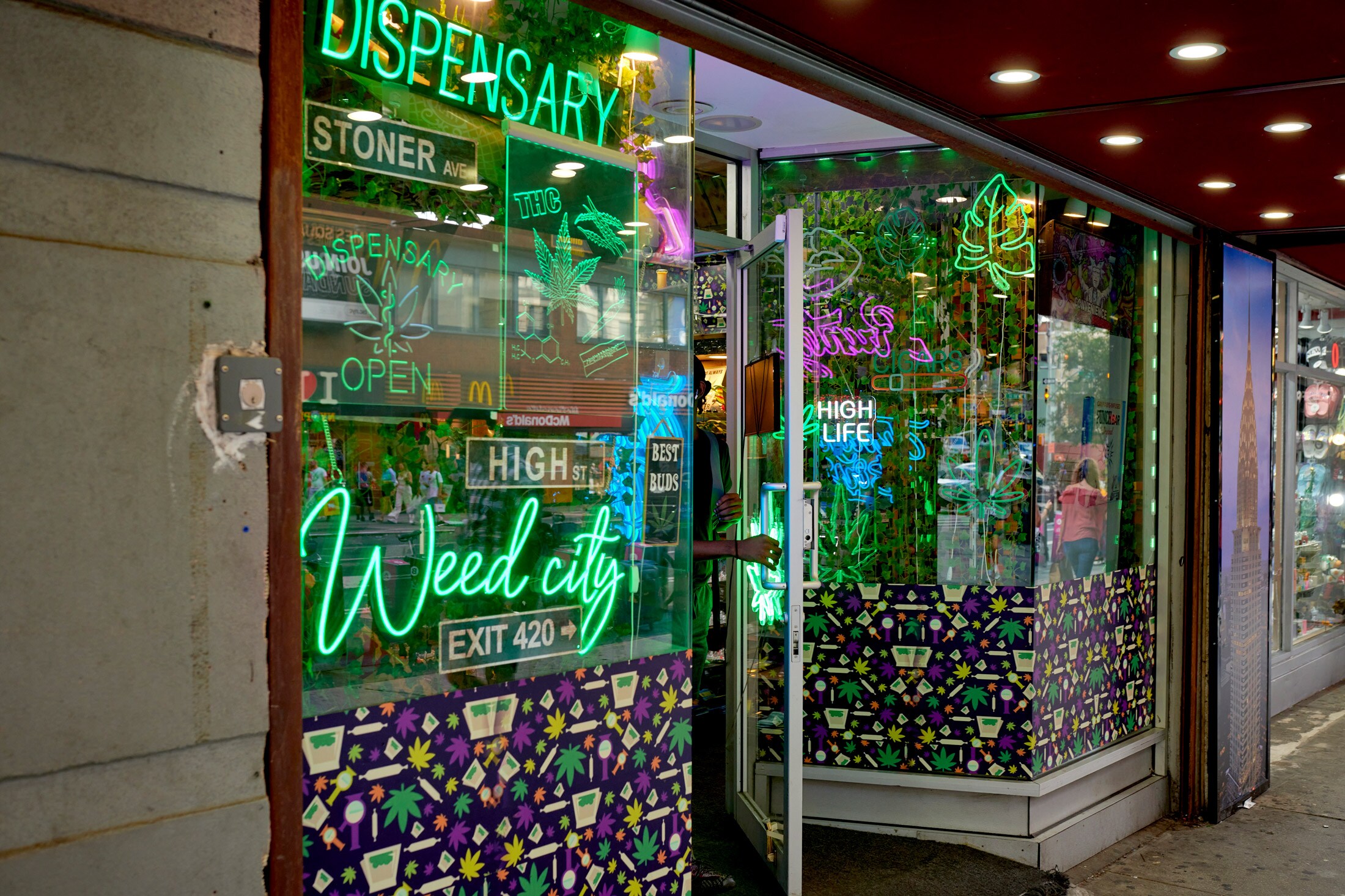
The spread of the unlicensed shops coincided with a pandemic that hollowed out the city's commercial areas and depressed real estate values, limiting landlords' options for leasing empty storefronts. In many cases, the illicit sellers were existing businesses like smoke shops and bodegas that added joints and cannabis gummies and sold the products alongside chips, soda and cigarettes, potentially making it difficult for a landlord or lender to know what was happening. In other examples, the shops decorated their storefronts with glowing pot leafs and stoner slogans.
Whether or not landlords knew this was happening initially, the continued presence of the illegal stores is exposing them to laws governing the sale of controlled substances.
“It leaves me scratching my head a little bit when I see the volume of landlords that are willing to lease the retail storefronts to operators who are unlicensed,” said Robert DiPisa, who is the chair of the cannabis group at law firm Cole Schotz. “There's a tremendous amount of exposure.”
Representatives for JPMorgan, Bank of America and Wells Fargo declined to comment. A representative for the Federal Deposit Insurance Corp., which seized Signature's commercial real estate loan portfolio in March, also declined to comment. New York Community Bank did not respond to requests for comment.
New York is one of more than a dozen states that has legalized marijuana for adults, even though the drug remains illegal at the federal level. But nearly two years passed between when the state law was enacted and when the first licensed retailers opened. There are just a handful of licensed dispensaries in the five boroughs, and the state's process to approve more locations has been bogged down by legal challenges. In the meantime, unlicensed stores are undermining the push to establish a regulated market that would generate tax revenue, control product safety and prevent the drug from being sold to minors.
Read More: NYC Pot-Tax Revenue Runs Below Forecasts as Store Openings Stall
City Law
In late July, a new city law went into effect that would fine landlords who knowingly lease space to unlicensed pot shops up to $10,000. The state's Office of Cannabis Management, which oversees the legal pot market, has teamed up with the police and the state Department of Taxation and Finance to raid a few dozen stores in the city and other parts of the state, confiscating illicit products. In some cases, they've reopened the same day.
New York Govenor Kathy Hochul, Mayor Eric Adams and Manhattan District Attorney Alvin Bragg have decried the situation, but have so far been unable to get it under control.
“We have been clear that any store that chooses to flout the law could face potential civil and criminal action,” Bragg said in a statement. “We are thoroughly investigating such illegal operations and are simultaneously proactively working to educate landlords about the laws and their options for eviction.”
One landlord who has leased space to unlicensed sellers, and who asked not to be identified, said that in 2022 much of the leasing demand was coming from smoke shops and convenience stores. The tenants didn't say they planned to sell weed when they were negotiating their lease, the landlord said, and he didn't think it was his job to enforce the law at a time when New Yorkers can smoke pot in broad daylight.
Property owners who try to oust the pot shops have run into a lengthy eviction process. Real estate company Ashkenazy Acquisition Corp. started a proceeding against a tenant in northern Manhattan after Bragg's office notified the landlord that the shop was selling cannabis without a license, a company spokesman said. Still, the firm won't get its case into court until September.
In another example, the district attorney sent a warning letter to an unlicensed marijuana seller located in a financial district office building owned by BGO, a Toronto-based firm with $83 billion in assets under management. The landlord later filed a default notice against the tenant, spokesman Rahim Ladha said, though he declined to specify the reason. The firm believes it must give the tenant an opportunity to cure the default before it starts an eviction process.
Even as legalization has spread to dozens of states, banks have typically taken a cautious approach because of the federal prohibition on cannabis. Most commercial mortgages include language that puts borrowers in default if they use the property in violation of federal, state or local laws.
Representatives for banks that have loaned money to buildings that now have pot tenants said they take the federal laws seriously, asking to remain anonymous. One bank said it expects commercial mortgage borrowers to make sure there are no illegal drug activities taking place on the property, and will take action if a borrower is out of compliance.“If a bank provides financing to a customer who leases property to a marijuana business, the bank is likely receiving funds derived from illegal marijuana sales,” said Sharon Cohen Levin, a former federal prosecutor who serves as a partner in the criminal defense and investigations group at Sullivan & Cromwell. “If a bank has multiple customers who lease property to marijuana businesses and the bank misses that and fails to report the suspicious transactions – it would likely raise concerns about the strength of the bank's anti-money laundering program.”
Midtown Marijuana
In midtown Manhattan the state's clumsy legalization effort has been on display to office workers and tourists. On a recent walk around the area, it was hard to go three blocks without passing an illegal store.
The Manhattan at Times Square Hotel is owned by a company controlled by Sheikh Faisal bin Qassim Al Thani, one of the richest businessmen in Qatar. The property, which encompasses an entire block, is ringed with retail shops, where guests can purchase NYPD-branded trinkets.
Or they can step past the green neon sign reading “Weed City'' in the window of one of the building's storefronts, where joints rolled from the shop's “in-house” sativa blend come packaged in brown plastic tubes. The Manhattan district attorney warned the store of potential eviction six months ago, but it is still operating.
Efforts to reach the Qatari royal for comment through Al Rayyan Tourism Investment Co. and several family members were unsuccessful. A representative for Highgate Hotels, which manages the property, declined to comment. The shop owner didn't respond to request for comment left with an employee.
A few blocks away, another business that received a warning letter from Bragg's office business positioned a chalkboard outside its storefront reading “get high and drunk.” The building is owned by Unite Here Local 6, a hospitality-workers union whose umbrella organization, the Hotel & Gaming Trades Council, wields influence in city and state politics. The owner, who declined to give his name, said that he sells products like cannabidiol, or CBD, and that he does not sell marijuana.
Local 6 was unaware that its tenant had been put on notice by the Manhattan district attorney, according to spokesman Austin Shafran.
“Now that the union has been made aware of the existence of a warning letter, it will be informing the tenant that the union will take appropriate legal action under the terms of our contract if any further illegal or unlicensed activity is reported,” Shafran said.
--With assistance from Tiffany Kary.
More stories like this are available on bloomberg.com
©2023 Bloomberg L.P.
Essential Business Intelligence, Sharp Market Insights, Practical Personal Finance Advice, Daily Fuel, Gold and Silver Prices and Latest Stories — On NDTV Profit.