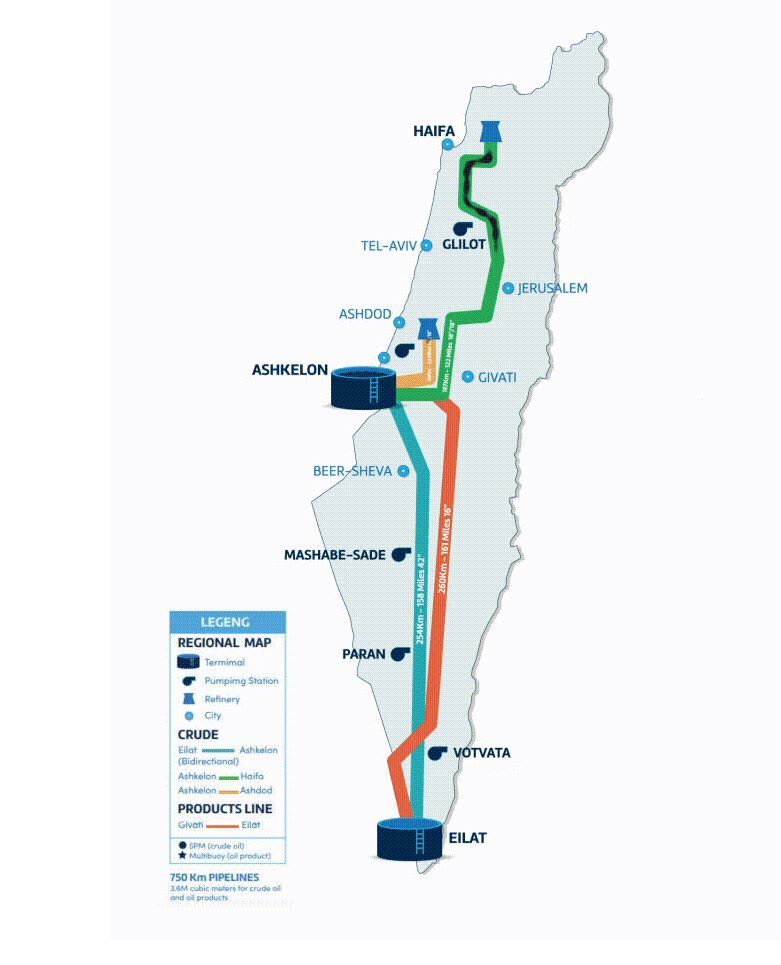
(Bloomberg) -- Israel relies almost entirely on imported oil and the war with Hamas has disrupted the country's main terminal on the Mediterranean. But there's a long-standing Plan B: a 158-mile (254-kilometer) pipeline linking the sliver of Israeli coast on the Red Sea with the country's oil refineries.
The Eilat-Ashkelon pipeline was built in the late 1960s as a joint venture with pre-revolutionary Iran, which had a markedly different relationship with Tel Aviv to today's Islamic Republic. For Israel, the route across the Negev desert offered a way to import oil from Iran without using Suez canal. For Iran the route also allowed its oil to bypass the canal, reloading at Israel's Mediterranean ports and shipping it on to customers in Europe.
Today, the pipeline network, owned by the Europe Asia Pipeline Co., can run in both directions and has capacity for both crude oil and fuels. Once it reaches Ashkelon, there are adjoining pipes that can take oil to Israel's oil refineries at Ashdod and Haifa.
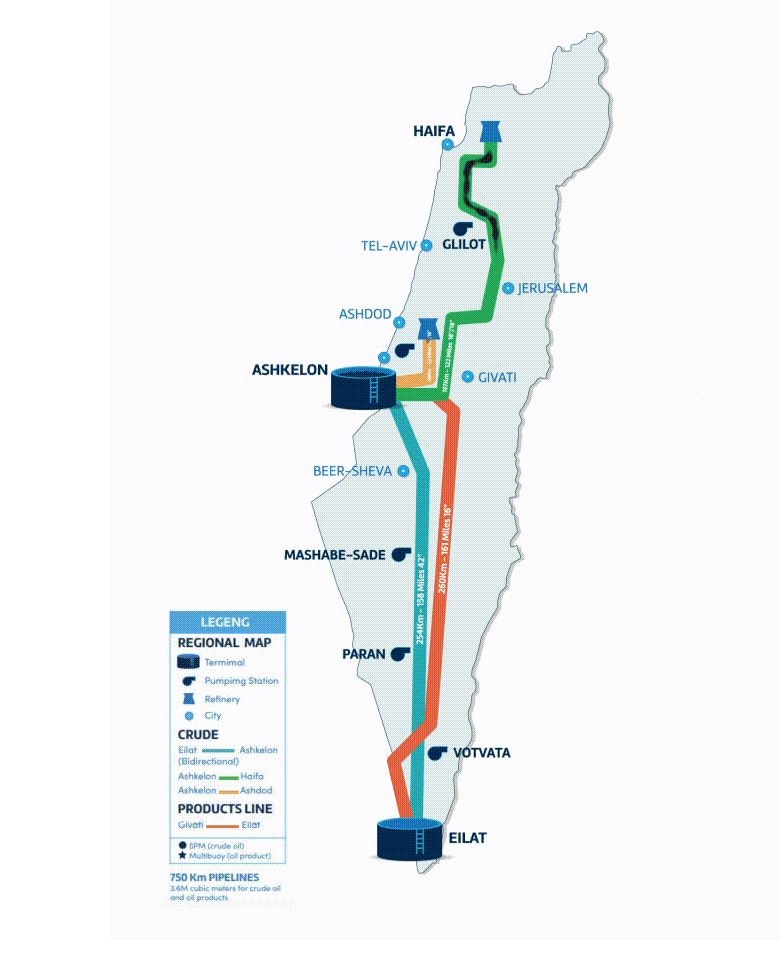
The pipeline's strategic location has made it a favorite of oil traders. Trafigura was among trading houses that used the pipeline to take politically sensitive exports from Kurdistan in northern Iraq southbound to the global oil market, according to The World for Sale by Bloomberg journalists Javier Blas and Jack Farchy.
Read: Top Secret Oil Pipeline is New Target of Israel-UAE Diplomacy
Imports into Eilat, the port that sits on Israel's three miles of coastline at the very top of the Gulf of Aqaba, have slowed in recent years because Israel gets most of its oil through the Mediterranean from Black Sea exporters like Kazakhstan and Azerbaijan. That may change.
The Seaviolet sailed up the Gulf of Aqaba this week laden with a just over a million a barrels of Azeri oil that it had shipped southbound through Suez.
Similar voyages are likely as conflict in the Gaza strip makes bringing oil into Ashkelon and a second import terminal at Haifa more risky.
More stories like this are available on bloomberg.com
©2023 Bloomberg L.P.
Essential Business Intelligence, Sharp Market Insights, Practical Personal Finance Advice, Daily Fuel, Gold and Silver Prices and Latest Stories — On NDTV Profit.