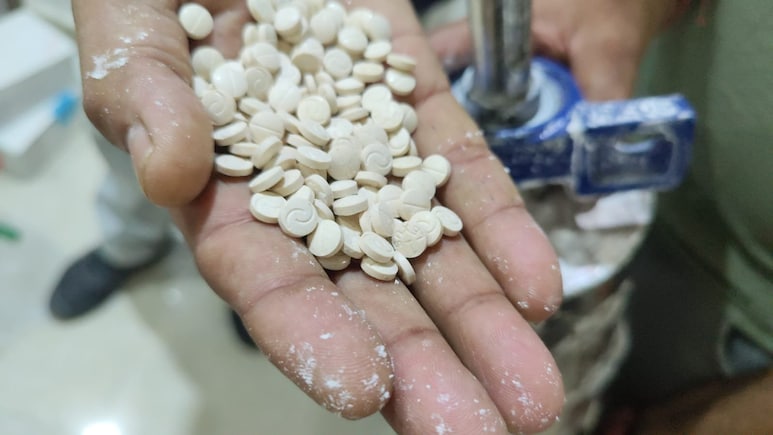
The reduction in US tariffs on Indian pharmaceutical exports to 18% from 50% could improve margins for Indian drugmakers with significant exposure to the American market, putting companies such as Sun Pharma, Dr. Reddy's Laboratories and Cipla in focus.
The tariff cut, announced as part of the India-US trade deal on Feb. 3, 2026, lowers a key cost burden for exporters serving the world's largest pharmaceutical market. India supplies nearly 40% of generic medicines consumed in the United States, while the US accounts for about 35% of India's pharmaceutical exports.
The change could support earnings growth for companies with sizeable US businesses, although the extent of the benefit is likely to depend on revenue exposure, product pipelines and valuations.
Also Read | Layoffs Are Rising In Tech, But These Skills Are Helping People Unlock Better Pay
US Exposure
Dr. Reddy's Laboratories has the highest exposure to the US market among major Indian drugmakers, with about 40-45% of its revenue coming from the region.
The company therefore stands to benefit more directly from lower tariffs. Its US generics business contributes an estimated Rs 12,000 crore to Rs 14,000 crore in revenue. A reduction in tariffs could improve profitability if the company retains part of the savings.
The stock has come under pressure following its third-quarter results, where profit after tax declined 14% from a year earlier. At around Rs 1,240, the stock trades below analyst target estimates.
For Dr. Reddy's, the key question is whether tariff relief can translate into stronger earnings growth over the coming quarters.
Scale Advantage
Sun Pharma, India's largest pharmaceutical company by market value, derives about 35% of its revenue from the US market.
The company reported 15.1% year-on-year growth in consolidated revenue in the third quarter, while EBITDA margin expanded to 31.9%.
Its size, manufacturing network and established US presence position it to benefit from higher export volumes if demand remains strong.
However, Sun Pharma trades at a higher valuation than peers, with a price-to-earnings multiple of about 33.5 times. That valuation reflects expectations of continued growth and product expansion.
The stock trades at about a 15% discount to consensus analyst price targets.
ASLO READ: Could Indian Auto Stocks Gain As US Tariff Cut Reshapes Export Economics?
Valuation Play
Cipla offers a different investment case.
The company trades at about 25 times earnings, below Sun Pharma. Its business is more diversified geographically and has a strong domestic presence alongside its US operations.
Sales growth of 9.97% trails some peers, but the lower valuation suggests the market has priced in a more moderate growth outlook.
Cipla also maintains a meaningful presence in the US market, giving it exposure to tariff-related benefits while reducing reliance on a single geography.
The stock trades at about an 11% discount to consensus analyst estimates.
Margin Impact
The reduction in tariffs could improve profitability across the sector.
Under the previous tariff structure, exporters often absorbed part of the additional cost to remain competitive in the US market. Industry estimates suggest the 50% tariff reduced profitability by 5-10% for pharmaceutical companies with significant US exposure.
The reduction to 18% could provide relief through lower costs, improved pricing flexibility and stronger order volumes.
For companies with about 40% exposure to the US market, the tariff change could improve EBITDA margins by 150 to 200 basis points, according to industry estimates.
Pipeline Matters
While tariff relief may support earnings, product pipelines remain a key differentiator.
Dr. Reddy's will need upcoming launches to support growth after its recent earnings weakness.
For Sun Pharma, investors will look for evidence that strong execution and product development can justify its higher valuation.
Cipla faces supply challenges in some products and increased competition in newer launches. Future product introductions may therefore play an important role in sustaining growth.
Investment View
The tariff reduction has improved the outlook for Indian pharmaceutical exporters by lowering costs in a market that accounts for more than one-third of the country's pharma exports.
Dr. Reddy's offers the highest exposure to the US market and therefore the greatest sensitivity to tariff-related gains. Sun Pharma brings scale and operational strength, while Cipla combines moderate US exposure with a lower valuation.
The ultimate impact of the tariff cut will depend on how effectively each company converts lower costs into earnings growth, market share gains and stronger margins over the coming quarters.
ALSO READ: Can Gems And Jewellery Stocks Continue To Rally As India-US Trade Deal Slashes Tariffs?
Disclaimer: The views expressed in this article are solely those of the author and do not necessarily reflect the opinion of NDTV Profit or its affiliates. Readers are advised to conduct their own research or consult a qualified professional before making any investment or business decisions. NDTV Profit does not guarantee the accuracy, completeness, or reliability of the information presented in this article.
Essential Business Intelligence, Sharp Market Insights, Practical Personal Finance Advice, Daily Fuel, Gold and Silver Prices and Latest Stories — On NDTV Profit.