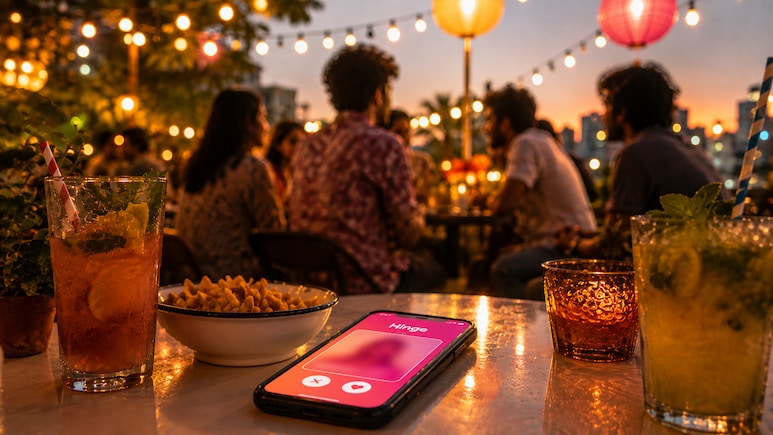
- Match Group is shifting from swipe-first dating to events and offline experiences to foster real connections
- Nearly half of singles 18-29 prefer in-person experiences, and 60% of non-users may join due to events
- New features include Double Date, Friends Take, and Signals badges to enhance trust and social validation
The rom-com "meet-cute" has long been replaced by a notification saying, "It's a Match!". Now, after a decade of swipes, chats and ghosting, the pendulum may be swinging back. Match Group's Q2 post-earnings analysts' call suggests the biggest names in online dating are rethinking the swipe-first model, betting instead on events, shared experiences and offline encounters that feel a little more human.
The company's own research found that nearly half of singles aged 18 to 29 want to build closer connections through in-person experiences, while 60% of people who don't currently use the platform said events could make them give it a try.
Tinder and Hinge have spent the past two quarters building products that try to close that specific gap, not the gap between one match and the next, but the gap between a match and an actual evening out. But for a generation that grew up chatting through screens, actually making that leap can feel hard.
ALSO READ: How Dating Apps Are Monetising Your Loneliness
Built To Get You Offline
Events is the clearest evidence of the shift. Inside the app, users could browse local activities and see who else planned on showing up before deciding whether to go, then message someone afterward if something clicked. Five months later the feature runs in ten cities including parts of Europe, with twenty-six more scheduled by September on the way to a target of seventy-five by year's end.
Match Group CEO Spencer Rascoff laid out the arithmetic for analysts on the call. A solo date runs $20 to $100 for a couple of hours spent evaluating a stranger, against roughly $30 a head for a Tinder event, three in ten of which are free entirely.
Three in five people who currently skip Tinder altogether told the company Events specifically would pull them back in, and during the Los Angeles pilot, 71% of eligible users between 18 and 24 opened the Events tab at least once.
ALSO READ: Is AI Stopping You From Meeting Your Soulmate?
Nothing Quite Like A Good Wingman
A stranger scrolling through no longer has to take a person's word for who they are. Double Date lets two friends match with another pair together, and users under 30 pick it up at a rate 70% higher than users over 30 do. Hinge pushed the idea further with Friend's Take, which launched in mid-July. Friends and family can now attach their own text, voice, video or photo notes directly onto someone's profile.
Match Group called India "an important expansion market" for Hinge on this same call, its "first meaningful push into Asia." Hinge opened in Mumbai back in 2015, at a launch party stacked with Bollywood names.
The company circling back now, right as it builds a feature around friends vouching for someone's character, lands strangely in a culture where family weighing in on a match has rarely counted as optional.
What's In A Profile?
Signals, Hinge's other new feature, gives users a visible badge for sticking with a conversation and following through on plans, a frustration the company says falls hardest on women. In internal testing, the badge also pushed selfie verification up 15% among existing users.
Tinder is also rethinking what a profile even is. Astrology Mode and Music Mode let users signal identity and taste rather than just appearance, and both are being folded into a rebuild of how profiles look and function, described internally as showing "more of the whole self" rather than a quick yes-or-no photo judgment.
Missed Connections, currently testing in Canada and Australia, goes a step further, resurfacing people users crossed paths with in real life during the previous week.
ALSO READ: 'Not The Future We Want': Bumble Sounds Alarm Over People Falling In Love With AI Bots
The Sniffies Bet
The company shut down Grindr-rival Archer, a serious matchmaking app built for gay men, and put $100 million into Sniffies instead, a map-based app built around instant, nearby contact.
Rascoff said Sniffies found real product-market fit because it matched how that specific community wanted to meet. Archer, despite years of investment behind it, never managed that.
The company also described artificial intelligence less as a dating coach and more as a product engine. AI has shortened development cycles dramatically, allowing teams to launch new features in weeks instead of months. That pace has been helping the platform experiment more quickly with formats that encourage meaningful interactions.
Essential Business Intelligence, Sharp Market Insights, Practical Personal Finance Advice, Daily Fuel, Gold and Silver Prices and Latest Stories — On NDTV Profit.











.png?im=FeatureCrop,algorithm=dnn,width=350,height=197)