Government expects around 200 chip design companies to emerge from the Rs 1.27 lakh crore semiconductor scheme Semicon 2.0, Union Minister Ashwini Vaishnaw said on Friday.
During a fireside chat, the minister said that the emergence of these 200 chip companies will be a "game changer" for the country.
"The country's design capability rooted in the IT industry and global capability centres, is now extending into the semiconductor sector. We estimate at least 200 chip design companies emerging under Semicon 2.0," the minister said.
Also Read | Layoffs Are Rising In Tech, But These Skills Are Helping People Unlock Better Pay
Vaishnaw said the first phase of support for chip-design startups in ISM 1.0 focused on addressing the high cost of Electronic Design Automation (EDA) tools. More than 105 chip design startups gained access to state-of-the-art EDA tools through the initiative, while 20 startups received venture capital funding.
He said the sector's progress, including chips being developed for products, has encouraged the programme's expansion and greater participation from larger companies and Indian-origin engineers working globally.
The minister said that the electronics manufacturing ecosystem has helped develop precision manufacturing capabilities, particularly among MSMEs, which are now supporting multiple sectors including electronics, mobile manufacturing, aerospace, aviation, defence and semiconductors.
"The next focus should be on applied R&D within manufacturing plants, aimed at improving product quality and manufacturing processes," he said.
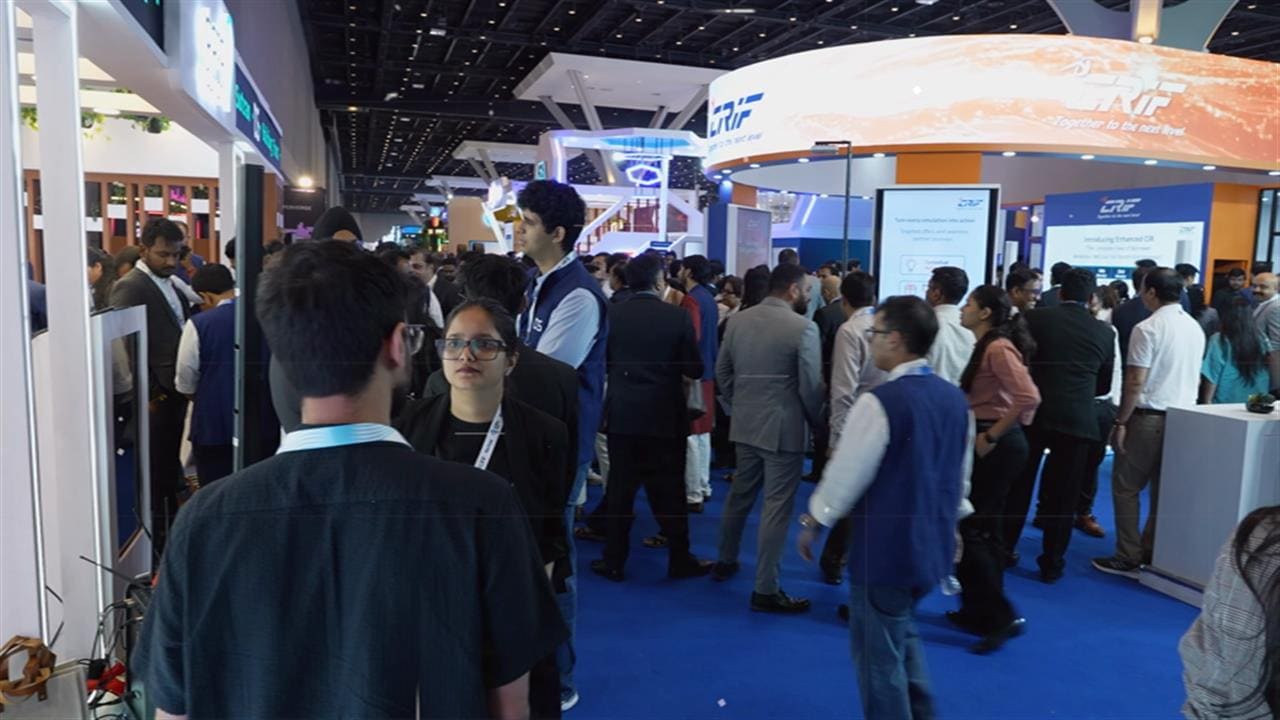
In a separate press briefing, Vaishnaw said roundtables of more than half a dozen countries held at Semicon India 2026 are showing support from their respective governments for their companies to expand work in India.
Semiconductor ecosystem companies from the US, Japan, the Netherlands, Finland, Singapore, South Korea and Japan have held roundtables at the event with Indian companies, Centre and state government representatives to evaluate partnership opportunities.
"The country roundtables are basically showing that companies from those countries can expand their work here. Their governments are supporting that and it looks like it is going to be a very good journey ahead," Vaishnaw said.
The minister said some of the countries have come in very large contingents, which has been very encouraging.
"We are very encouraged by it. Japan and Singapore have 30-plus companies participating in their pavilions. The overall response has been very good," Vaishnaw said.
He said that the government has received inputs from those meetings and will be working on those points including concerns around customs and logistics.
The roundtables held at Semicon India saw state governments of Andhra Pradesh, Keralam, Gujarat, Uttar Pradesh, Odisha etc pitching with their strengths to attract investments.
In response to a question on the Centre's plan of action in case states overpromise and underdeliver, Vaishnaw said all states are aligning their policies with those of the Centre and therefore no one can overpromise and underdeliver.
"The question of over-promising doesn't arise because the industry is a very smart industry. The semiconductor industry has seen the world's most difficult and most different times. They know when somebody is talking more than what they can deliver. They can evaluate it very well," Vaishnaw said.
ALSO READ: Tata Electronics Partners With Sumitomo For High-Purity Chemicals Used In Chip Making
The minister said discussions and agreements between Indian companies and global partners on the supply of critical machines and minerals have already started, and several agreements have been signed among them at the event.
He said soon production of that critical equipment and materials will start in India under Semicon 2.0.
In response to questions over concerns about water consumption by data centres and semiconductor companies, Vaishnaw said most of the companies are using closed-loop data centres where the coolant is basically circulating within the cooling circuit.
"Rather than consuming large quantities of water, they are reusing the same throughout the thermal cycle. From the government policy point of view, we are pushing the data centres and nudging them and encouraging them, as well as mandating them, to use the least amount of water as their footprint," Vaishnaw said.
The minister said that in the case of the semiconductor industry, a huge amount of recycling of the water is going to happen.
"We, as a country, have always been at the forefront of environmental technology. For example, today 500 gigawatt power energy capacity that we have for a country at our scale of our level of economic growth, we have close to 52 per cent power generation capacity coming from renewable energy so that has been the norm that has been the policy regime in our country," the minister said.
(This story has not been edited by NDTV staff and is auto-generated from a syndicated feed.)
Essential Business Intelligence, Sharp Market Insights, Practical Personal Finance Advice, Daily Fuel, Gold and Silver Prices and Latest Stories — On NDTV Profit.