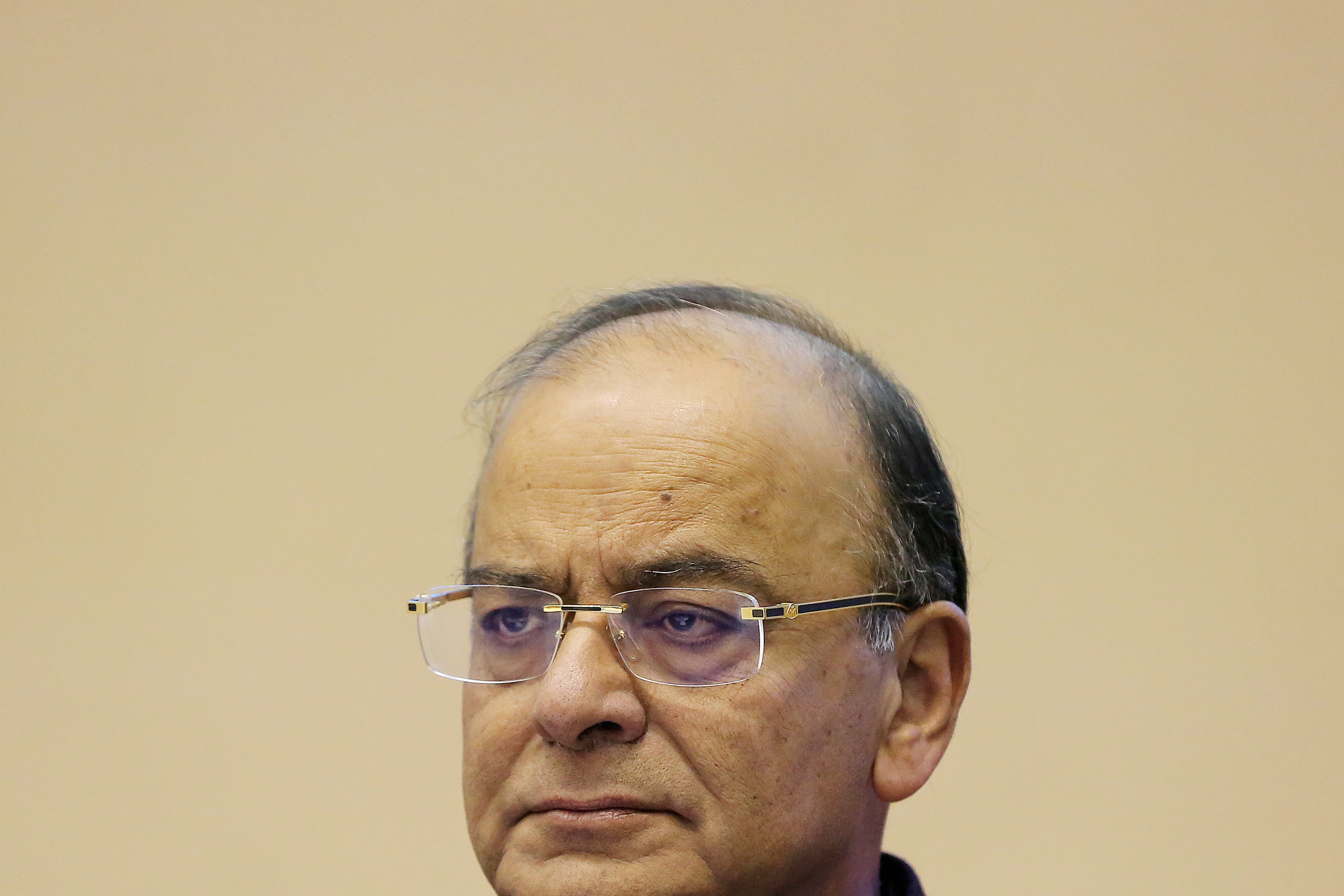
The Finance Ministry has refused to disclose whether Finance Minister Arun Jaitley was consulted before the announcement of demonetisation by Prime Minister Narendra Modi on November 8, 2016.
The Prime Minister's Office (PMO) and the Reserve Bank of India (RBI) had earlier claimed that the query whether the finance minister and the chief economic advisor were consulted before the announcement does not come under the definition of “information” under the Right To Information (RTI) Act.
The definition of “information” under the Act refers to “any material in any form” under the control of a public authority.
Also Read | Layoffs Are Rising In Tech, But These Skills Are Helping People Unlock Better Pay
The response of the finance ministry to an RTI query filed by the Press Trust of India (PTI) assumes significance, as it acknowledges that there are records pertaining to the question but they cannot be disclosed under the RTI.
The finance ministry has taken refuge under the exemption clause of section 8(1)(a) of the Act to deny the information.
It did not, however, give any reasons as to how the information would attract the section. The section allows withholding information “disclosure of which would prejudicially affect the sovereignty and integrity of India, the security, strategic, scientific or economic interests of the State, relation with foreign State or lead to incitement of an offence”.
According to procedure, a first appeal can be filed with the ministry concerned which is to be handled by a senior official. If it is unsuccessful, the matter escalates to the Central Information Commission, the top adjudicating body on the RTI Act.
The three key institutions which are directly related to the move of demonetisation— the PMO, the RBI and the Finance Ministry—have refused to disclose information about the sudden measure on different pretexts.
The finance ministry is the latest respondent.
The RTI Act has specific provision which allows records attracting its exemption clauses to be disclosed “if public interest in disclosure outweighs the harm to the protected interests”.
“The clause of public interest would apply where exemption clause applies on the information sought by an applicant. In the present case, the information sought does not attract any exemption clause,” former Central Information Commissioner Shailesh Gandhi told PTI.
He said the law is very clear: when a public authority rejects to disclose information it must give clear reasons as to how the exemption clause would apply in the given case.
On the responses of the PMO and the RBI, former Chief Information Commissioner A N Tiwari had said that their replies are wrong as the applicant had sought to know a fact which would be part of records hence an “information” under the RTI Act.
Notes of Rs 1,000 and Rs 500 ceased to be legal tender after a surprise announcement by the Prime Minister on November 8 last year.
Also Read: After Morgan Stanley, Macquarie Arm Marks Down Flipkart Valuation
Essential Business Intelligence, Sharp Market Insights, Practical Personal Finance Advice, Daily Fuel, Gold and Silver Prices and Latest Stories — On NDTV Profit.