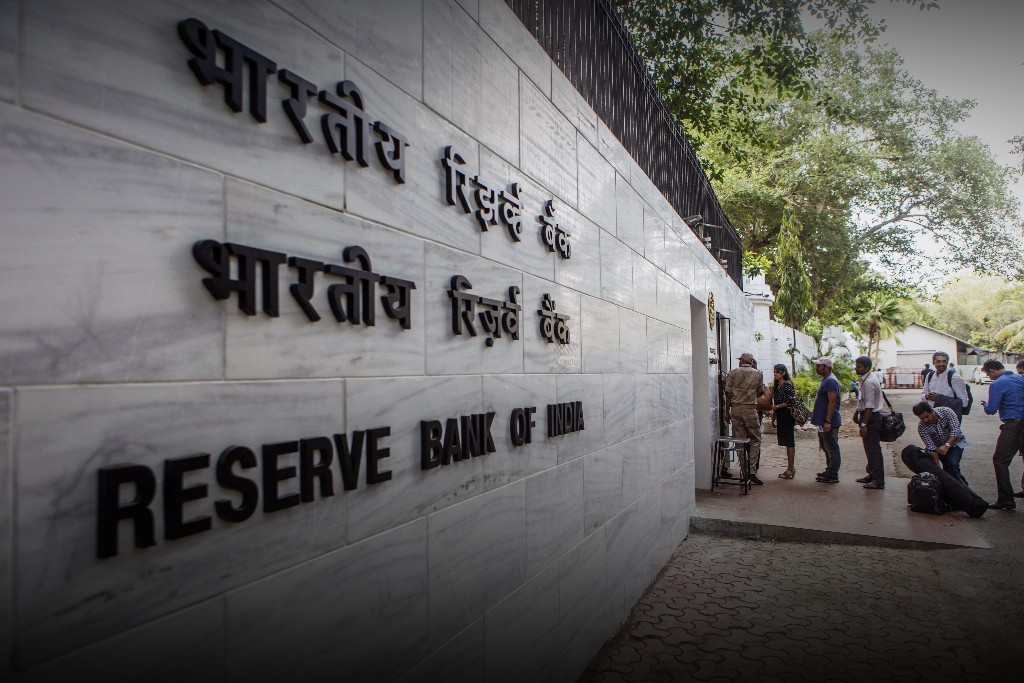
Top finance ministry officials may not meet Monetary Policy Committee members as scheduled on June 1-2. Instead, the government is likely to submit its suggestions in writing ahead of the monetary policy review on June 6-7, an official from the ministry, aware of the development told BloombergQuint.
The meeting is not scheduled even at a later date, according to the same official.
Chief economic adviser Arvind Subramanian, Principal Economic Adviser Sanjeev Sanyal, and the economic affairs secretary were scheduled to meet all six members of Monetary Policy Committee on June 1-2.
The proposed meeting, coming a week before the policy review, had raised eyebrows since it could be seen as an attempt to influence the MPC.
The reason behind the government's decision to defer the meeting is not clear. However the person quoted above said that the principal economic adviser Sanjeev Sanyal was not available, and the new Economic Affairs Secretary, Tapan Ray, will take charge only on Thursday.
In September last year, the MPC was set up with three external members and three members from within the RBI. Ravindra Dholakia, Pami Dua and Chetan Ghate are the external members. Governor Urjit Patel, deputy governor Viral Acharya and executive director Michael Patra represent the RBI on the committee.
To be sure, the RBI Act allows for the government to convey its views to the MPC from time to time. "The Central Government may, if it considers necessary, convey its views in writing to the Monetary Policy Committee from time to time," the RBI Act says.
However, the government's decision to call for separate meetings with the external members and with the RBI representative had raised eyebrows.
A former RBI official, who spoke to BloombergQuint earlier this week when news of the meeting emerged, had pointed out that there was no reason for the government officials to meet MPC members unless they were discussing fiscal policy. The person spoke on the condition of anonymity.
While the external members of the MPC are named by the government, the appointments are made in a manner to ensure that the government does not have undue influence over monetary policy. To this end, the members are appointed for a four year term, with no room for reappointment. Removal of an MPC member from the committee can only be done under the strictest conditions.
The meeting between the government and MPC members had been proposed at a time when questions are being raised about whether the central bank is over-estimating inflation. The RBI changed its monetary policy stance from accomodative to neutral in February. Since then, however, consumer price inflation has fallen to near 3 percent. The RBI expects inflation to pick up over the course of this year and sees it range between 4-4.5 percent in the first half of the fiscal and between 4.5-5 percent in the second half. Since this is higher than the central bank's medium term inflation target of 4 percent, the RBI argues that a neutral policy stance is appropriate.
The government appears to have a different view.
“Inflation pressures are easing considerably; the inflation target has been over-achieved; the inflation outlook is benign because of a number of economic developments,” said chief economic adviser Subramanian in a speech on May 12.
Essential Business Intelligence, Sharp Market Insights, Practical Personal Finance Advice, Daily Fuel, Gold and Silver Prices and Latest Stories — On NDTV Profit.