(Bloomberg) -- The euro area and its biggest economies will avoid a recession as growth returns at the end of the year, helped by slowing inflation and a robust jobs market, according to new European Union forecasts.
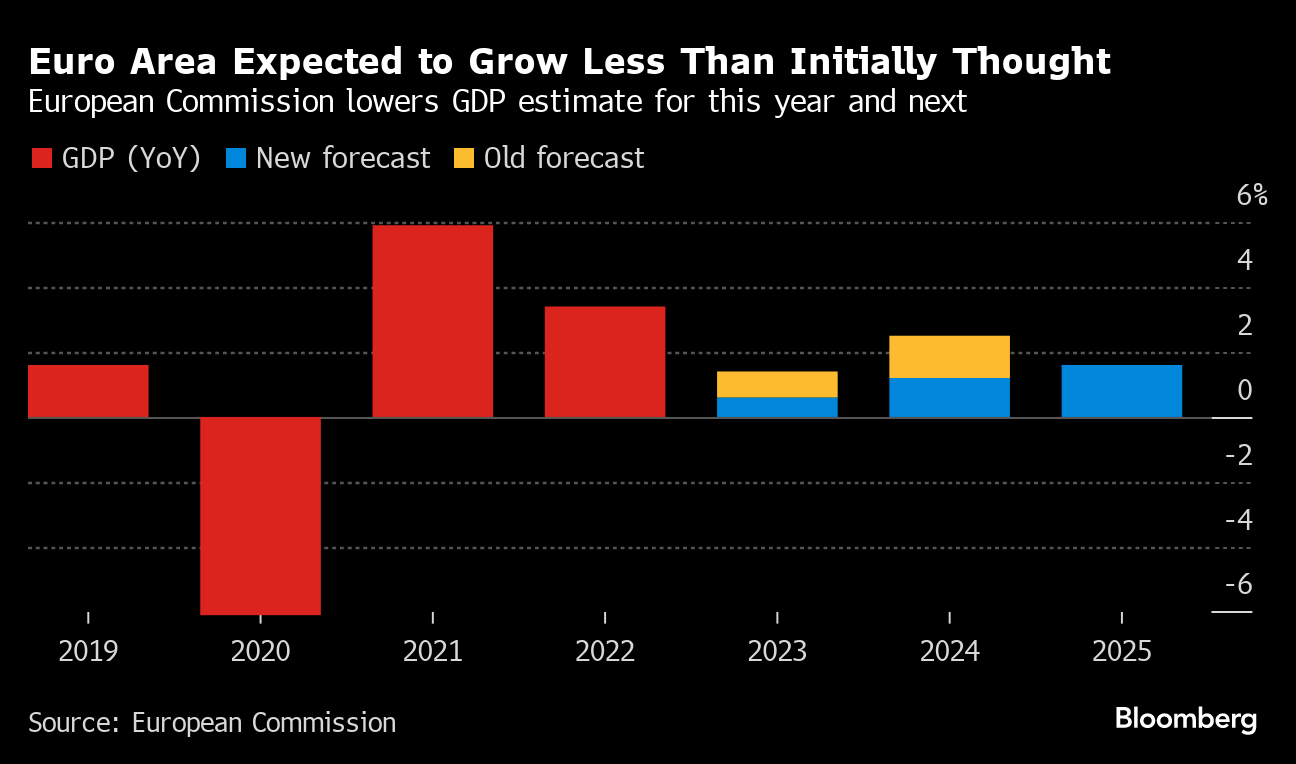
Output in the 20-nation bloc will increase by 0.2% in the fourth quarter after shrinking 0.1% in the three months through September, the European Commission said in a report on Wednesday. Even Germany, which has fared worse than peers amid a prolonged manufacturing slump, is predicted to avoid a recession.
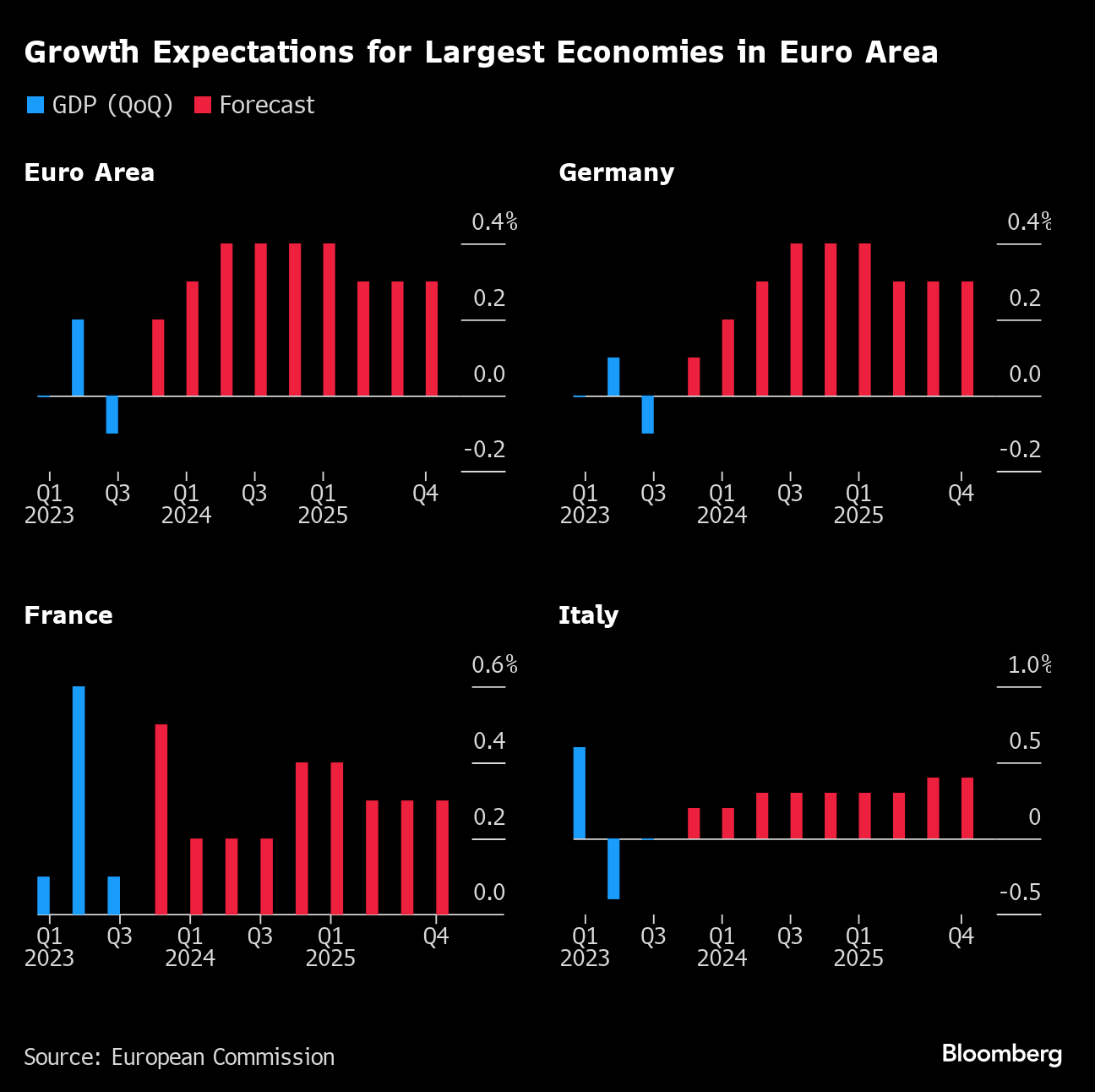
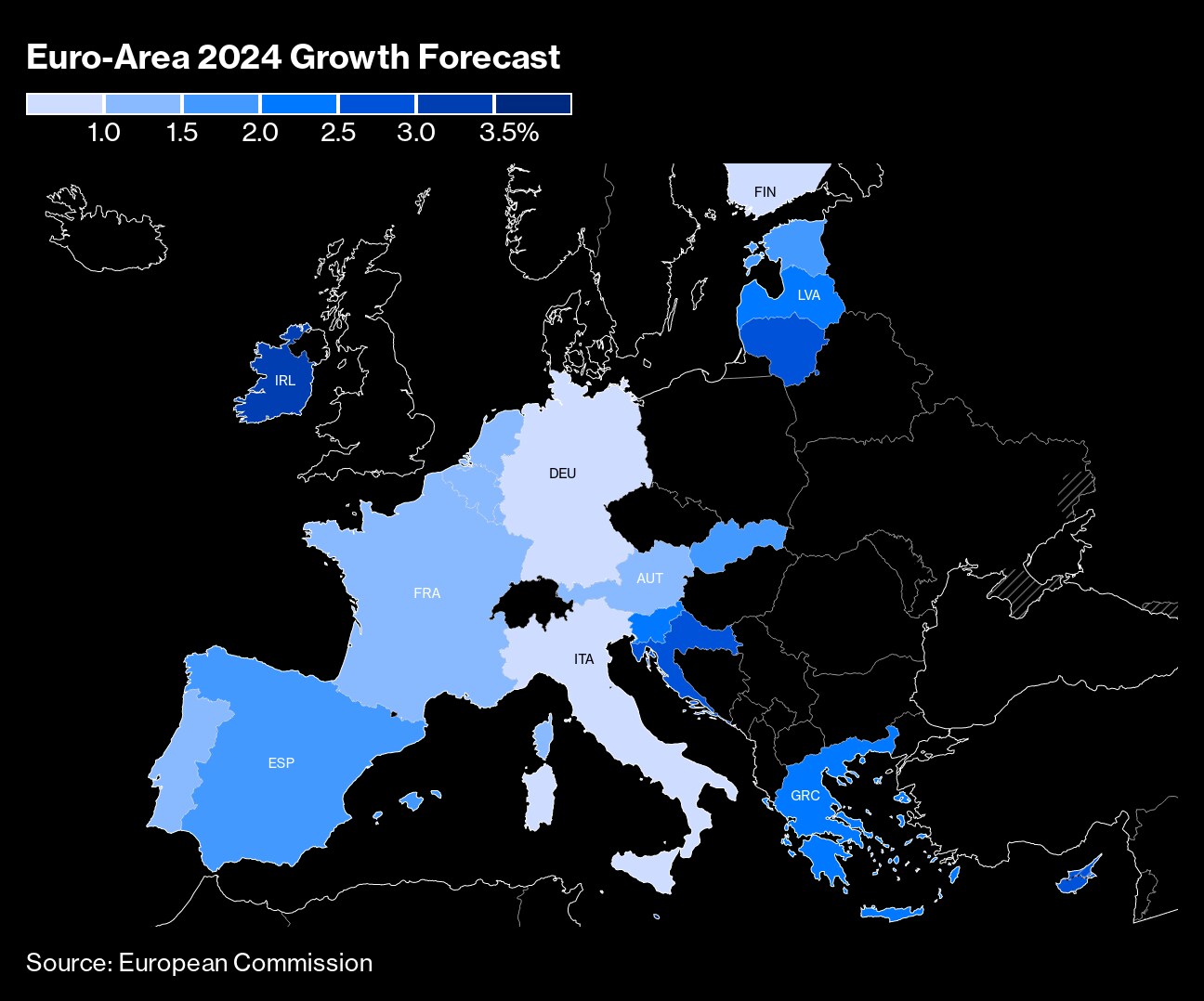
For the full year, the EU's executive arm now sees 0.6% growth, down from a September forecast of 0.8%. That's seen picking up to 1.2% in 2024 and 1.6% in 2025 — a slightly more optimistic view than that of the European Central Bank.
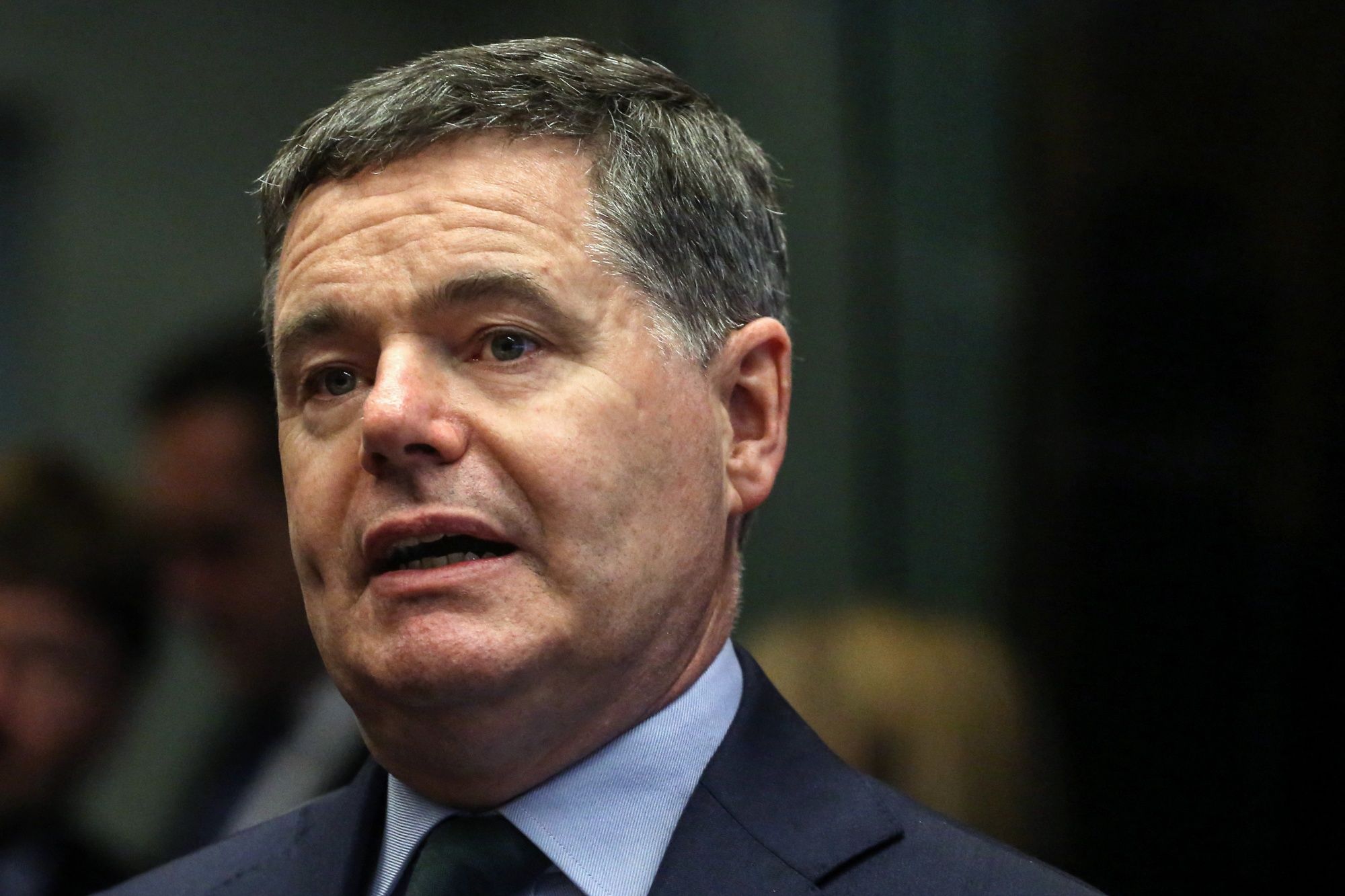
“Strong price pressures and the monetary tightening needed to contain them, as well as weak global demand, have taken their toll on households and businesses,” EU Economy Commissioner Paolo Gentiloni said in a statement. “Looking ahead to 2024, we expect a modest uptick in growth as inflation eases further and the labor market remains resilient.”
Price growth will average 5.6% this year and ease to 3.2% in 2024 and 2.2% in 2025. That's similar to the ECB's prediction and an upward revision for next year compared to the EU's September forecast, prompted by higher energy and food commodity costs.
“Still, price pressures related to non-energy consumption categories are expected to unwind, broadly in line with the previous forecast and in a context of slightly tighter financing conditions, moderating wage growth and normalizing profit shares,” the commission said.
Inflation eased to 2.9% last month, down from a peak of more than 10%, but ECB policymakers have warned against complacency as price growth may pick up again in coming months. They kept interest rates on hold in October, saying the current level will help return inflation to the 2% goal — if held for long enough.
High living costs and the ECB's unprecedented tightening campaign that started in mid-2022 “took a heavier toll than previously expected,” the commission said.
Speaking Wednesday to Bloomberg TV, ECB Governing Council member Mario Centeno acknowledged worries over the lack of momentum in the euro-area economy.
“The numbers have not been great, zero, 0.1, -0.1 quarter-on quarter for five quarters in a row creates a little bit of anxiety over will this be a soft landing,” he said. “This stagnation of the euro area is of course a source of concern for all.”
EU officials also warned of stalling efforts to bring down public debt in some of the bloc's biggest economies. Italy's is seen increasing back above 140% of output in the next two years, with an uptick in 2025 also seen in France after a slight dip in the preceding year.
Initially helped by inflation, debt reduction is set to become tougher as price growth slows, borrowing costs rise and growth remains subdued, the commission said.
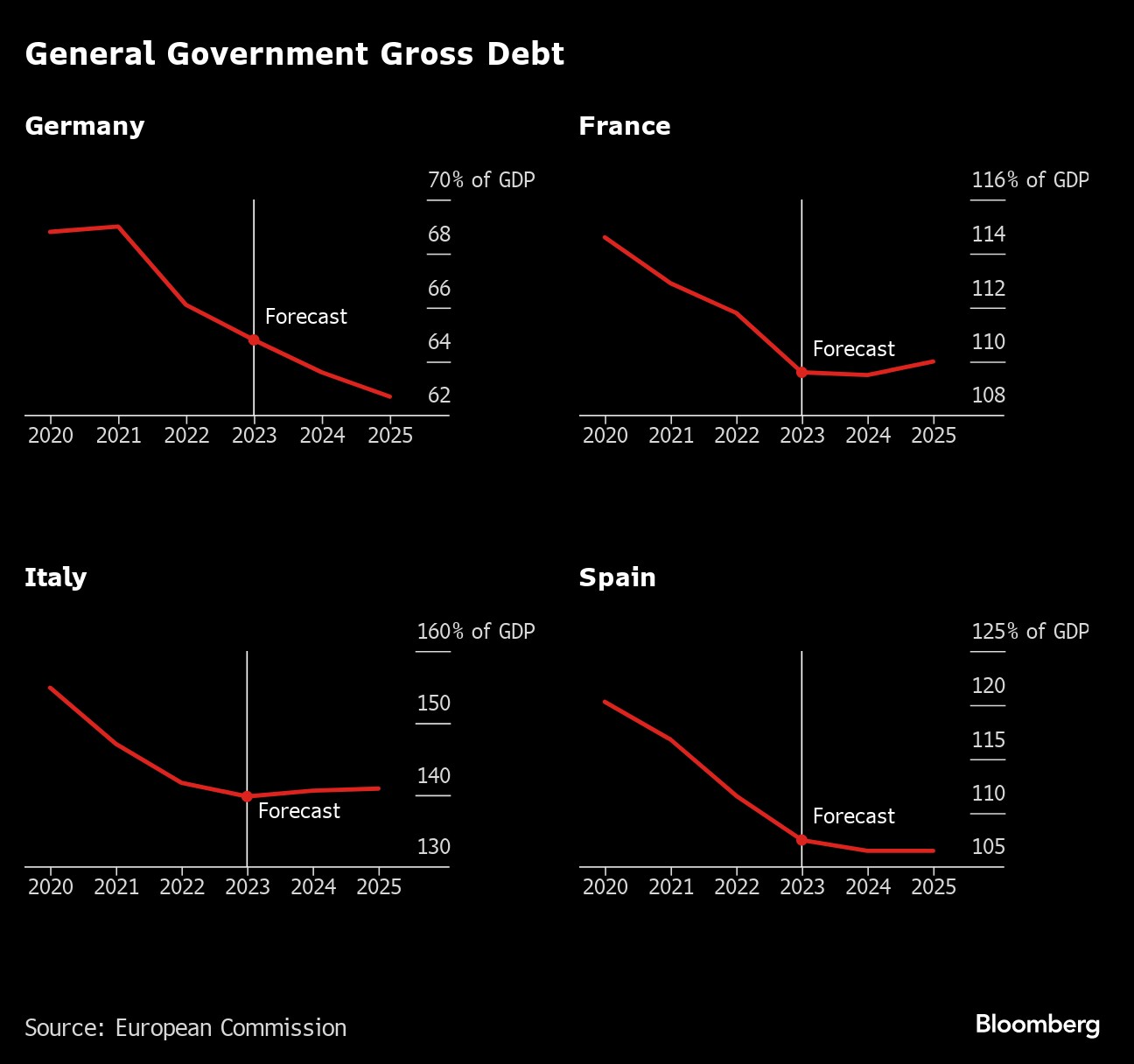
The euro area's sovereign debt has become an increasing source of unease after governments borrowed heavily during the pandemic and the energy crisis while borrowing costs jumped to combat inflation.
The labor market has been a bright spot so far, with unemployment barely increasing even as the economy struggled. While some member states have meanwhile seen an uptick, jobless rates “are expected to remain broadly stable,” the commission said.
The continued war in Ukraine and conflict in the Middle East mean uncertainty around the economic outlook has increased, it added. How China fares and the transmission of monetary tightening within the euro area also pose risks.
The report covered Ukraine itself for the first time after the country gained EU candidate status. The commission predicts 3.7% growth next year and 6.1% in 2025 — after a 29% slump in 2022.
--With assistance from Jorge Valero.
(Updates with ECB's Centeno in ninth paragraph)
More stories like this are available on bloomberg.com
©2023 Bloomberg L.P.
Essential Business Intelligence, Sharp Market Insights, Practical Personal Finance Advice, Daily Fuel, Gold and Silver Prices and Latest Stories — On NDTV Profit.