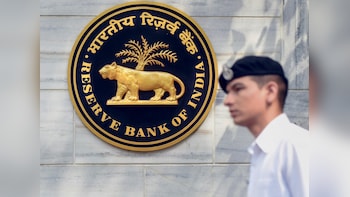
The financial services industry has been the backbone of the Indian economy.
Acknowledging the importance of this sector, the government has recently taken steps for financial inclusion such as the 'Jan Dhan' scheme, issuing new licences to banks, payments banks, small banks etc. This article discusses the key direct tax changes proposed in the Finance Bill 2016 (FB) impacting the financial services industry.
Securitisation trusts
Currently, the special taxation regime is provided in respect of income of securitisation trusts and the investors of such trusts. The regime provides that the income distributed by such a trust to its investors shall be subject to a distribution tax and such income shall be exempt in the hands of the investors. Investors such as banks suffered a disallowance of expenditure in respect of such exempt income.
The Finance Bill proposes a new regime under which there shall not be any distribution tax on such income. However, there shall be a withholding tax on distribution of income by the trust. Further, the provisions are now extended even to trusts set up by a securitisation company or a reconstruction company. These changes shall go a long way in developing the market for such trusts in India.
Deduction for the non-performing assets (NPA) provision to NBFCs
The financial services industry, especially the banking/NBFC sector, is undergoing turmoil in light of the alarming level of NPAs. Currently, banks, public and state financial institutions are allowed deduction in respect of provision for NPAs up to a prescribed limit. NBFCs, which have been a significant source of lending to crucial sectors such as infrastructure and housing, were not permitted to claim such a deduction for provision on NPAs. The Finance Bill proposes to grant such deduction even to NBFCs up to 5 per cent of the total income.
Onshore fund management industry
The Budget 2015 introduced special regime for offshore investment funds to boost the domestic fund management industry. These provisions have been rationalised to provide that eligible investment fund would also include a fund established outside India in a notified country. This will help in including pension funds, mutual funds, SICAVs, etc that were earlier not covered as it was ambiguous if they qualify as tax resident of such countries due to domestic law framework.
Alternative investment funds (AIFs)
Currently, the income earned by investors from investments in Category I and II AIFs is subject to withholding tax rate of 10 per cent. Where the investor in such an AIF is a non-resident, there is a possibility that under the applicable tax treaty, the income is subject to tax at a lower rate/not subject to tax. Accordingly, the provisions have been rationalized to the effect that withholding tax as per tax treaty would apply to the income paid to a non-resident if it is more beneficial.
Business trust
Currently, in the case of business trusts being REITs and Infrastructure Investment Trust, the dividend distribution tax (DDT) is levied on the dividend distributed by the SPVs of the trusts. Under the present regulations, the business trusts have to distribute 90% of the income earned to its investors, which results in tax inefficiency. Accordingly, the provisions have been rationalised to the effect that the dividend distributed by the SPV would not be subject to DDT and the same would also be exempt in the hands of the trust and the investors.
Income Computation and Disclosure Standards (ICDS)
While, the Finance Minister emphasized the need to simplify existing income-tax law, the Bill does not defer the ICDS as suggested by various industry bodies and the Easvar Committee.
International Financial Services Centre (IFSC)
An IFSC is a jurisdiction that provides financial services primarily to non-residents in a foreign currency. It targets offshore business and deals only sparingly with residents. With an objective to incentivise the growth of IFSCs in India, the FB proposes to provide certain tax concessions to units in an IFSC. Minimum Alternative Tax (MAT) shall be levied at a concessional rate of 9 per cent on a unit in an IFSC against the normal MAT rate of 18.5%. Further, no tax will be levied on dividends distributed by a unit in an IFSC deriving income solely in foreign exchange. Further, no securities transaction tax and commodities transaction tax would be levied on transactions undertaken on an exchange located in the IFSC in foreign currency. However, no relief has been granted from withholding tax on payments made by a unit in an IFSC to non-residents.
MAT on foreign companies
Last year, the Finance Act, 2015 granted exemption to foreign companies from the ambit of MAT on a prospective basis. In line with the press release issued by the Government, the FB clarifies that MAT will not apply to foreign companies even for prior years in certain cases.
Taxation of income from offshore rupee-denominated bonds
Under the new external commercial borrowings framework, an Indian company is now permitted to issue rupee denominated bonds outside India. By a press release dated 29th October 2015, the Government announced that interest on such bonds will be taxable at a concessional rate of 5% and capital gains arising on their redemption would be exempt from tax. While the FB provides for exemption to capital gains earned on appreciation of rupee, the concessional rate of 5 per cent does not find a mention in the Budget proposals.
From the amendments proposed in the Budget, it is reassuring to note that the finance minister has taken cognizance of the various representation made by the stakeholders and accordingly amended the various provisions. This sends out a positive message to the taxpayers that the government is aware of the ground realities and looks forward to make the amendments that do not have tax revenue leakage and boost the industry confidence.
(Jaiman Patel is Director, EY. Asrar Jalili, Manager, EY, has also contributed to this article)
Disclaimer: The opinions expressed within this article are the personal opinions of the author. The facts and opinions appearing in the article do not reflect the views of NDTV and NDTV does not assume any responsibility or liability for the same.
This Article is From Mar 04, 2016
Opinion: Budget 2016 Positive for Financial Services Sector

- Budget 2023,
-
Updated:Mar 04, 2016 15:46 pm IST
-
Published On Mar 04, 2016 15:42 pm IST
-
Last Updated On Mar 04, 2016 15:46 pm IST
-