Eric Weinstein, former managing director of venture capital firm Thiel Capital argues that resentment over immigration in the US is being directed at Indian professionals while American employers benefit from competition between workers. Indian professionals in the US are becoming targets of anger over jobs, wages and cultural change, according to Eric Weinstein, who, on The Prakhar Gupta Xperience (podcast) spoke at length spoke about American employers and policymakers bearing responsibility for a system that pits workers against one another.
"The US is going through a bigotry moment that's really unhealthy," Weinstein said, describing the anti-Indian prejudice he encountered unlike anything he had previously seen.
His argument was that Americans' frustrations were being directed at immigrants who had entered a system shaped by decisions made within the United States.
Also Read | Layoffs Are Rising In Tech, But These Skills Are Helping People Unlock Better Pay

-
 India's Market Leaders To Decode The New Samvat At NDTV Profit Ignite In Mumbai On Oct 28
-
 NDTV Profit IGNITE Diwali 2026: Top Market Veterans Decode Wealth Creation
-
 The Week Ahead: Earnings Season, Fed Policy Verdict And Crude Oil In Focus
-
 Silver Is Now Down From Rs 4.2 Lakh To Rs 1.9 Lakh: Where It Goes From Here
-
 NDTV Ignite, The Trillion-Dollar Trajectory: India's Road to 2030
"You American voters got played by people who did not represent your interests, using Indians and others as instruments," he claimed.
ALSO READ | Indians On H-1B Visas Face Uncertain Future Amid Meta, Amazon Layoffs As 60-Day Deadline Looms Large
Weinstein linked hostility towards immigration to economic pressures and a sense of cultural displacement. Some Americans, he suggested, felt that communities and institutions they identified with had changed without them having a say in the process.
He pointed to what he described as a limited understanding of India among Americans, saying the country's diversity and culture were often reduced to a narrow set of stereotypes.
Weinstein described himself as an immigration "restrictionist" and argued that immigration policy should account for its effects on existing workers. He criticised the targeting of Indians, urging a distinction between concerns about policy and hostility towards the people affected by it.
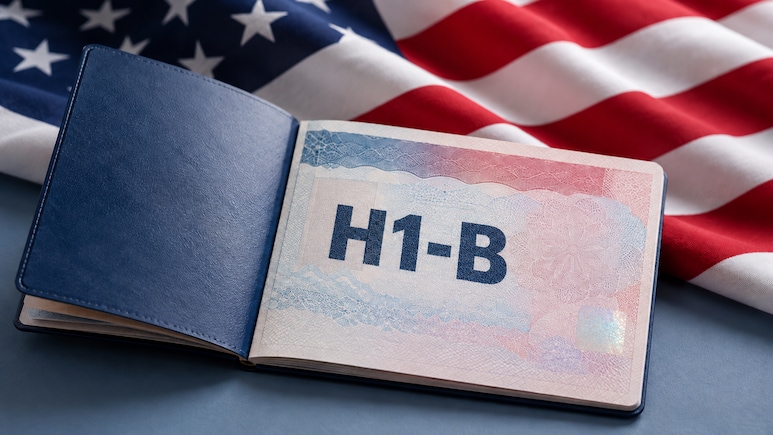
Weinstein alleged that the H-1B system had been used to weaken American workers' bargaining power by expanding employers' access to foreign labour. He disputed the argument that cheaper labour was necessarily in America's interest, saying workers should have been able to demand higher pay when their skills were in demand.
READ | Is Trump Softening H1-B Stance? US President's Latest Comment Hints At Flexibility
"It was elite management versus everybody else," he explained and traced his criticism to a "secret 1986 National Science Foundation study". He alleged that concerns about rising salaries for American science and technology graduates helped drive a labour-shortage narrative that influenced the development of H-1B visas. The supporting documents were not included in the supplied transcript.
In his view, the resulting competition damaged relations between American and Asian workers while allowing employers to retain greater negotiating power.
So, the question remains on where does this leave Indians in America?
For Indian professionals, Weinstein's criticism extended to their own position within the visa system.
"They're not able to respond to signals in the market. They're tethered to their employer, historically," he said, agreeing with the host's concerns about dependence on employers.
The programme includes worker protections: US labour rules require H-1B employers to pay at least the higher of the applicable prevailing wage or the actual wage paid to comparable workers. Eligible H-1B workers can also change employers through the programme's portability provisions.
Weinstein's broader concern was that workers on both sides could lose bargaining power while being encouraged to blame one another. He argued that this antagonism had undermined opportunities for cultural exchange.
AI could intensify the pressure
While speaking on the podcast, the discussion raised the prospect of artificial intelligence adding another source of competition for workers. When host Gupta suggested that AI could repeat the earlier substitution of more expensive labour with cheaper alternatives, Weinstein agreed.
He proposed giving workers ownership or licensing rights so they could receive income from the systems affecting their livelihoods, including AI.
For Indians facing resentment in America, his proposed message was to acknowledge economic fears while challenging misplaced blame. He urged Indian voices to tell Americans: “I understand your frustrations, fears, and resentments, but you're taking them out on the wrong people in the wrong way."
Essential Business Intelligence, Sharp Market Insights, Practical Personal Finance Advice, Daily Fuel, Gold and Silver Prices and Latest Stories — On NDTV Profit.